✅ Medically reviewed
Pes anserine bursitis is the irritation of a small fluid-filled cushion on the inner side of the knee. The cushion sits just below the joint line, between the shin bone and three conjoined tendons. When it swells, a tender spot develops that hurts on stairs, during kneeling and when rising from a chair. The problem is often mistaken for arthritis or a ligament strain, yet the treatment differs. Correct identification of the pain source saves weeks of guesswork. Most cases settle with rest, activity changes and simple physiotherapy. Persistent cases may need imaging or an injection.
Where the Goosefoot Bursa Sits and What It Does
The knee contains several small cushions called bursae. One sits on the inner side, about 5 to 7 cm below the joint line. Its job is to help tendons glide smoothly over bone.
The Three Tendons Behind the Goose Foot
The sartorius, gracilis and semitendinosus tendons meet on the upper inner shin bone. Together they fan out in a shape that resembles a webbed foot. Anatomists named the group pes anserinus, Latin for goose’s foot. The bursa lies beneath this tendon group and works as a slippery cushion. The fanned-out group is also called the goosefoot tendon.
Doctors use the term pes anserinus bursitis for this condition. Some clinics prefer the label goosefoot bursitis.
How an Irritated Bursa Turns Painful
Repeated friction irritates the bursa lining. The lining then produces extra fluid. The sac swells and presses on nearby tissue. Every stair climb adds a little more friction. Pes anserine bursitis behaves like a squeaky hinge: it complains loudest when used most.
Saying the Name Out Loud
The name trips up many tongues. A common version is “pess an-ser-EEN ber-SY-tiss”. Pronunciation varies slightly between clinicians. The name sounds like a Latin spell, but the condition is simply an irritated cushion. A short rehearsal helps before a GP appointment.
Pes Anserine Bursitis Symptoms and Where the Pain Sits
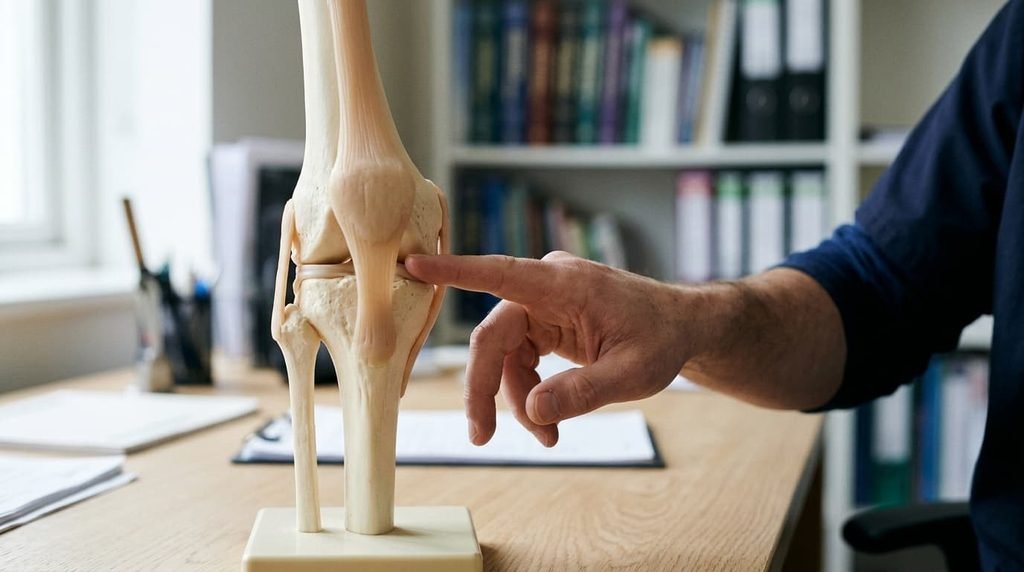
Symptoms follow a recognisable pattern. Pain stays on the inner knee and builds gradually over days or weeks. Rest usually eases it, and activity brings it back.
Pes Anserine Bursitis Pain Location Explained
The classic tender spot sits on the inside of the knee, about 5 to 7 cm below the joint line. Pressing on this point often reproduces the pain. Inner knee pain below the joint is the signature complaint. Pain at the front of the kneecap or behind the knee usually points to another cause.
Everyday Movements That Set Off Goose Foot Knee Pain
Stairs top the list of triggers. Standing up from a low chair comes a close second. Kneeling, getting out of a car, and brisk walking can also provoke discomfort. Some people develop a fear of movement after repeated flare-ups. Complete avoidance rarely helps, because the surrounding muscles weaken. Gentle, guided activity usually serves the knee better.
Swelling, Warmth and Redness
Mild swelling and warmth can appear over the tender spot. Redness is less common but possible. Stiffness may limit how far the knee bends. A knee that turns hot, red and rapidly swollen needs urgent medical help. Fever or an inability to bear weight also demands same-day assessment.
Pes Anserine Bursitis Causes
Overuse accounts for most cases. Friction builds when the same tendons pull repeatedly across the bursa. Several factors increase that friction.
Repetitive Sport and Training Errors
Running, football and tennis all load the inner knee repeatedly. Sudden jumps in mileage or intensity add stress. Skipping warm-ups leaves tendons tight. The bursa pays the bill for every training shortcut. Athletes, particularly runners, form the group most often affected.
Tight Hamstrings and Knee Alignment
Tight hamstrings tug harder on the goosefoot tendon. Knock knees, known as valgus alignment, increase pressure on the inner knee. A duck-footed walking pattern does the same. A previous medial collateral ligament injury may also raise the risk. Wedge insoles and regular stretching address these mechanical factors.
Pes Anserine Bursitis Risk Factors
Certain groups develop the condition more often. Age, sex and existing health conditions all play a part.
Osteoarthritis and Body Weight
Knee osteoarthritis commonly coexists with bursal pain. Extra body weight increases the load on the inner knee with every step. Weight management can therefore ease pressure on the bursa. A careful clinical assessment separates joint pain from bursal pain, since the two overlap.
Pes Anserine Bursitis: Diabetes and Other Profiles
Diabetes appears on the list of recognised risks. Females and people aged 40 to 60 also feature more often in clinical reports. Anyone in these groups with persistent inner knee pain should seek assessment early.
Other Conditions That Mimic Inner Knee Pain
Pes anserine bursitis shares its symptoms with several knee problems. Sorting them apart early prevents wasted treatment.
Stress Fracture and Ligament Injury
A stress fracture of the upper shin can imitate the same symptoms. A medial collateral ligament sprain also hurts on the inner knee. X-rays help exclude a bone injury. Examination of ligament stability separates the others.
Meniscus and Arthritis Pain
Meniscus problems usually cause catching, locking or pain on twisting. Osteoarthritis tends to produce stiffness after rest and pain across the joint line. Bursal pain stays more localised below the joint. Overlap is common, so one diagnosis does not always exclude another.
Why Misdiagnosis Happens
Pes anserine bursitis is easy to overlook because osteoarthritis and bursal pain overlap so often. A scan that shows arthritis does not prove the arthritis causes the pain. Careful pressure over the tender spot below the joint often settles the question. Good diagnosis depends on listening to the knee, not just reading the scan. An accurate label prevents months of the wrong treatment.
Pes Anserine Bursitis Diagnosis in the Clinic

Diagnosis starts with a conversation and a hands-on examination. Imaging comes second and only when it adds useful information.
History and Physical Examination
The clinician asks about pain location, triggers and recent changes in activity. Pressure over the tender spot below the joint reproduces the pain. Hamstring tightness, knee alignment and joint movement all get checked. Tests for ligament stability and meniscus problems follow. Rarely, fluid from the bursa goes for laboratory analysis.
X-ray, Ultrasound and MRI Findings
X-rays cannot show a bursa, but they rule out a fracture or advanced arthritis. Ultrasound can show fluid and guide an injection. An MRI of pes anserine bursitis shows fluid in the bursa and checks cartilage, ligaments and menisci. An MRI scan is not needed for every patient.
Pes Anserine Bursitis Treatment Options
Pes anserine bursitis rarely needs surgery. Treatment follows a stepwise ladder, starting with the simplest measures.
Rest, Ice and Pain Relief
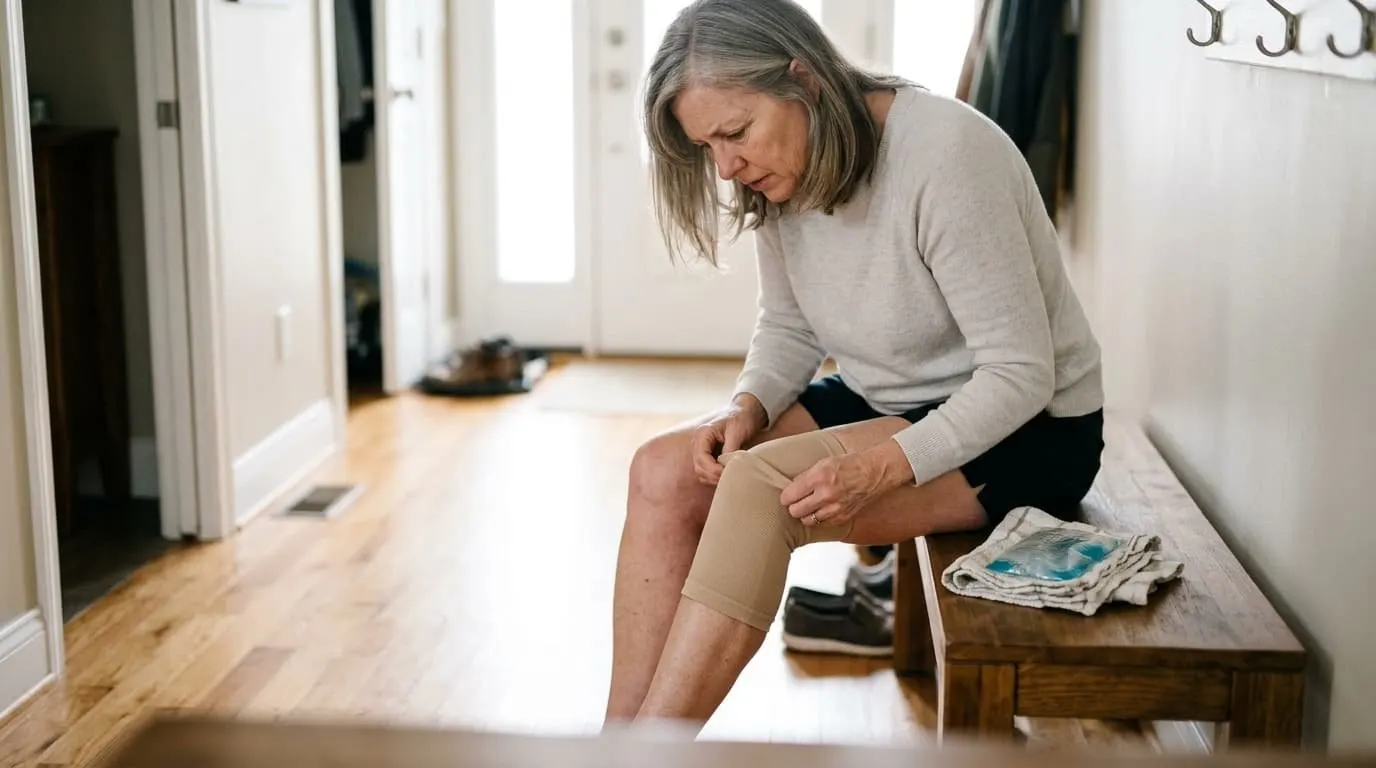
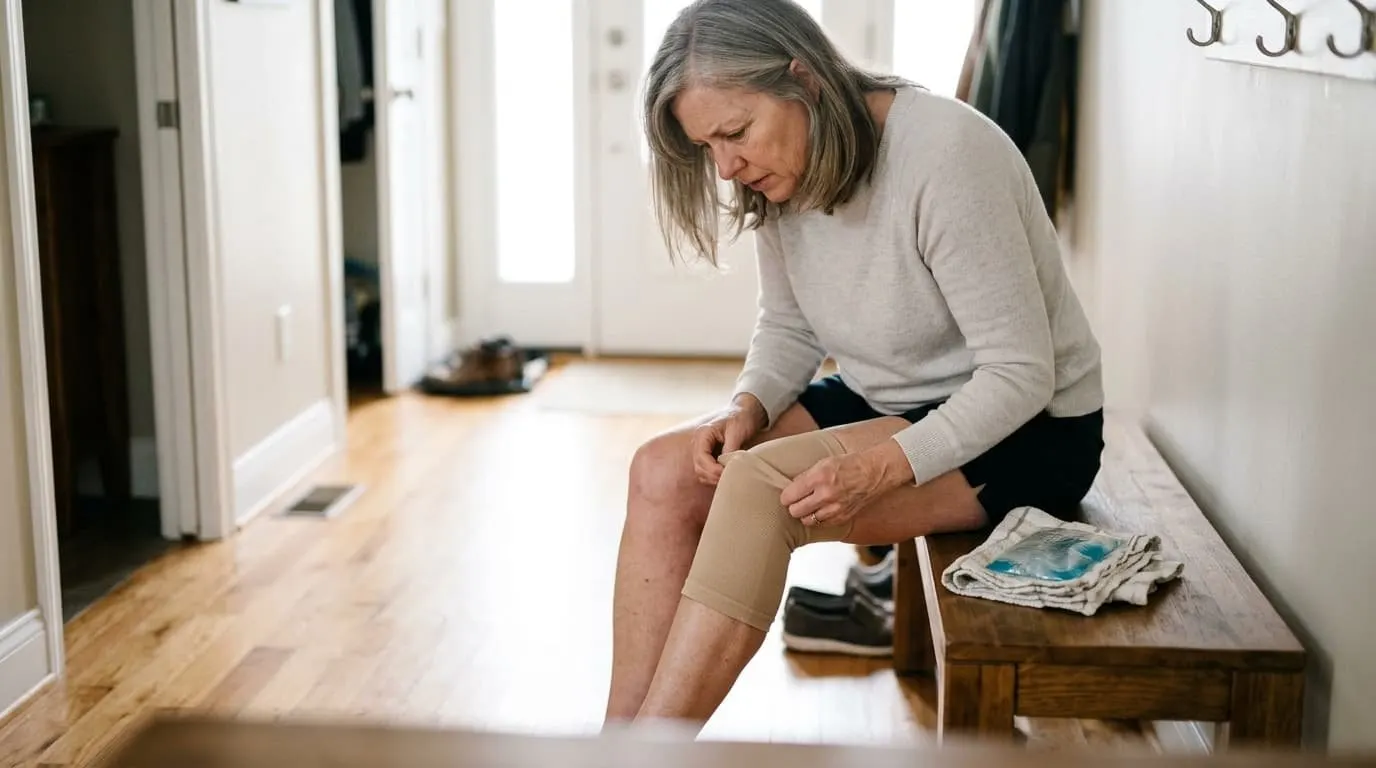
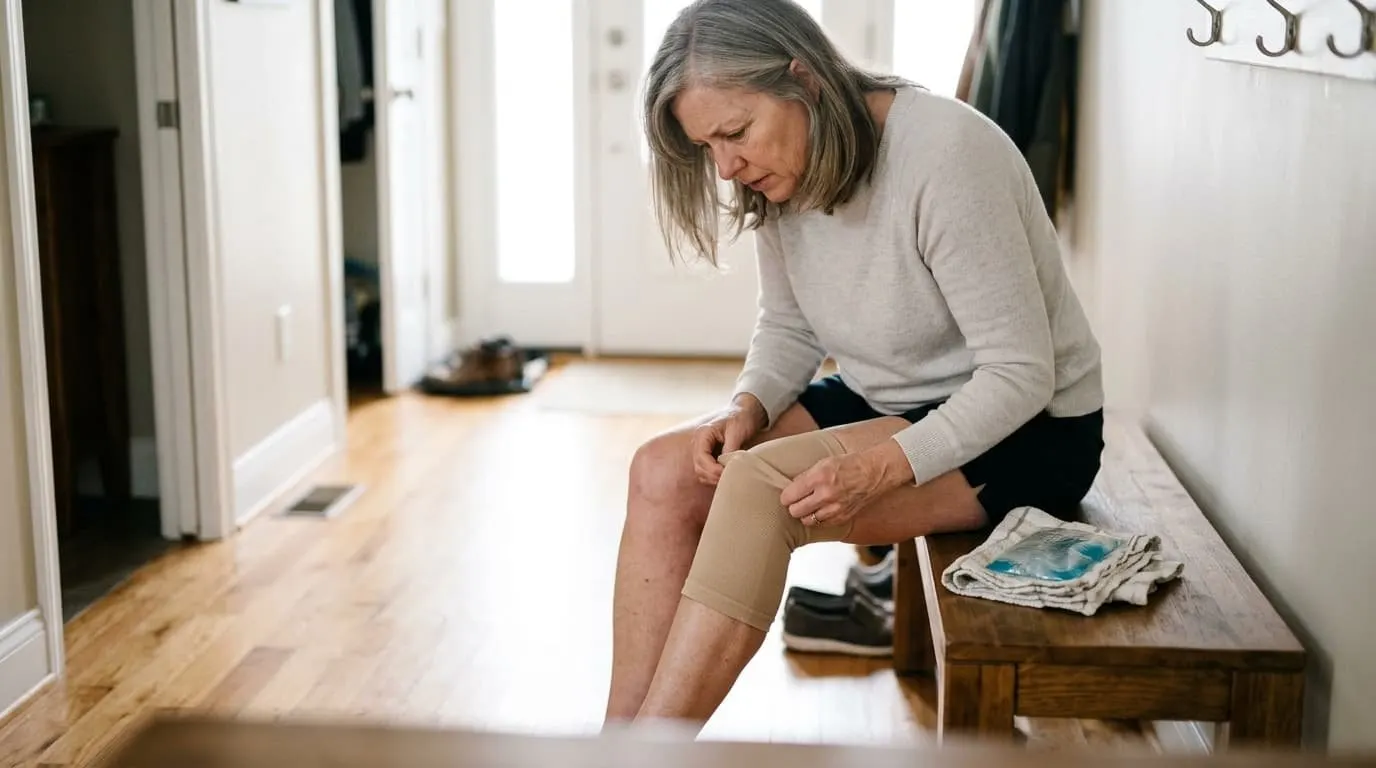
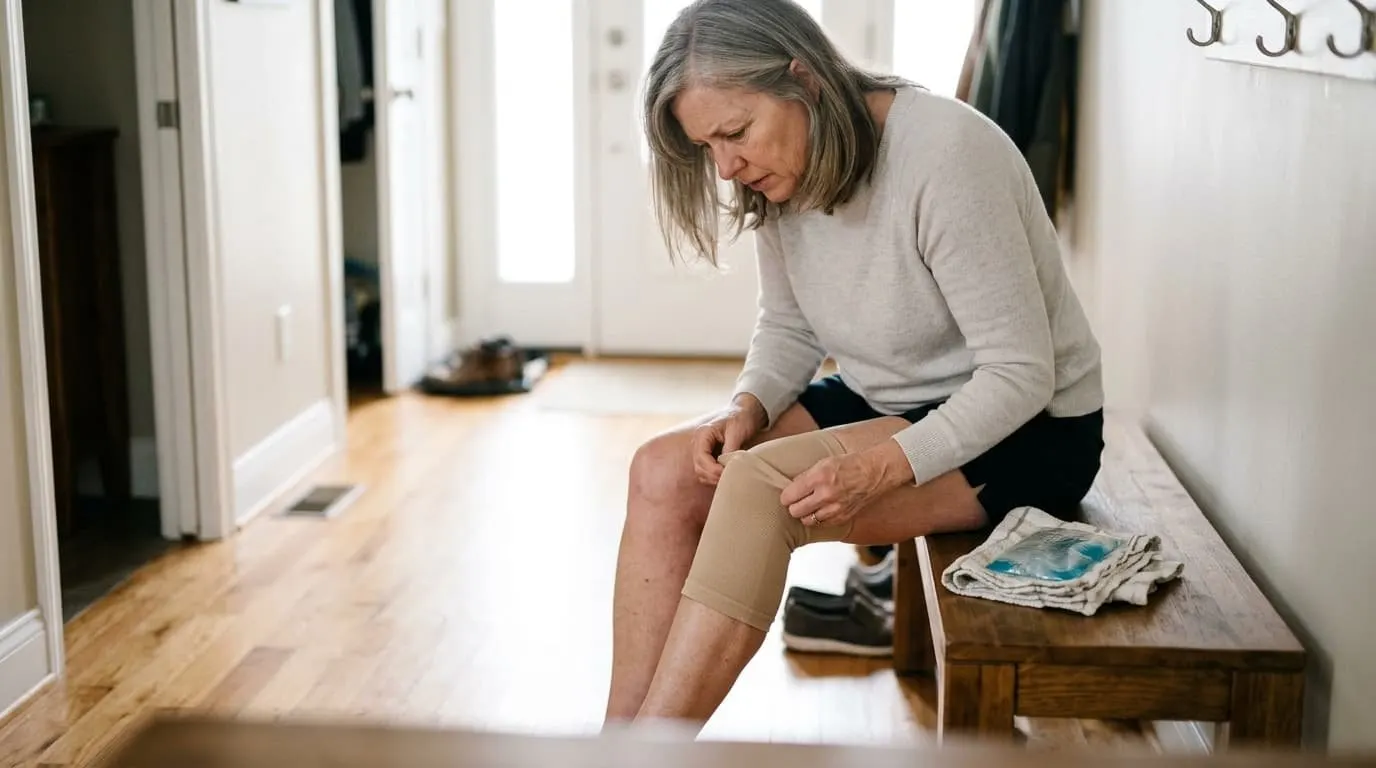
Rest from aggravating activity gives the bursa time to settle. Ice packs applied three to four times daily reduce swelling and soreness. For pes anserine bursitis, NSAIDs such as ibuprofen can ease pain and inflammation for short periods. Anyone with stomach, kidney or heart conditions should check with a pharmacist or GP first. Many people find that drug-free options work well alongside medication.
Physiotherapy, Insoles and Kinesiology Tape
Physiotherapy targets hamstring flexibility and thigh and hip strength. Wedge insoles correct alignment problems that overload the inner knee. Pes anserine bursitis kinesiology tape may offer short-term comfort when applied correctly. A physiotherapist can demonstrate the technique. Ultrasound therapy sometimes forms part of the programme.
Sleeping Position and Compression
Night pain often comes from the knees pressing together. A pillow between the legs reduces pressure on the sore spot. For pes anserine bursitis, sleeping position choices matter more than expected. Side sleeping with the knees slightly apart works well for many people. A light elastic bandage during the day can support the knee.
Steroid Injection and Other Options
Pes anserine bursitis steroid injection delivers anti-inflammatory medicine directly into the bursa. Providers reserve it for cases that resist simpler measures. Platelet-rich plasma injections are another option some providers use. Surgery to remove the bursa is rare and applies only to severe, stubborn cases. Persistent symptoms after several months warrant a specialist review.
Gentle Stretches and Strength Work for the Inner Knee
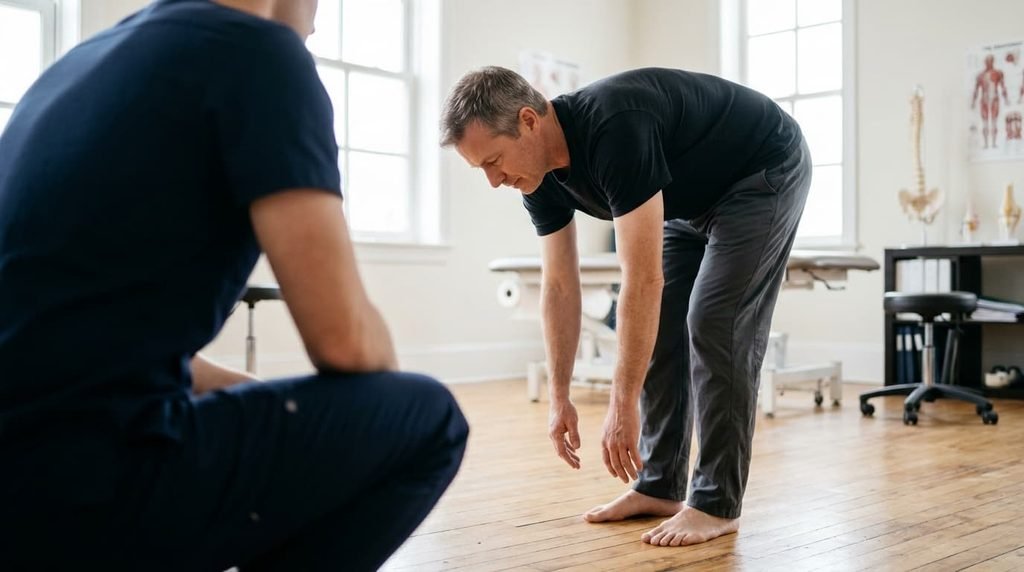
Targeted exercise lets the bursa settle and protects it afterwards. A physiotherapist should confirm the exact programme, because the wrong exercise can irritate the area further. Discomfort should stay mild and fade within an hour.
Hamstring and Inner Thigh Stretches
A seated or lying hamstring stretch takes tension off the tendon group. Hold each stretch for 20 to 30 seconds. Repeat two or three times daily. The inner thigh muscles respond well to a gentle seated butterfly stretch. A stretch should feel firm, never sharp. Any stabbing sensation means the stretch should stop.
Hip and Thigh Strengthening
Strong hip and thigh muscles share the load that the inner knee otherwise carries alone. Straight leg raises, glute bridges and side-lying leg lifts suit most beginners. Start with 8 to 10 repetitions and build up slowly over several weeks. Low-impact options such as swimming often feel kinder than running during a flare-up. Strength is the cheapest insurance policy the knee can buy.
Common Mistakes That Slow Healing
Small habits often decide how fast the inner knee recovers. Most mistakes come from impatience rather than carelessness.
Pushing Through Sharp Pain
Training through sharp inner knee pain keeps the bursa inflamed. A short pause costs far less than a long layoff. Pain that rises during activity and lingers overnight signals a need to back off.
Skipping the Warm-Up
Cold, tight tendons drag across the bursa with every step. Five minutes of gentle movement before sport makes a real difference. A warm-up is dull, but dull is cheap.
Relying on Tablets Alone
Painkillers mask discomfort without fixing the mechanics. Tight hamstrings and weak hips still need attention. Massage for knee pain can ease tension in surrounding muscles when applied safely. Firm pressure directly over a swollen, tender bursa is best avoided.
Recovery Time and Prevention
Pes anserine bursitis responds well to consistent care. Patience matters, because tendons and bursae heal slowly.
How Long Does Pes Anserine Bursitis Last?
Most people heal in about six to eight weeks. Severe cases take longer. Pes anserine bursitis recovery time shortens when rest begins early, and treatment stays consistent. Symptoms that persist for a few months call for a follow-up review.
Returning to Activity Gradually
Desk workers can often return to work straight away. Physically demanding jobs may need a few weeks off. Walking on flat ground usually returns first, followed by stairs and then sport. A runner with pes anserine bursitis should restart with short, flat sessions. A sudden jump back to full training invites a relapse. Slow and steady beats fast and sorry.
Preventing a Flare-Up
Regular hamstring stretching keeps the tendons relaxed. Thigh and hip strengthening shares the load across the knee. Gradual increases in training protect the bursa. Healthy weight management reduces pressure on the inner knee. Loss of muscle around the knee also raises joint load, so regular strength work stays worthwhile in later life.
When Knee Osteoarthritis Shares the Same Knee
Pes anserine bursitis and osteoarthritis often coexist. Osteoarthritis affects the joint itself, while bursitis affects a soft-tissue cushion outside it.
Arthrosamid and Bursal Pain
A specialist assessment identifies which condition drives the pain. Video explainers on knee osteoarthritis and synovitis are available on the Dr SNA Clinic YouTube channel. Arthrosamid injection is a hydrogel injection intended for knee osteoarthritis, not for bursitis. Suitability depends on strict candidate selection and a full assessment. Anyone with both conditions benefits from a plan that addresses each pain source.
Frequently Asked Questions
Can pes anserine bursitis go away on its own?
Mild cases often settle with rest and activity changes over several weeks. Ignoring aggravating movements slows healing. Pain that lasts beyond a few months needs a professional review. Early care usually shortens the course.
How is goose foot knee pain different from knee arthritis?
Goosefoot pain sits on the inner side below the joint and eases with rest. Arthritis pain spreads across the joint and often brings morning stiffness. Both conditions can exist together. Examination and imaging tell them apart.
Which sleeping position works best for pes anserine bursitis?
A pillow between the knees stops the inner surfaces from pressing together. Side sleeping with the knees slightly apart reduces night pain. Some people prefer lying on the back with a small pillow under the knees.
Is diabetes linked with pes anserine bursitis?
Diabetes appears among the recognised risks, alongside osteoarthritis and higher body weight. People with diabetes and persistent inner knee pain should seek assessment early. Good blood sugar control supports overall healing. A clinician can adjust advice to each person.
When should a specialist review the knee?
Pain lasting beyond a few months despite home care deserves specialist review. A hot, red or rapidly swelling knee needs urgent care. Inability to bear weight also needs prompt assessment. Imaging or an injection may follow.
Pes anserine bursitis is an irritated cushion on the inner knee, not a mysterious knee failure. Pain below the joint, triggered by stairs and kneeling, points to the diagnosis. Rest, ice, stretching, insoles and graded activity settle most cases within about six to eight weeks. Persistent pain deserves a proper assessment to rule out other knee problems.
Mr Syed Nadeem Abbas is a specialist in non-surgical knee and joint pain. Book a private knee assessment to find the true source of the pain.
Read more: Stiff joints can be caused by inactivity, arthritis, and gout
Read more: A Knee MRI Scan Reveals Soft Tissue Damage That Plain Films Cannot Show