
✅ Medically reviewed
Tricompartmental osteoarthritis knee damage means cartilage wear has reached every area of the joint. The knee has three compartments: the inner side, the outer side, and the area behind the kneecap. Most cases begin on the inner side, and some then spread to the other two zones. Pain, stiffness, and shaky confidence on stairs usually follow. Doctors diagnose the pattern through a hands-on assessment, supported by X-rays and sometimes MRI. Treatment starts with exercise, weight control, and pain relief. Injections suit some patients, and knee replacement suits those with severe symptoms. Knowing the causes, symptoms, and treatment choices helps patients take part in decisions about their care.
What Is Tricompartmental Osteoarthritis and How Does It Affect the Knee?
Osteoarthritis is a long-term joint condition. Cartilage thins, the joint lining becomes irritated, and movement starts to hurt. In the tricompartmental pattern, that process reaches every part of the knee. Think of a house where every room needs repairs, and the kitchen is just one of them.
The Three Compartments of the Knee
The knee is a hinge joint where the thigh bone, shin bone, and kneecap meet. Doctors divide it into three working zones. Each zone can wear alone or alongside the others. Tricompartmental osteoarthritis knee wear involves all three zones at once.
Medial Compartment
The medial zone sits on the inner side of the knee. Medial compartment knee osteoarthritis is the most common pattern, because the inner knee carries most body weight.
Lateral Compartment
The lateral zone sits on the outer side, where the thigh bone meets the shin bone. Wear in the lateral femoral tibial compartment is less common but equally painful.
Patellofemoral Compartment
This zone sits at the front, where the kneecap glides over the thigh bone. Wear in the patellofemoral compartment of the knee often hurts on stairs and when rising from a chair.
How Unicompartmental Disease Differs
Unicompartmental osteoarthritis knee disease affects a single zone, usually the inner side. Treatment can then focus on that one area. Tricompartmental knee osteoarthritis leaves no untouched zone, so options narrow and care plans widen. A shared plan between patient, GP, and specialist becomes more important.
Tricompartmental Osteoarthritis Causes and Risk Factors
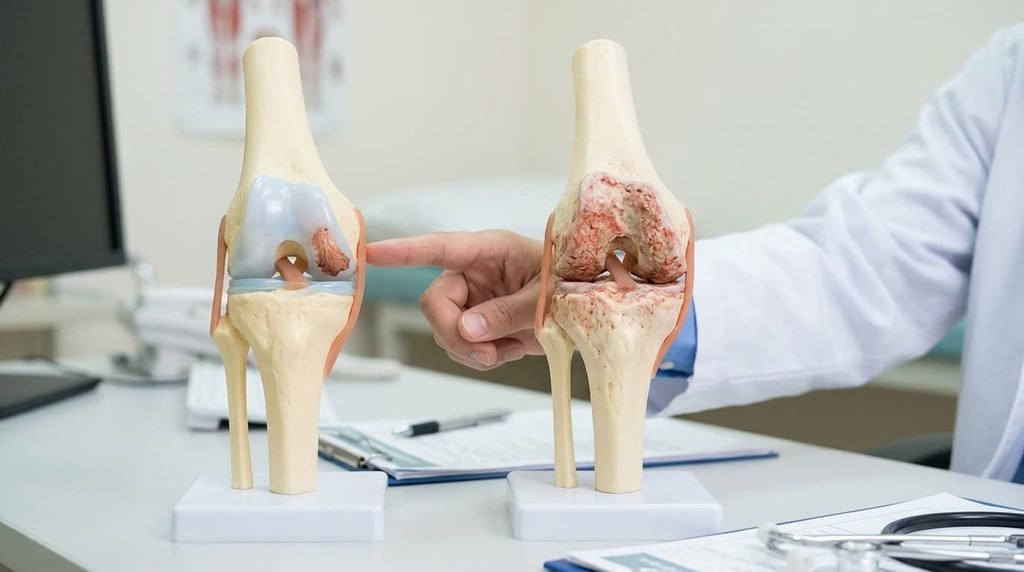
No single trigger explains why wear spreads across the whole knee. Several factors tend to stack up over the years. Tricompartmental osteoarthritis knee changes therefore rarely have one clear culprit.
Why Wear Spreads Across the Joint
Cartilage loss in one zone changes how the knee carries weight. The remaining zones then take extra load. The joint lining reacts with inflammation, which irritates healthy cartilage nearby. Over time, a cycle of strain and swelling keeps the damage moving.
Age, Sex, and Family History
Cartilage changes with age, so risk climbs steadily after the mid-forties. Women develop knee osteoarthritis more often than men in later life. A family history of osteoarthritis also raises the odds.
Body Weight and Muscle Strength
Extra body weight increases the load the knee carries with every step. Weak thigh muscles reduce shock absorption. Muscle loss often develops alongside knee wear in later life.
Past Injury and Joint Alignment
A previous fracture, ligament tear, or meniscus injury can speed up wear. Bow-legged or knock-kneed alignment shifts load unevenly across the joint. Some research also links smoking with higher risk.
Tricompartmental Osteoarthritis Symptoms to Recognise
Pain is the main complaint, and it usually builds slowly. Early symptoms come and go, which makes them easy to dismiss. Stairs turn into a negotiation with the bannister. Tricompartmental osteoarthritis knee pain often worsens as cartilage thins further.
Common Signs in Daily Life
- Knee pain that worsens with activity and eases with rest
- Stiffness after sitting or first thing in the morning, usually settling within an hour
- Swelling or a warm, puffy feeling around the joint
- Grinding, clicking, or popping sounds, known as crepitus
- Trouble fully bending or straightening the leg
- Weakness or buckling, especially on stairs
- A bow-legged or knock-kneed shape
How Symptoms Change Over Time
Early disease brings mild, occasional aches after long walks. Mid-stage disease adds stiffness, swelling, and clear limits on distance. Advanced disease can cause pain at rest and at night. Progress is rarely a straight line, and good weeks often follow bad ones.
Loss of Proprioception and Balance
Proprioception is the sense that tells the brain where a joint sits in space. Specialists suspect that loss of proprioception causes knee problems to appear more often when all three zones wear. This remains unproven. A knee that misjudges the kerb causes more trips and stumbles. Educational videos on the Dr SNA Clinic YouTube channel explain why knee osteoarthritis hurts in plain language.
Bone-on-Bone Knee Pain in Advanced Disease
Patients often describe advanced wear as bone-on-bone knee pain. The phrase is shorthand for severe cartilage thinning and a narrowed joint space. Pain may then appear at rest and at night. Not every knee that looks severe on X-ray hurts equally.
How Is Tricompartmental Osteoarthritis Diagnosed?
Diagnosis starts with a conversation and a physical examination. Imaging then confirms which zones are affected. Tricompartmental osteoarthritis knee diagnosis rarely depends on a scan alone.
Clinical Assessment Comes First
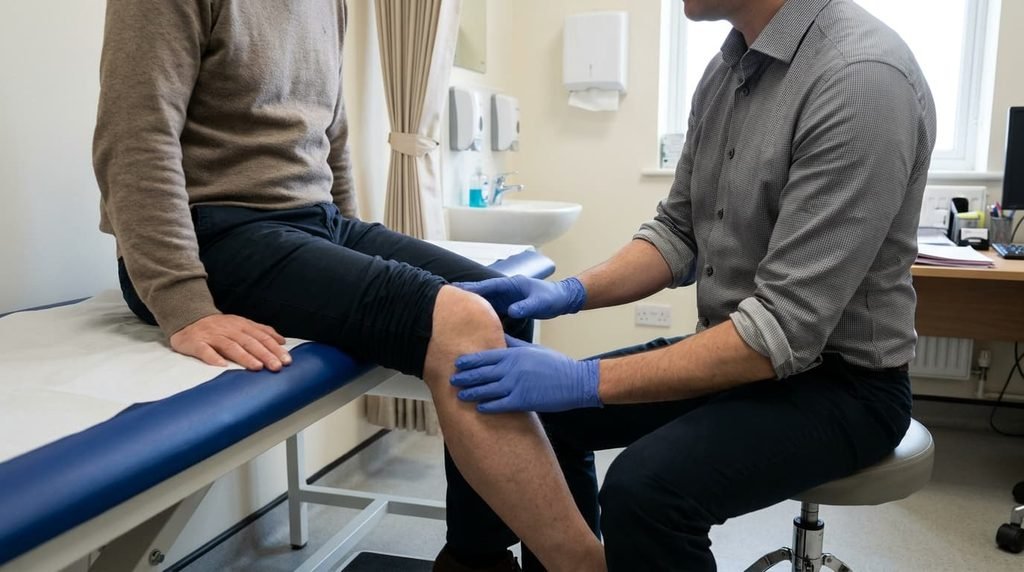
The doctor asks about pain patterns, stiffness, past injuries, and family history. A hands-on examination tests movement, tenderness, and alignment. In typical cases, UK guidance supports diagnosing osteoarthritis from symptoms alone in adults over 45. A thorough clinical assessment also checks walking pattern and muscle strength.
What X-Rays and MRI Scans Show
Standing X-rays show joint space narrowing and bone spurs. Early disease can look mild on X-ray despite real symptoms. Doctors reserve MRI for unclear cases, because it shows ligaments, menisci, and cartilage in detail.
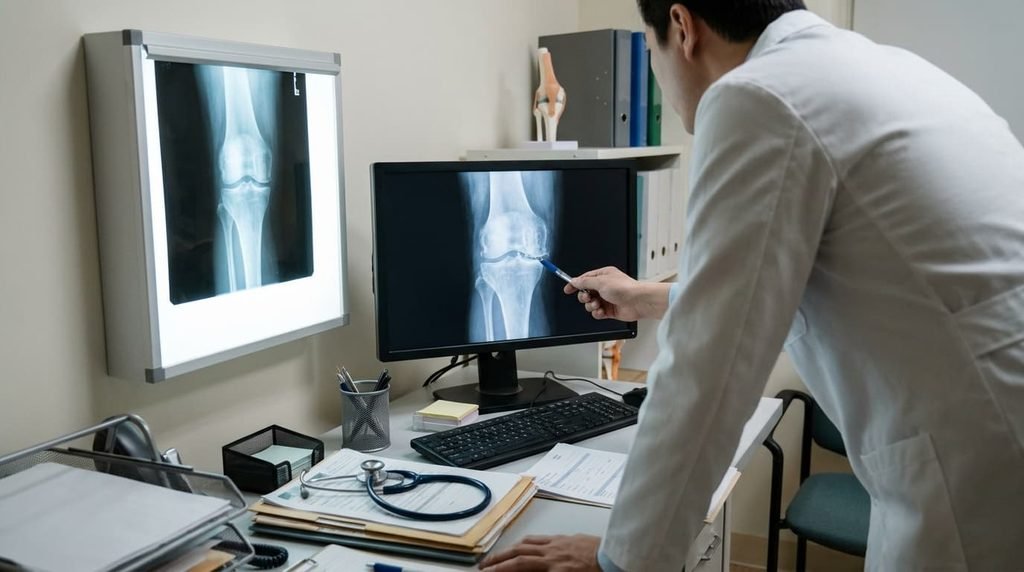
When Scans and Symptoms Disagree
Some patients show severe X-ray changes yet report mild pain. Others have constant pain with modest scan findings. Doctors therefore treat the person, not the picture. Symptoms and daily function guide every treatment choice.
Blood Tests and Other Conditions
No blood test confirms osteoarthritis. Doctors sometimes order blood tests to rule out inflammatory arthritis or gout. Other causes of knee pain, such as hip problems, also need checking.
Questions Worth Asking at the First Appointment
- Which compartments show wear, and how severe is it?
- Which non-surgical options suit the current stage?
- What warning signs should trigger an earlier review?
- How often should progress be checked?
Is Tricompartmental Osteoarthritis Serious?
The condition progresses over time, but it does not threaten life. Its seriousness lies in lost mobility, poor sleep, and reduced independence.
Outlook and Daily Impact
Progress varies between people. Some patients stay stable for years, while others notice steady decline. Tricompartmental osteoarthritis knee disease responds best to early, active management. Good care slows symptoms, but it cannot restore worn cartilage.
Effects on Sleep, Mood, and Independence
Night pain disrupts sleep, and poor sleep lowers the next day’s pain threshold. Reduced activity can also affect mood and social life. Walking aids and a clear pacing plan can help many patients maintain independence.
Common Myths That Delay Care
Several myths keep patients away from useful treatment.
Myth: rest cures the knee. Long rest weakens muscles and stiffens the joint. Gentle, regular movement usually helps more.
Myth: exercise wears the knee out faster. Controlled exercise strengthens the muscles that protect the joint. Fear of movement often keeps patients inactive, and inactivity worsens symptoms.
Myth: severe X-rays always mean surgery. Many patients with advanced changes cope well with non-surgical care. Tricompartmental osteoarthritis knee disease does not mean the joint must stay still.
Warning Signs That Need Urgent Care
A hot, red, rapidly swelling knee needs same-day medical review. So do fever, feeling unwell, or visible deformity of the joint. Inability to bear weight also calls for urgent help.
Daily Habits for Tricompartmental Osteoarthritis of the Knee
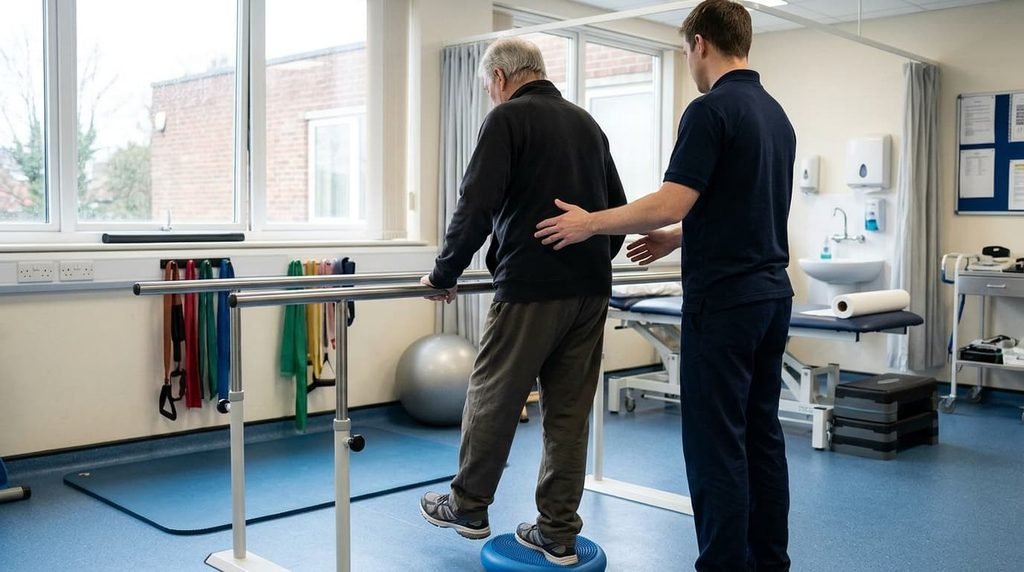
Daily habits shape pain levels more than most patients expect. Small changes add up over weeks.
Low-Impact Exercise
Swimming, cycling, and walking on flat ground keep the joint moving without heavy impact. Strong thigh and hip muscles share the load with the knee. A physiotherapist can set safe starting levels and adjust them as symptoms change.
Weight, Pacing, and Home Relief
Even modest weight loss reduces strain on every compartment. Short bursts of activity with rest breaks protect a sore knee. Ice and heat packs have loyal fans. They ease soreness but do not change the underlying wear. Many patients gain drug-free knee pain relief when simple habits work together.
Sleep and Night Pain
A pillow between the knees keeps the joint aligned during side sleeping. Gentle movement before bed reduces stiffness. A warm bath may also ease aching before sleep.
Walking Aids and Footwear
A walking stick, held in the hand opposite the sore knee, reduces joint load. Cushioned, supportive shoes absorb shock on hard pavements. Worn soles change alignment, so regular replacement helps.
Tricompartmental Osteoarthritis Treatment Options in the UK
No treatment removes the condition. Good care reduces pain, protects movement, and delays surgery where possible. Tricompartmental osteoarthritis knee care works best as a stepped plan.
Medicines and Physiotherapy
Topical anti-inflammatory gels are often the first medicine tried for knee pain. Paracetamol and oral anti-inflammatories help some patients, but older adults need medical advice first. A physiotherapist builds a strengthening plan and checks walking patterns. Regular review keeps the plan matched to symptoms.
Balance and Gait Training
Balance exercises retrain the knee’s sense of position. Gait training corrects uneven stepping that overloads one side. Short, regular sessions at home work better than rare long ones. Physiotherapists often combine both with thigh and hip strengthening.
Managing Flare-Ups
Flare-ups bring swelling, heat, and sharp pain after overuse. Patients can rest the knee for a day or two, then return to gentle movement. Topical gels and cold packs may calm the swelling. A flare that lasts more than a few days needs medical review.
Injection Options
Corticosteroid injections can ease flare-ups for a short period. Hyaluronic acid injections remain available privately, although evidence for them is mixed. Arthrosamid is a polyacrylamide hydrogel injected under ultrasound guidance. It is designed to stay in the joint and does not reverse joint damage. Doctors check the stage and pattern of wear first, because not every patient is suitable for Arthrosamid injection.
Does a Knee Brace Help Tricompartmental Osteoarthritis?
Unloader braces shift pressure away from one compartment. That design suits single-zone wear. The benefit is far less certain when every zone is affected. A tricompartmental osteoarthritis brace is therefore a decision for clinician advice, not guesswork.
Knee Replacement for Osteoarthritis: When Surgery Becomes an Option
Surgery is reserved for severe symptoms that resist other care. Total knee replacement treats all three compartments in one operation. Tricompartmental knee osteoarthritis is therefore a typical reason for considering this surgery.
Signs That Surgery May Be Worth Discussing
Patients often ask when to get knee replacement osteoarthritis surgery. No single date applies. The decision rests on pain, function, and the results of earlier treatment.
- Constant pain that disturbs sleep
- Walking limited to short distances
- Daily tasks, such as dressing or shopping, become hard
- Exercise, medicines, and injections no longer help enough
Surgeons also weigh age, general health, and weight. BMI shapes surgery eligibility for many UK patients.
Options to Weigh Before Surgery
A referral to a musculoskeletal service can add structured exercise and education. Weight management programmes reduce surgical risk and ease symptoms. A specialist may also review newer non-surgical treatments for suitable patients. Each step gives the knee a fair chance before an operation.
What Recovery Involves
Recovery takes months, not weeks. Physiotherapy starts soon after the operation and continues for a long period. Most patients walk with support at first, then regain independence step by step. Steady effort during rehabilitation shapes the final result.
Frequently Asked Questions
Can tricompartmental arthritis knee symptoms be managed without surgery?
Yes, many patients manage well without an operation. Exercise, weight control, topical medicines, and injections reduce pain for months or years in some cases. Surgery becomes an option only when these measures stop working.
How is tricompartmental osteoarthritis diagnosed in clinic?
Doctors start with a history and a physical examination. X-rays then show narrowing and bone spurs. A knee MRI scan adds detail when soft tissue damage is suspected.
Is tricompartmental osteoarthritis serious?
The condition is not life-threatening, but it can limit mobility. Pain, poor sleep, and reduced confidence affect daily life. Early care helps protect function.
Does a knee brace help tricompartmental osteoarthritis?
Evidence is limited for multi-zone wear. Unloader braces work best when one compartment is affected. A clinician should advise before any purchase.
When to get knee replacement osteoarthritis surgery?
Surgery is considered when pain is constant and daily tasks become difficult. Non-surgical care must have been tried first. A specialist reviews age, health, and weight before deciding.
Tricompartmental osteoarthritis knee disease affects every zone of the joint, yet it remains manageable for many patients. Early diagnosis, steady exercise, weight control, and the right mix of medical treatment protect movement. Surgery remains a sound option once other care stops helping.
Mr Syed Nadeem Abbas is a non-surgical knee and joint pain specialist. Book a consultation for a full knee assessment.
Read more: Pes Anserine Bursitis Can Cause Pain on the Inside of the Knee
Read more: An Arthrosamid Clinic London Patients Can Trust Passes Five Safety Checks