
✅ Medically reviewed
Arthrosamid and Baker’s cyst can occur in the same knee. That overlap raises a fair question for patients with osteoarthritis. Arthrosamid is a non-biodegradable hydrogel that cushions an arthritic knee joint. A Baker’s cyst is a fluid-filled pouch that bulges behind the knee. Both problems stem from a stressed joint, so they often arrive as a pair.
A cyst behind the knee does not automatically close the door on treatment. Suitability depends on the cyst, the joint and general health. A specialist makes that call after an examination and a scan. Knees rarely explain themselves, so assessment has to do the talking.
How a Baker’s Cyst Forms in a Knee With Osteoarthritis
A Baker’s cyst is a sign of trouble inside the joint, not a stand-alone disease. Osteoarthritis sits behind most adult cases. That link explains why cysts and hydrogel treatment so often share a knee.
Synovial Fluid and the Popliteal Pouch
The knee makes synovial fluid to keep movement smooth. An irritated joint makes more of it than needed. The surplus pushes backwards into a small pouch behind the knee. That pouch swells into a cyst, also called a popliteal cyst. The cyst is the overflow, and the arthritis is the leaking tap.
Clinicians sometimes file this pattern under popliteal cyst knee osteoarthritis, because joint wear drives the swelling.
Baker’s Cyst and Arthritis: The Usual Link
Baker’s cyst and arthritis appear together more often than chance would explain. Cartilage wear inflames the joint lining. An inflamed lining makes extra fluid. Long-term inflammation from conditions such as rheumatoid arthritis follows the same pattern. The usual triggers behind a cyst include wear, meniscus tears and repeated strain.
Baker’s Cyst Symptoms Worth Knowing
Symptoms vary with size. A small cyst may cause nothing at all. A larger one creates tightness, a visible bulge and a dull ache behind the knee. Full bending often feels awkward. Swelling that spreads into the calf needs prompt medical review.
How Arthrosamid Works in a Knee With Osteoarthritis
Arthrosamid is a single injection given into the knee joint under ultrasound guidance. It aims to ease the pain and stiffness of osteoarthritis. The gel does not drain a cyst, which matters for planning.
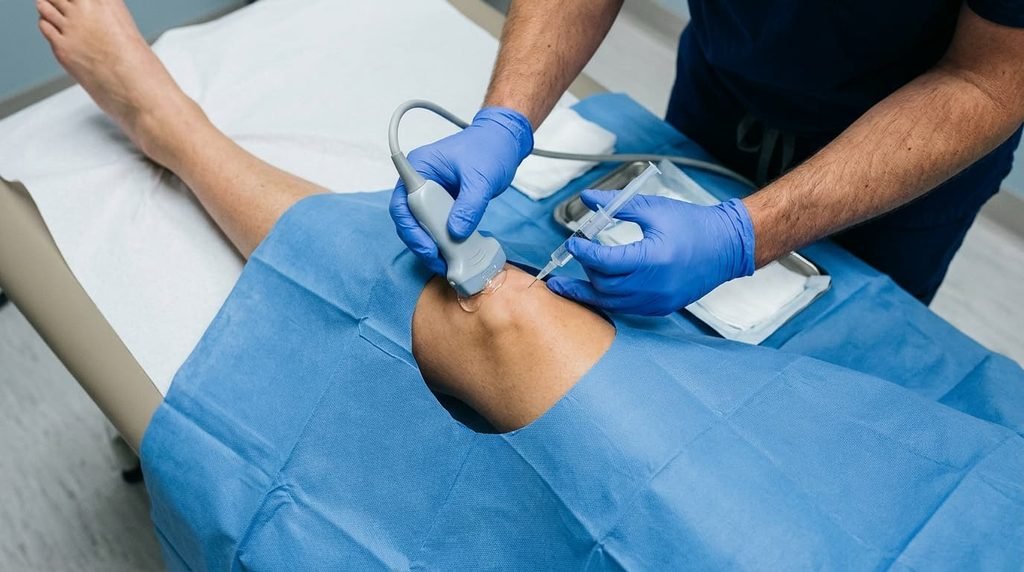
What the Hydrogel Does Inside the Joint
The gel contains mostly water and a small share of cross-linked polymer. The body does not absorb it. The gel instead integrates with the joint lining and adds cushioning. The Arthrosamid injection in London itself takes around fifteen minutes. Many patients notice improvement within four weeks, and full benefit can take up to twelve weeks. Studies report relief lasting up to three years in some patients.
A hydrogel injection differs from hyaluronic acid because the body absorbs hyaluronic acid. That limits its relief to around four to six months.
Who Is Suitable for Arthrosamid
Moderate to severe knee osteoarthritis is the usual starting point. Patients typically try lifestyle changes, medication or physiotherapy first. Younger patients who want to delay a knee replacement may also qualify. A consultant confirms suitability after an examination, a history and imaging. The same process applies when a cyst is present.
Recovery After the Hydrogel Is Placed
Most patients walk straight away and manage normal daily activity. Strenuous exercise and heavy lifting should wait a few days. Many providers advise against driving for 24 hours. A short rest period lets the joint settle. Patients with a cyst follow the same advice and report any new lump promptly.
Can Arthrosamid and Baker’s Cyst Be Managed in the Same Knee?
The short answer is that it depends on the knee. One large UK hospital group publishes an exclusion list. It focuses on bleeding problems, infection and certain health conditions. A cyst alone does not appear on it. Individual assessment still decides every case.
Why a Cyst Changes the Assessment
A cyst signals active fluid production inside the joint. A clinician therefore wants to know its size and how often it returns. Ultrasound shows the size, the type and the link to the joint. Simple and complex cysts behave differently after treatment. Planning Arthrosamid and Baker’s cyst care together starts with that scan.
What Research on Baker’s Cyst Knee Osteoarthritis Shows

Research on Baker’s cyst and knee osteoarthritis followed 130 patients with osteoarthritis in one knee. Thirty-three of them also had a cyst. Both groups improved after conservative treatment, including injections and fluid withdrawal. At six months, however, scores held steady without a cyst and slipped with one. The study did not test Arthrosamid, but it shows why a cyst deserves attention.
What Patients Report
Patient forums carry accounts of Arthrosamid Baker’s cyst experiences. One patient described cysts that remained but troubled the knee less. Such accounts are anecdotes, not evidence. They still show how varied results can be.
Questions Worth Raising at the Consultation
A few details sharpen the assessment. Patients benefit from noting when the lump first appeared and whether it changes through the day. Previous drainage or injections matter. So do current medicines, especially blood thinners. A clear history helps the clinician choose the order of treatment.
Arthrosamid Contraindications and Safety Checks Before Treatment
Safety checks come before any gel enters a joint. These checks apply to every patient, with or without a cyst. A cyst simply adds one more item to review.
Conditions That May Rule Treatment Out
A large UK hospital group lists several situations that call for caution or exclusion:
- Bleeding disorders such as haemophilia
- Blood-thinning medicines
- Infection in or around the knee
- Pregnancy or breastfeeding
- Knee arthroscopy within the past six months
- Poorly controlled diabetes
- Certain autoimmune conditions
Lists differ slightly between providers, so a consultant reviews each personal history. Inflammatory joint disease such as rheumatoid arthritis also matters, because it can keep fluid production high.
Scans That Guide the Decision
X-rays show how far osteoarthritis has progressed. Ultrasound shows the cyst. MRI adds detail when a meniscus tear is suspected. A torn meniscus can keep the swelling going, so it needs its own plan. Guesswork has no place in a knee, and scan findings keep it out.
Treating the Cyst First: Aspiration and Steroid Options
Some knees need the cyst settled before any gel goes in. Others need no cyst treatment at all. Specialists decide the order case by case, particularly when Arthrosamid and Baker’s cyst share a knee.
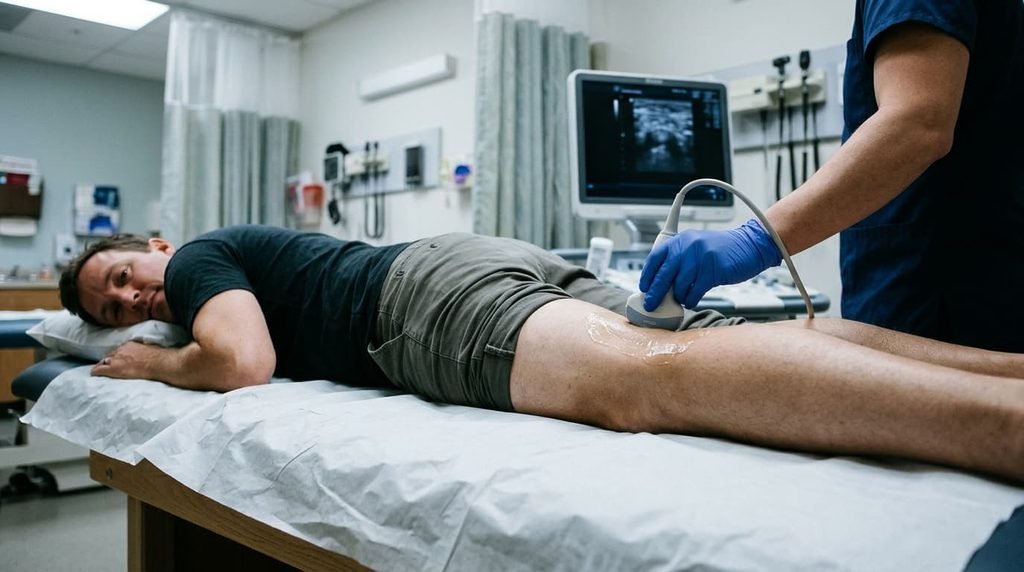
Baker’s Cyst Aspiration
The procedure uses a needle to draw fluid out of the cyst. Ultrasound guides the needle. It is quick and usually takes place in clinic. Studies show smaller cysts and better knee function afterwards. Cysts can still return. In one study of 32 patients, all six relapses involved complex cysts.
Baker’s Cyst Steroid Injection
A steroid often follows the aspiration. It calms inflammation in and around the cyst. Relief usually lasts several weeks to a few months. That makes it a short-term tool rather than a long-term fix. Short-term fixes have their place, just not a permanent address.
Knee Injection for Baker’s Cyst: Choosing the Route
An injection can target the cyst itself or the joint feeding it. Joint injections address the source of the fluid. Cyst-directed injections address the swelling. Some protocols combine both.
Baker’s cyst treatment also includes rest, physiotherapy and anti-inflammatory medicine. Surgery stays a last option for cysts that persist despite other care. Patients who prefer to hear options explained can watch a video on the DrSNA Clinic YouTube channel. The channel covers non-surgical joint pain and arthritis education.
Arthrosamid vs Steroid Injection for a Knee With a Cyst
Both options sit in the injection toolkit for knee osteoarthritis. Their jobs differ. One calms inflammation for a limited time, while the other cushions the joint for longer.
How the Two Injections Differ
A steroid reduces inflammation, and the effect usually fades after several weeks to a few months. The hydrogel acts as a cushion that integrates with joint tissue. Relief builds over weeks and can last far longer. Think of the steroid as a quick word with a noisy neighbour and the hydrogel as better soundproofing.
Where the Cyst Fits In
A steroid can also target the cyst or the joint fluid directly, so it can play a supporting role. The hydrogel addresses the arthritis that drives the fluid. Neither option replaces a proper scan. Cyst size, arthritis grade and personal goals guide the final choice.
Swelling After Injection: What Is Normal and What Needs Review
Some swelling is expected after any knee injection. Most of it settles without treatment. Swelling deserves extra attention when Arthrosamid and Baker’s cyst share a knee.
Arthrosamid Swelling After Injection
Swelling usually appears around the knee within the first days. Mild to moderate swelling and soreness settle over several days. Some patients report fullness or swelling lasting four to six weeks. Heavy lifting and strenuous activity should wait a few days.

Arthrosamid Side Effects at a Glance
Most effects are mild and short-lived:
- Pain and swelling at the injection site
- Temporary stiffness and tenderness
- Rare allergic reactions
- Rare joint infection
- A rare Baker’s cyst behind the knee
A Baker’s cyst that forms after treatment may settle alone or need care. Ultrasound helps decide which path applies.
Baker’s Cyst Swelling After Knee Injection
Extra joint fluid can push backwards and form a pocket behind the knee. A new lump in that spot after any injection deserves an ultrasound. The scan separates a simple fluid pocket from other causes. Reporting a new lump early keeps small problems small.
Signs That Need Urgent Review
- Sudden calf pain or swelling
- A hot, red or very tender knee
- Fever after the injection
- Chest pain or breathlessness
A ruptured cyst and a blood clot can look alike. Only a clinician can tell them apart. Urgent review is the safe move, and chest pain or breathlessness needs emergency services.
When Other Treatments Replace the Hydrogel
Some knees fall outside the usual criteria. Others show wear that has moved past what an injection can ease. Alternatives then take the lead.
Non-Surgical Alternatives
Lifestyle changes, anti-inflammatory medicine and physiotherapy form the first layer of care. Steroid and hyaluronic acid injections add short-term options. Each one suits a different stage of osteoarthritis. A consultant matches the option to the scan and the symptoms.
When Surgery Enters the Discussion
Advanced wear across all three compartments of the knee can push the discussion toward surgery. Knee replacement usually follows only after other treatments fail. Cyst surgery is rarer still. Surgeons often address the underlying joint problem instead of removing the cyst alone.
Frequently Asked Questions
Do Arthrosamid and Baker’s cyst rule each other out?
No. One large UK hospital group publishes an exclusion list. It focuses on bleeding problems, infection and certain health conditions, not cysts. A consultant still reviews the knee, the cyst and the medical history. The final decision rests on that individual assessment.
Can the hydrogel cause a cyst behind the knee?
A Baker’s cyst appears on lists of rare complications. Most patients never develop one. A cyst that does appear may settle alone or need treatment. Ultrasound confirms the diagnosis before any plan begins.
Should the cyst be drained before hydrogel treatment?
Some clinicians drain a large or painful cyst first. Baker’s cyst aspiration uses ultrasound to guide the needle. Smaller or silent cysts may need no drainage. The scan and symptoms guide that choice.
How long does Arthrosamid swelling after injection last?
Mild to moderate swelling usually settles over several days. Some patients report fullness or swelling for four to six weeks. Swelling that worsens, or comes with fever or a hot knee, needs prompt review.
Who should avoid the hydrogel altogether?
Bleeding disorders, blood-thinning medicines, knee infection, pregnancy and poorly controlled diabetes call for caution. The full list of Arthrosamid contraindications varies slightly between providers. A consultant reviews each case individually.
When does a cyst need urgent help?
Baker’s cyst symptoms such as sudden calf pain, rapid swelling or bruising need urgent review. These signs can mimic a blood clot. Chest pain or breathlessness calls for emergency services. Early help prevents avoidable harm.
Which works better, Arthrosamid vs steroid injection?
The two serve different jobs. A steroid calms inflammation for weeks to months. The hydrogel cushions the joint and can last longer. Cyst size and arthritis grade decide the better fit.
Arthrosamid and Baker’s cyst can coexist in an arthritic knee. A specialist weighs cyst size, scan findings and general health before any decision. Aspiration or a steroid may come first, and the hydrogel follows when the joint is ready. Swelling after any injection needs watching, and sudden calf symptoms need urgent review.
Mr Syed Nadeem Abbas, a consultant orthopaedic surgeon, medically reviewed this article. A consultation gives each patient a personal assessment of the knee, the cyst and the treatments that fit.
Read more: Everyday Habits That Damage Knees Without Anyone Noticing
Read more: What Causes a Baker’s Cyst Behind the Knee