
Baker’s cyst causes range from simple joint irritation to long-term arthritis. A Baker’s cyst forms when extra fluid collects behind the knee and creates a soft, fluid-filled swelling. The lump often feels alarming at first glance. Most cases, however, trace back to a small number of well-understood triggers inside the joint.
Baker’s cysts turn up more often than most people expect, particularly on knee scans done for unrelated reasons. Adults between 35 and 70 face the highest likelihood, though younger people can develop one after a sports injury. The cyst itself is not a tumour and carries no direct cancer risk. Some patients only discover it during a routine examination, since a small cyst rarely causes any noticeable discomfort. Others notice it immediately because of tightness or visible swelling behind the joint.
What Is a Baker’s Cyst?
A Baker’s cyst, also called a popliteal cyst, is a fluid-filled sac that forms behind the knee. The knee joint naturally produces synovial fluid to keep movement smooth. When the knee makes too much of this fluid, the excess has to go somewhere. It collects in a small pouch called the popliteal bursa, and that pouch swells into a visible knee cyst.
The swelling sits directly behind the joint, often described as a golf-ball-sized lump. Bending or straightening the leg can make the bulge more noticeable. A popliteal cyst is not cancerous and rarely causes long-term harm on its own.

Healthcare providers sometimes describe the condition as a secondary problem rather than a disease in its own right. The cyst itself is simply a sign that something inside the joint needs attention. Treating the visible lump without addressing the underlying issue rarely produces a lasting solution.
What Causes a Baker’s Cyst?
Understanding baker’s cyst causes starts with the knee’s fluid system. Anything that irritates the joint lining can trigger extra fluid production. That excess fluid eventually pools at the back of the knee. Five triggers appear most often in clinical practice, and each one affects the joint in a slightly different way.
Synovial Fluid Build-Up in the Knee Joint
Synovial fluid knee production increases whenever the joint becomes irritated or inflamed. This thick, lubricating liquid normally reduces friction between bones. During inflammation, the synovial membrane produces far more fluid than usual. The surplus drains backwards into the bursa. Synovial fluid buildup then gradually forms the visible cyst behind the knee. This mechanism explains why most knee cyst cases follow the same basic process. The original trigger simply determines how quickly that process happens.
Osteoarthritis and Baker’s Cyst Formation
Osteoarthritis knee cyst cases are the most common presentation seen in clinical practice. Cartilage wears down gradually with age and repeated joint stress. Bone-on-bone friction irritates the joint lining and pushes fluid production into overdrive. Patients over 50 face the highest risk, though the condition can appear earlier after injury. Joint space narrowing on an X-ray often confirms the underlying wear before a cyst even becomes visible. Weight-bearing activity tends to make the swelling more noticeable by the end of the day.
Rheumatoid Arthritis and Joint Inflammation
Rheumatoid arthritis knee cyst development follows a different path. This autoimmune condition attacks the joint lining directly, causing chronic inflammation. The immune system mistakenly targets healthy tissue inside the knee. Persistent swelling from rheumatoid arthritis keeps synovial output high. That constant fluid production makes a popliteal cyst far more likely to form and recur. Cold weather can also worsen joint stiffness in people already managing arthritis. Understanding how arthritis symptoms shift with the seasons can help with earlier symptom recognition.
Cartilage Tears and Meniscus Damage
A meniscus tear or cartilage tear can trigger sudden fluid production. Sport injuries, awkward twists, and falls commonly damage this cushioning tissue. The knee responds to any structural damage with inflammation and swelling. That swelling behaves the same way as arthritis-related swelling does, feeding fluid into the popliteal bursa. Younger, active patients often develop a cyst this way, unlike the slower arthritis pathway seen in older adults. A locking or catching sensation during movement can suggest that a meniscus tear sits behind the swelling.
Knee Injuries and Overuse
Repetitive strain from running, kneeling, or heavy lifting can also lead to a swollen knee cyst. Manual jobs and certain sports place ongoing pressure on the joint. Over time, that pressure wears down protective tissue and encourages fluid retention. Men over 60 frequently report this exact combination of long-term wear and cumulative joint stress. Exploring common knee pain patterns in older men offers a useful context for anyone in that age group.
Who Is Most at Risk of a Baker’s Cyst?
Certain groups face a higher chance of developing a popliteal cyst. Age plays a central role, since joint wear accumulates gradually over the decades. Adults between 35 and 70 make up the largest share of diagnosed cases.

Additional risk factors include:
- Existing knee osteoarthritis or rheumatoid arthritis
- A history of meniscus or ligament injury
- Physically demanding jobs involving kneeling or heavy lifting
- Regular participation in high-impact sport
- Carrying excess body weight, which increases joint pressure
None of these factors guarantees a cyst will develop. They simply raise the likelihood when combined with ongoing joint irritation. Diet also plays a supporting role in joint health. Small changes in daily meals can ease pressure on an already sensitive knee over time. Better hydration and reduced processed food intake can further support long-term joint comfort.
Baker’s Cyst Symptoms to Watch For
Baker’s cyst symptoms vary depending on size and underlying cause. Many people notice a soft lump on the back of the knee first. The swelling can appear gradually over weeks or show up suddenly after activity. Common signs include:
- A visible bulge behind the knee, sometimes described as a baker’s cyst on the knee
- Tightness or stiffness when bending the joint
- Mild aching that worsens after standing or walking
- Swelling that spreads slightly into the calf
- A feeling of fullness behind the joint
Some people experience no discomfort at all. A small popliteal cyst can sit quietly for months without drawing attention. Larger cysts, in contrast, tend to restrict movement and create a persistent dull ache.
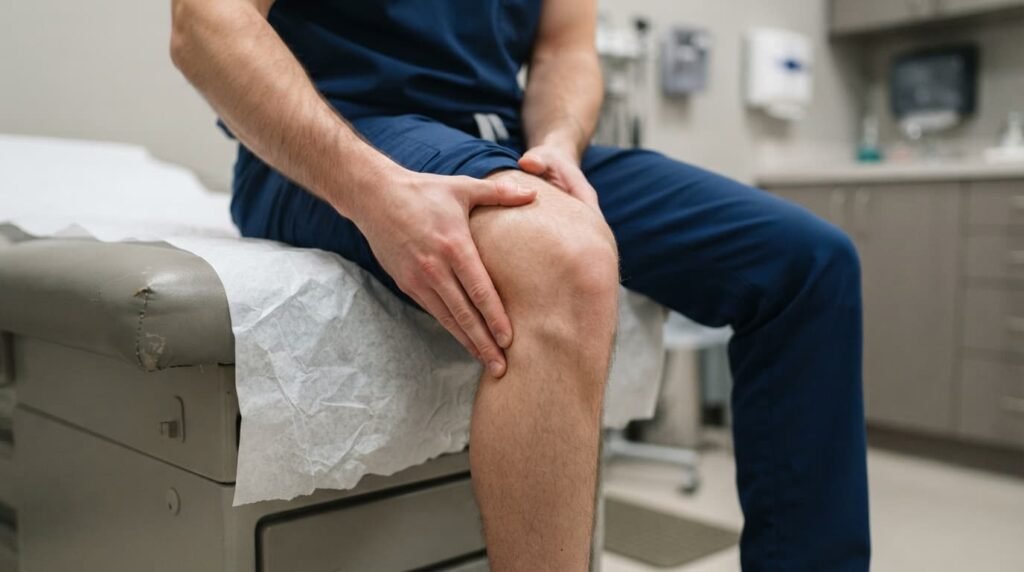
Ruptured Baker’s Cyst and Other Warning Signs
A cyst can burst if pressure builds too quickly inside the sac. A ruptured Baker’s cyst releases fluid into the surrounding calf tissue almost instantly. This event often produces sharp, sudden pain that catches people off guard.
Ruptured Baker’s Cyst Symptoms
Ruptured baker’s cyst symptoms typically include:
- Sudden sharp pain behind the knee or in the calf
- Rapid calf swelling within hours
- Bruising or skin discolouration down the lower leg
- A sensation similar to fluid trickling down the leg
Baker’s Cyst vs Blood Clot
Baker’s cyst and blood clot symptoms overlap closely, which makes self-diagnosis risky. Both conditions cause calf swelling, warmth, and tenderness. A blood clot, medically known as deep vein thrombosis, needs urgent treatment. Comparing baker’s cyst vs blood clot symptoms is a job for a qualified clinician, not a home assessment. Compartment syndrome knee cases also share similar early warning signs. Anyone with sudden calf swelling and pain should seek medical review immediately.
How Baker Cyst Diagnosis Works
Baker cyst diagnosis typically begins with a straightforward physical examination. A clinician checks the size, location, and firmness of the bump behind the knee. Questions about recent injuries or existing arthritis usually follow. A cyst that transilluminates, meaning light passes through it, generally confirms a fluid-filled structure rather than a solid mass.
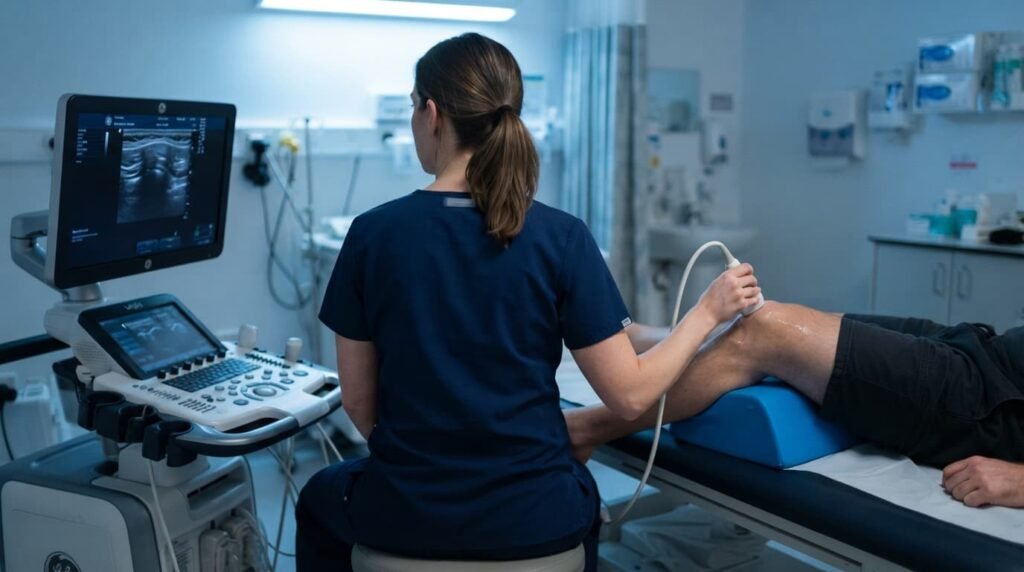
Imaging often confirms the diagnosis when the lump feels unusual or grows quickly. An X-ray may be used first to rule out bone-related problems. It can flag arthritis damage to the joint surface early. Baker’s cyst ultrasound remains the most common first-line test for the swelling itself. It clearly shows fluid-filled structures without needing an invasive procedure. A baker’s cyst MRI provides more detail when doctors suspect a meniscus tear or other joint damage underneath the swelling. Both scans are painless and take only a short appointment slot. Blood tests may also be requested when rheumatoid arthritis is suspected as the underlying cause.
Baker’s Cyst Treatment Options
Baker’s cyst treatment focuses on the underlying cause rather than the lump itself. Once the source of inflammation settles, the cyst usually shrinks on its own. Treatment plans vary depending on whether arthritis, injury, or overuse sits behind the swelling.
Standard approaches include:
- Rest and activity modification to reduce pressure on the joint
- Anti-inflammatory medication to calm swelling and discomfort
- Ice application during flare-ups to ease pain quickly
- Physiotherapy-guided baker’s cyst exercises to restore strength and flexibility
- Fluid drainage (aspiration) for particularly large or painful cysts
- Corticosteroid injections when arthritis drives ongoing fluid production
When Baker’s Cyst Surgery Becomes Necessary
Baker’s cyst surgery remains rare and is reserved for persistent or severely limiting cases. Surgeons typically address the root cause, such as a torn meniscus, rather than performing baker’s cyst removal alone. Removing the cyst without treating the underlying arthritis often leads to recurrence. Patients dealing with long-term osteoarthritis may benefit from newer non-surgical joint treatments. Reviewing how modern hydrogel injections support knee osteoarthritis can highlight options beyond standard painkillers.
Living With a Baker’s Cyst: Self-Care Tips
Small daily habits can ease discomfort while the underlying cause is treated. Gentle movement keeps the joint from stiffening, while excessive strain should still be avoided.
Helpful self-care steps include:
- Elevating the leg during rest periods to reduce swelling
- Wearing supportive footwear to reduce pressure on the knee
- Applying a compression bandage for mild, temporary relief
- Avoiding prolonged kneeling or squatting during flare-ups
- Following a structured plan of baker’s cyst exercises from a physiotherapist
Consistency matters more than intensity when managing joint recovery. A few short sessions each week, done properly, tend to outperform occasional intense workouts. Tracking symptoms in a simple diary can also help identify which activities trigger flare-ups, making future management decisions easier.
Possible Complications of an Untreated Cyst
Most cysts resolve without lasting problems, though complications occasionally arise. A large cyst can press on nearby blood vessels or nerves, causing numbness or tingling. Cysts behind the knee that involve severe arthritis carry a higher chance of recurrence after treatment. Reduced blood flow from a large cyst can, in rare cases, contribute to swelling that mimics more serious vascular problems.
Persistent swelling can also limit knee flexibility over time. Left unmanaged, the underlying joint damage may progress and worsen mobility. Early evaluation prevents most of these complications from developing. Anyone noticing a growing lump behind the knee should book an assessment rather than wait and hope it resolves alone.
Managing Knee Arthritis to Prevent Recurring Cysts
Since arthritis is the main cause of baker’s cysts, long-term management focuses on joint health. A structured plan usually combines weight management, targeted exercise, and appropriate medical treatment. Reducing repetitive strain on the knee lowers the chance of fluid build-up returning.

Modern non-surgical options now give patients more choice beyond standard steroid injections. Clinics offering hydrogel-based joint treatments, physiotherapy referrals, and imaging-guided diagnosis provide a fuller picture of long-term care. A short video explaining how these treatments work is available on the DrSNA Clinic YouTube channel. It covers common knee conditions in plain, accessible language for patients researching their options. Visiting the Private Knee Pain Clinic also outlines available consultation options for anyone managing ongoing knee pain. Early consultation often makes the difference between temporary relief and lasting improvement.
Frequently Asked Questions
What is the main cause of a Baker’s cyst?
The leading baker’s cyst causes involve excess synovial fluid triggered by osteoarthritis, rheumatoid arthritis, or a cartilage tear.
Can a Baker’s cyst go away without treatment?
Yes, many small cysts shrink once the underlying knee inflammation settles, though larger ones may need baker’s cyst treatment.
How long does a Baker’s cyst last?
Duration depends on the underlying cause. Cysts linked to a minor injury often clear within weeks, while arthritis-related swelling can persist longer without management.
What does a ruptured Baker’s cyst feel like?
Ruptured baker’s cyst symptoms include sudden sharp pain, rapid calf swelling, and skin discolouration spreading down the leg.
How is a popliteal cyst diagnosed?
Baker cyst diagnosis usually starts with a physical exam. An ultrasound or MRI often follows if further detail is needed.
Does a Baker’s cyst always need surgery?
No, baker’s cyst surgery is uncommon. Most cases respond to rest, physiotherapy, or treatment of the underlying arthritis.
Can exercise make a Baker’s cyst worse?
High-impact exercise can aggravate a cyst, but guided baker’s cyst exercises from a physiotherapist usually support recovery instead.
Is a Baker’s cyst the same as a knee cyst?
A Baker’s cyst is one specific type of knee cyst. It forms behind the joint, unlike cysts that develop inside the joint itself.
Can a Baker’s cyst come back after treatment?
Yes, a popliteal cyst can return if the underlying arthritis or joint damage remains untreated. Long-term management matters more than a one-off fix.
Baker’s cyst almost always traces back to excess fluid inside the knee joint. Arthritis, cartilage damage, and repetitive strain remain the three leading triggers. Recognising early symptoms and seeking a proper Baker’s cyst diagnosis helps avoid unnecessary discomfort. Prompt evaluation also speeds up recovery and lowers the chance of complications.
Most cysts linked to a minor injury settle within a few weeks once swelling reduces. Cysts driven by ongoing arthritis can take longer and may return if the joint damage stays unmanaged. The body reabsorbs the built-up fluid naturally as the knee heals. Most people manage a Baker’s cyst successfully once the underlying cause receives proper attention. A combination of rest, targeted exercise, and appropriate medical treatment usually restores normal knee function. Long-term joint health depends far more on consistent care than on any single treatment.
This article has been medically reviewed by Mr Syed Nadeem Abbas, a consultant orthopaedic surgeon. Patients seeking further assessment can book a consultation to discuss personalised treatment options.
Read more: Acupuncture for Knee Pain: A Practical Guide to Relief and Recovery
Read more: Iliotibial Band Syndrome Causes Sharp Pain on the Outside of the Knee


