Subchondral Sclerosis in Knee Osteoarthritis Causes Stiffness And Bone Thickening

✅ Medically reviewed | Updated August 2026
Subchondral sclerosis in knee osteoarthritis develops when bone beneath the cartilage becomes abnormally thick and dense. This bone change is a common finding on X-rays of arthritic knees. It signals ongoing damage inside the joint, even before pain becomes severe. Understanding this process helps patients recognise osteoarthritis earlier and manage it more effectively. Doctors across the UK increasingly use imaging findings to track this condition alongside standard osteoarthritis symptoms.
What Is Subchondral Sclerosis In The Knee?
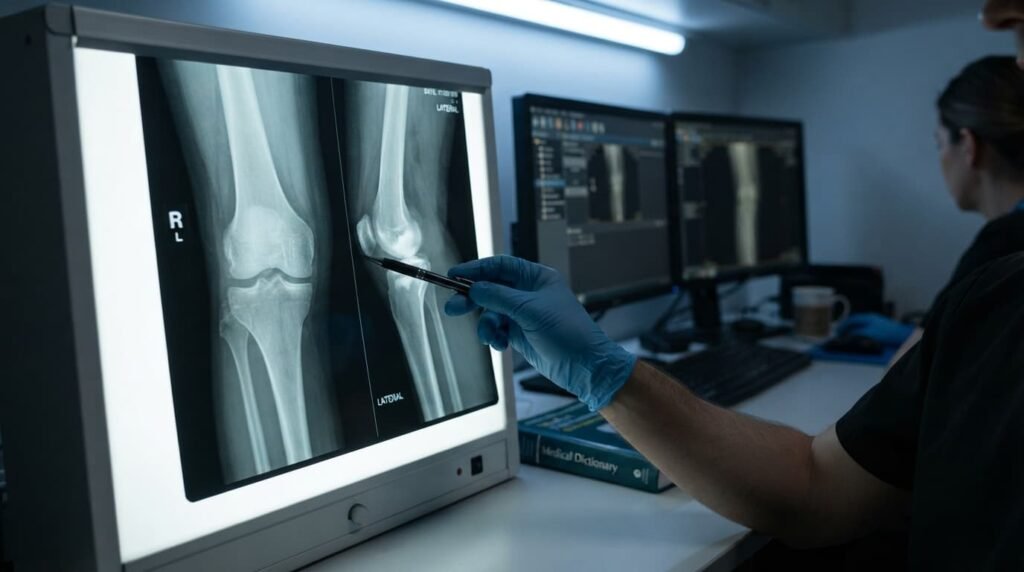
The subchondral bone sits directly beneath the cartilage layer inside the knee joint. In healthy joints, this bone remains a steady thickness. When cartilage wears away, the bone underneath reacts by growing denser and thicker. This process is called subchondral sclerosis, sometimes referred to as marginal sclerosis in radiology reports. On imaging, subchondral sclerosis on X-ray appears as a bright, white band beneath the joint surface. Radiologists use this pattern to confirm advancing joint damage. Subchondral sclerosis in knee osteoarthritis rarely occurs alone; it usually points towards broader joint changes across the knee. Doctors often find this bone thickening alongside other structural warning signs during routine imaging.
Subchondral Sclerosis And Joint Space Narrowing
Joint space narrowing often accompanies subchondral sclerosis on the same X-ray. As cartilage thins, the gap between the femur and tibia shrinks. This narrowing, combined with bone thickening, gives doctors a clear picture of disease severity. Together, these two signs form part of standard osteoarthritis grading systems used across UK clinics. Radiologists measure joint space narrowing carefully, since its degree often reflects how far cartilage loss has progressed.
What Causes Subchondral Sclerosis? Mechanical Stress And Bone Response
Subchondral sclerosis causes relate closely to how the knee handles daily pressure. Repeated mechanical stress the knee joint tissue experiences during walking, climbing stairs or standing gradually wears cartilage down. As cushioning disappears, the bone beneath absorbs greater force with each step. The body responds by laying down extra bone tissue, aiming to reinforce the weakened area. Several factors accelerate what causes subchondral sclerosis to develop faster than expected, and understanding subchondral sclerosis knee osteoarthritis risk factors helps patients take preventive steps early.
- Ageing: Natural cartilage breakdown increases with age, particularly affecting ageing joints in men over sixty, where wear accumulates over decades.
- Excess weight: Extra body weight multiplies the load placed on knee cartilage with every stride, increasing bone response over time.
- Previous injury: Ligament tears or fractures often disturb normal joint mechanics permanently, shifting pressure unevenly across the joint surface.
- Repetitive strain: Physically demanding work or sport raises pressure on the joint surface repeatedly, accelerating cartilage thinning.
- Genetics: A family history of osteoarthritis raises the likelihood of similar bone changes appearing earlier in life.
- Joint alignment: Bowed or knock-kneed alignment concentrates pressure unevenly, speeding up sclerosis in specific areas of the joint.
Diet also plays a part in slowing cartilage decline. Choosing anti-inflammatory foods rich in omega-3 fatty acids supports joint tissue and may reduce swelling around the knee. Small dietary adjustments, sustained over months, can meaningfully support joint health alongside other treatments.
The Role Of Sclerostin In Bone Remodelling
Cellular activity beneath the cartilage drives much of this bone thickening process. Sclerostin osteoarthritis research shows this protein normally restrains excessive bone growth. Bone-maintaining cells called osteocytes produce sclerostin under healthy conditions. When mechanical stress increases, sclerostin levels drop, releasing the natural brake on bone formation. This allows osteoblasts to build new bone tissue rapidly, thickening the area beneath damaged cartilage. Inflammatory molecules such as interleukin-6 add further fuel to this remodelling cycle. Over time, this feedback loop worsens both bone density and cartilage breakdown simultaneously. Researchers continue studying sclerostin pathways, hoping to develop treatments that interrupt this damaging cycle directly.
Symptoms Of Subchondral Sclerosis In The Knee
Subchondral sclerosis symptoms usually mirror those of general knee osteoarthritis rather than presenting separately. Patients commonly notice the following signs during daily activity.
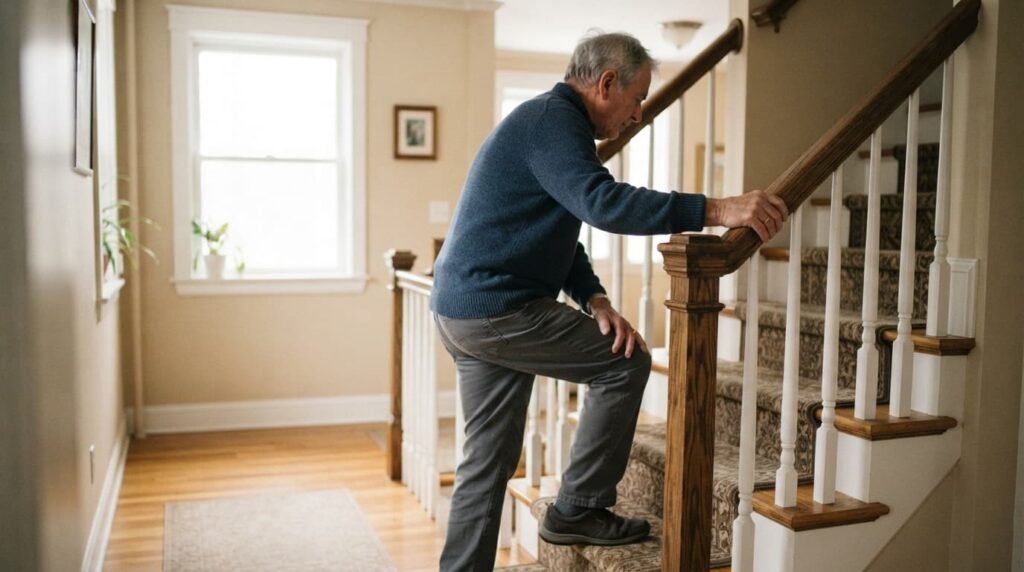
- A grinding or cracking sound known as crepitus during movement, often noticeable when climbing stairs.
- Stiffness that worsens after periods of rest or sitting, easing gradually once movement resumes.
- Swelling around the joint, particularly after activity or prolonged standing.
- Reduced range of motion when bending or straightening the knee fully.
- Aching pain that intensifies during colder months and damp weather conditions.
- Instability or a feeling that the knee may give way unexpectedly.
Cold conditions frequently make joint stiffness feel worse for arthritis sufferers, and understanding how temperature affects joint discomfort can help patients plan activity accordingly. Recognising these symptoms early allows treatment to begin before joint damage becomes severe. Subchondral sclerosis knee osteoarthritis symptoms often build gradually, meaning many patients dismiss early stiffness as ordinary ageing.
Subchondral Bone Cysts Explained
Subchondral bone cysts sometimes develop alongside sclerosis in advanced osteoarthritis cases. These fluid-filled pockets form within the thickened bone tissue, appearing in roughly half of patients with knee osteoarthritis on imaging. Despite the name, subchondral cysts lack the cellular lining found in true cysts elsewhere in the body. Many patients experience no additional symptoms from these cysts, though larger ones may increase discomfort. Over time, some cysts harden and lose their fluid content entirely. Doctors monitor cyst size during follow-up scans, since growth can indicate worsening joint damage.
Is Subchondral Sclerosis Serious Or Painful?
The condition itself rarely causes pain directly; discomfort stems from surrounding cartilage damage and inflammation instead. However, subchondral sclerosis often signals later-stage osteoarthritis, making early management important. Regarding whether subchondral sclerosis is painful, most reported pain traces back to joint friction rather than the bone thickening itself. In severe cases, subchondral sclerosis disability can result when mobility becomes significantly restricted. Persistent stiffness affecting daily tasks, such as climbing stairs, warrants a medical assessment. Left unmanaged, worsening bone and cartilage changes gradually reduce independence for many patients.
How Doctors Diagnose Subchondral Sclerosis
X-ray imaging remains the standard tool for spotting subchondral sclerosis in knee osteoarthritis. Dense bone appears as a bright white area directly beneath the joint surface. MRI scans sometimes catch earlier changes that standard X-rays miss, particularly bone marrow abnormalities. Newer technology now assists radiologists in reading these images more accurately. AI-detection osteoarthritis tools can automatically grade sclerosis severity from radiographs, reducing subjective interpretation between different readers. These systems also track changes over repeated scans, helping specialists monitor knee osteoarthritis progression over months or years. Patients interested in learning more about non-surgical arthritis management can explore educational content on the DrSNAClinic YouTube channel, which covers joint pain treatment approaches in detail.
Why Early Diagnosis Matters
Catching subchondral sclerosis early creates more treatment options for patients. Early-stage changes respond better to conservative management than advanced joint damage. Delayed diagnosis often means patients arrive at clinics already experiencing significant mobility loss. Routine imaging during check-ups helps specialists spot bone changes before symptoms become disabling.
Subchondral Sclerosis And Knee Osteoarthritis Progression
Bone changes and cartilage damage feed into each other continuously throughout disease progression. Subchondral bone changes that osteoarthritis specialists observe typically worsen alongside cartilage thinning and joint space narrowing. Mechanical stress triggers cellular responses, which then accelerate further mechanical damage in a repeating cycle. This relationship explains why subchondral sclerosis often appears alongside osteophytes, or bone spurs, on imaging. Subchondral sclerosis in knee osteoarthritis typically progresses through recognisable stages, moving from mild bone thickening to significant joint space loss. Understanding this progression pattern helps clinicians decide when conservative treatment should shift towards more advanced options.
Treatment Options For Subchondral Sclerosis
Subchondral sclerosis treatment focuses on managing the underlying osteoarthritis rather than targeting bone density directly. Several approaches work together to reduce pain and preserve joint function.
- Medication: Nonsteroidal anti-inflammatory drugs reduce swelling and ease discomfort during flare-ups.
- Physical therapy: Strengthening muscles around the knee reduces strain on damaged cartilage significantly.
- Weight management: Losing excess weight significantly lowers pressure placed on weight-bearing joints.
- Injections: Corticosteroid injections offer short-term relief, typically lasting one to two months. For long-term relief, arthrosamid injection can be a good option.
- Bracing and support: Knee braces can improve alignment and reduce pressure during daily activity.
Newer non-surgical options are also gaining attention among UK patients. Polyacrylamide hydrogel injections integrate into the joint lining, providing longer-lasting cushioning than standard steroid treatments. Some patients also compare platelet-rich plasma injections against hydrogel-based options when choosing a non-surgical route. Surgery remains a last resort, reserved for cases where conservative treatment fails to control symptoms. Managing subchondral sclerosis knee osteoarthritis effectively usually involves combining several of these approaches rather than relying on a single approach.

Can Subchondral Sclerosis Be Cured?
Regarding can subchondral sclerosis be cured, the honest answer is no cure currently exists. Bone thickening cannot be reversed once it has formed within the joint. However, progression can slow considerably with proper management and lifestyle adjustments. Early intervention often makes the biggest difference in preserving long-term joint function.
Living With Subchondral Sclerosis: Daily Management Tips
Simple daily habits can ease symptoms alongside formal medical treatment. Gentle stretching each morning reduces stiffness before activity begins. Low-impact exercise, such as swimming or cycling, keeps joints moving without added strain. Wearing supportive footwear reduces uneven pressure travelling up through the knee joint. Pacing activity throughout the day prevents overloading a joint already under mechanical stress. Applying warmth before activity and ice afterwards often eases discomfort noticeably. Regular follow-up appointments allow specialists to adjust treatment as subchondral sclerosis knee osteoarthritis progresses over time.
Frequently Asked Questions
What is subchondral sclerosis in the knee?
Subchondral sclerosis refers to abnormal thickening of bone beneath knee cartilage. It typically develops as a response to osteoarthritis-related cartilage wear and increased mechanical stress.
What causes subchondral sclerosis to develop?
Repeated mechanical stress, ageing, excess weight and previous injury commonly trigger subchondral sclerosis. Cellular changes involving sclerostin and inflammatory molecules also drive bone thickening.
Is subchondral sclerosis the same as osteoarthritis?
Subchondral sclerosis is not identical to osteoarthritis but represents one of its key imaging signs. It appears alongside joint space narrowing and osteophytes on X-rays.
Can subchondral sclerosis be reversed?
Subchondral sclerosis cannot be reversed once bone thickening has occurred. Treatment instead focuses on slowing progression and managing associated pain effectively.
Do subchondral bone cysts always cause symptoms?
Subchondral bone cysts do not always produce noticeable symptoms in every patient. Larger cysts, however, may contribute to increased pain and stiffness.
Does subchondral sclerosis affect mobility long term?
Subchondral sclerosis in knee osteoarthritis can gradually reduce mobility if left unmanaged over several years. Early treatment and lifestyle changes help preserve function significantly.
When should someone see a doctor about subchondral sclerosis?
Persistent stiffness, swelling or reduced mobility affecting daily activities warrants medical assessment. Early diagnosis allows treatment to begin before joint damage becomes severe.
Subchondral sclerosis in knee osteoarthritis reflects deep bone changes driven by mechanical stress and cellular remodelling. While the condition cannot be cured, proper management slows progression and preserves mobility. Patients experiencing persistent knee symptoms should seek specialist evaluation promptly. Mr Syed Nadeem Abbas specialises in non-surgical knee osteoarthritis management for patients across the UK.
Read more: Single Injection For Knee Osteoarthritis Offers Real Relief
Read more: Bone Marrow Lesion Knee Pain Points to a Deeper Joint Problem