
Arthritis in leg joints is one of the most common reasons people seek advice from a joint specialist. It develops in the hip, knee, or ankle far more often than anywhere else in the body. These joints carry constant load during standing and walking. Leg pain from arthritis rarely appears overnight. It usually begins as mild stiffness that comes and goes. It builds slowly over weeks or months rather than announcing itself all at once. Swelling or weakness often follows once the joint has been under strain for a sustained period. Recognising leg arthritis symptoms early makes a real difference to how well a joint responds to treatment. It often changes which options remain available further down the line.
What Is Arthritis In Leg Joints
Arthritis in leg joints happens when cartilage, the synovium, or nearby tissue becomes inflamed or worn down. This can occur in the hip, knee, or ankle. The leg carries the full weight of the body with every step. This makes its joints especially vulnerable to wear-related damage. Leg arthritis is not one single disease. It is an umbrella term. Several conditions sit under that umbrella. Each one produces pain and reduced movement in a slightly different way.
Muscles around an inflamed joint often tighten to compensate for reduced stability. This is why arthritis muscle pain in the legs cases frequently get mistaken for a simple strain. Discomfort rarely stays confined to one small spot. It can spread along the thigh, behind the knee, or down into the calf. This is part of why patients often struggle to pinpoint the true source.
How Leg Joints Work Together
Picture the hip, knee, and ankle as links in a single chain. Damage in one link changes how the others move. A stiff hip forces the knee to absorb extra load. A weak ankle changes how the thigh muscles fire during walking. Seeing leg joints this way explains why pain often shows up somewhere other than the joint that started the problem. Physiotherapists often assess the whole chain rather than just the painful spot for exactly this reason.
Types Of Arthritis In Leg Joints

Several distinct conditions fall under the broader label of arthritis affecting the legs. Treatment approaches differ depending on which type is present. An accurate label matters from the outset rather than being a formality. The wrong assumption can delay effective care by months.
Osteoarthritis Leg Pain
Osteoarthritis is the most common form. It develops gradually as cartilage wears down over years of use. Repetitive movement, past injury, or simple ageing can wear cartilage down faster than the body can repair it. Osteoarthritis leg pain typically worsens with activity. It tends to ease with rest, particularly in the earlier stages of the condition.
Rheumatoid Arthritis Leg Pain
Rheumatoid arthritis leg pain follows a different pattern. It stems from an autoimmune response, where the immune system mistakenly attacks the joint lining. This form often affects both legs at once. It also tends to bring noticeable morning stiffness that lasts well over an hour before it eases.
Infectious Arthritis Symptoms
Infectious arthritis symptoms appear when bacteria or another pathogen reaches a joint, usually through the bloodstream. This type develops quickly, sometimes within days rather than weeks. Fever alongside intense joint pain is common. It needs urgent medical attention rather than home management.
Polymyalgia Rheumatica Leg Pain
Polymyalgia rheumatica leg pain tends to affect the hips and thighs rather than the knee itself. It brings sudden stiffness, particularly overnight, and mostly affects adults over 65. Unlike osteoarthritis, this type usually responds quickly once low-dose steroid treatment begins.
Early Signs Of Arthritis In The Leg
Catching early signs of arthritis gives treatment the best possible chance of slowing joint damage. Waiting too long lets minor stiffness turn into something harder to manage.

First Signs Of Arthritis Patients Notice
The first signs of arthritis rarely involve severe pain. Most patients describe a dull ache after activity. Some describe a joint that feels tight rather than sore. Early arthritis symptoms often disappear with rest. This is exactly why so many people delay seeking advice until the problem becomes harder to ignore.
Joint Stiffness And Morning Symptoms
The joint stiffness arthritis produces has a distinctive pattern. It eases with gentle movement rather than staying constant throughout the day. Morning joint stiffness causes include reduced synovial fluid production overnight. Synovial fluid normally lubricates the joint surfaces, and levels drop during long periods of rest. This explains why the first few steps out of bed often feel harder than anything else during the day. Patients frequently report that a hot shower loosens the joint faster than waiting for the stiffness to pass. A short walk around the bedroom often has the same effect.
Swelling Around The Joint
Swelling around a joint with arthritis affects signals of active inflammation beneath the surface. The joint may look slightly larger. It may feel warm to the touch or become tender under light pressure. This symptom often appears before an X-ray shows any structural damage.
Reduced Flexibility And Weakness
Reduced joint flexibility shows up as difficulty fully bending or straightening the knee or hip. Joint weakness symptoms tend to follow soon after, since muscles around a painful joint weaken from reduced use. Signs of arthritis in joints, taken together, build a fairly clear picture even before formal testing confirms anything.
Early signs of osteoarthritis usually centre on activity-related stiffness in one joint. Early signs of rheumatoid arthritis more often involve symmetrical pain across both hands or both knees at once. Spotting this difference early helps guide the right referral and speeds up appropriate treatment.
Arthritis In Legs Symptoms By Location
Leg pain due to arthritis does not always sit inside the joint that caused it. Referred pain is common and often confuses patients trying to self-diagnose. Arthritis leg pain can travel well beyond the joint itself. This is one reason self-diagnosis based on location alone is unreliable.
Arthritis In Thigh
Arthritis affecting the thigh often reflects a hip joint problem rather than a muscle injury. Pain can radiate down the front or side of the leg. It tends to worsen during walking or climbing stairs, and this pattern catches many patients off guard.
Arthritis In Calf
Discomfort in the calf muscles is less common than hip or knee involvement. It can occur when knee or ankle inflammation changes gait mechanics. This places unusual strain on the muscles below the knee, which patients rarely expect from a joint problem elsewhere.
Knee Stiffness After Sitting
Knee stiffness after sitting for long periods is one of the more reliable early markers of knee arthritis. This includes stiffness noticed during a car journey or at a desk. Standing up and taking a few steps typically eases it within minutes. This quick improvement is itself a useful clue for a doctor to note.
What Causes Arthritis In Legs
The underlying causes vary considerably by type. Several patterns repeat across most cases seen in clinical practice. Wear-related damage tends to build up over decades. Autoimmune activity, by contrast, can appear at almost any adult age. This includes people under 40 who assume arthritis only affects older patients.
Arthritis Risk Factors
Arthritis risk factors include the following:
- Age-related cartilage wear
- Previous joint injury or surgery
- Excess body weight, which adds load to weight-bearing joints
- Family history of joint conditions
- Repetitive strain from physically demanding work or sport
Genetics play a role in several forms, particularly rheumatoid arthritis. Lifestyle factors remain the more modifiable piece of the puzzle for most patients. That is encouraging news for anyone looking to slow progression. Small daily changes to activity and weight management can genuinely shift long-term outcomes.
Arthritis Muscle Pain Legs Versus Simple Joint Pain
Arthritis Vs Joint Pain Difference
The arthritis vs joint pain difference usually comes down to duration and pattern. Ordinary joint pain from overuse tends to settle within days. Pain linked to arthritis tends to persist, recur, or worsen slowly over several weeks rather than fading on its own.
Joint Pain That Comes And Goes
Joint pain that comes and goes deserves attention. This is particularly true if it shifts between similar joints on both sides of the body. This shifting pattern more often signals an inflammatory type. Rheumatoid arthritis is the most likely candidate rather than straightforward mechanical wear.
How Is Arthritis In The Leg Diagnosed
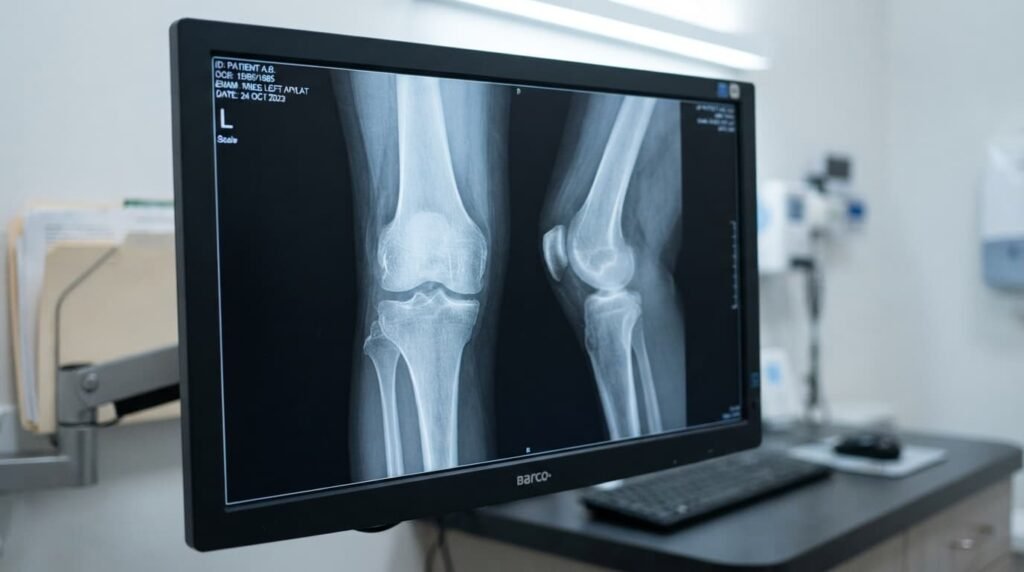
Diagnosis usually starts with a physical examination. The doctor checks range of motion, swelling, and joint tenderness during this first assessment. Blood tests can identify inflammatory markers linked to rheumatoid arthritis or infection. Imaging, including X-ray, ultrasound, or MRI, confirms cartilage loss or structural joint damage where it exists. A precise diagnosis matters because osteoarthritis, rheumatoid arthritis, and infectious arthritis each need a completely different treatment plan. Readers can find a fuller breakdown of specialist evaluation methods in this piece comparing PRP vs Arthrosamid injections. It weighs up two common non-surgical options recommended once a diagnosis is confirmed.
Arthritis Leg Treatment Options
The right course of treatment depends heavily on which type of arthritis is present. How far joint damage has progressed also shapes the decision.
Medication And Injection-Based Approaches
Anti-inflammatory medication, corticosteroid injections, and disease-modifying drugs form the first line of treatment for many patients. For knee-specific cases, newer options can offer longer-lasting relief without surgery. Cold weather often makes arthritic knees feel stiffer and more painful, largely due to changes in barometric pressure and joint fluid viscosity that intensify arthritis pain during colder months.
For patients seeking a non-surgical way to manage this discomfort, Arthrosamid treatment has become a preferred option when seasonal flare-ups make daily movement harder.
Arthritis Leg Exercises
Arthritis leg exercises strengthen the muscles supporting an affected joint. This reduces strain on the cartilage itself over time. Low-impact options such as swimming, cycling, and controlled stretching tend to work best for most patients. Movement, done correctly, protects joints far more effectively than complete rest ever manages to. Small, consistent changes to both movement and diet tend to outperform occasional bursts of intense effort. This holds particularly true for a long-term joint condition.

Patients weighing up long-term options sometimes find visual explanations easier to follow than text alone. The DrSNA Clinic YouTube channel covers non-surgical joint pain and arthritis treatment approaches. It gives anyone comparing options a clearer sense of what to expect ahead of a consultation.
When To See A Doctor For Joint Pain
Certain warning signs make the decision to book an appointment much clearer. Seek a review if stiffness lasts longer than two to three weeks. A visibly swollen or hot joint is also worth checking promptly. The same applies to pain that starts interfering with sleep or daily tasks. Telling arthritis apart from a passing strain often comes down to whether symptoms improve or persist. Strains typically fade within days. Arthritis warning signs tend to linger or return instead. Does arthritis develop gradually in most cases? Usually, yes, though infectious arthritis is the clear exception. It arrives suddenly and needs same-day medical review rather than a wait-and-see approach.
Frequently Asked Questions
What symptoms appear first when this condition develops?
Mild stiffness after rest, occasional swelling, and reduced flexibility that improves with movement tend to appear first. Pain often becomes constant only weeks later.
What causes arthritis in legs to develop in the first place?
Causes range from age-related cartilage wear and previous injury to autoimmune activity and, less commonly, infection reaching the joint.
How does a doctor diagnose arthritis in the leg?
Diagnosis combines a physical exam with blood tests for inflammatory markers. Imaging such as X-ray or MRI then confirms the extent of any damage.
Does arthritis always affect both legs at once?
Not always. Osteoarthritis often starts in one leg. Rheumatoid arthritis and polymyalgia rheumatica more commonly affect both sides together instead.
Can arthritis leg stiffness improve without formal treatment?
Mild stiffness can ease temporarily with rest or gentle movement. Underlying joint damage generally still needs proper care to slow further progression.
Is calf discomfort a common arthritis presentation?
It is less frequent than knee or hip involvement. It usually develops secondary to gait changes caused by a nearby joint problem instead.
Arthritis in leg joints develops gradually, starting with stiffness and mild discomfort long before swelling or weakness becomes obvious. Recognising early symptoms, understanding the different types, and knowing when professional assessment is needed all support better long-term joint health. Treatment ranges from targeted exercise and medication through to specialist injection therapies for more advanced cases. Mr Syed Nadeem Abbas is a knee pain consultant specialising in non-surgical joint treatment. He advises early assessment for anyone noticing persistent leg stiffness or swelling that does not settle on its own. Prompt evaluation tends to preserve joint function far better than a wait-and-see approach.
Read more: ACL Injury Myths Continue To Mislead Patients Considering Treatment Choices
Read more: Gel Injections For Knee Pain A Non-Surgical Option For Osteoarthritis Symptoms


