
Knee arthroscopy is a keyhole procedure that surgeons use to diagnose and treat damage inside the knee joint. Roughly two million procedures of this kind are performed worldwide each year, according to published orthopaedic data. The technique relies on a narrow camera and small surgical tools. Incisions stay under a centimetre long in most cases. Patients typically return home the same day, often walking within hours of the operation.
What Is Knee Arthroscopy?
Knee arthroscopy is a form of minimally invasive knee surgery. A surgeon inserts a thin instrument called an arthroscope through a small incision near the kneecap. The arthroscope carries a camera that projects live images onto a monitor. Surgical tools pass through separate small cuts. This allows the surgeon to repair or remove damaged tissue without fully opening the joint.
Because the incisions are small, scarring is minimal. Healing tends to be faster than with open surgery. Most operations take less than an hour, though complex repairs can run longer. Surgeons typically use general or regional anaesthesia. The choice depends on the extent of the planned work and the patient’s preference.
This keyhole technique serves two purposes. First, it allows direct visual diagnosis when scans leave uncertainty. Second, it enables treatment during the same session. Many patients avoid a separate operation entirely as a result. Orthopaedic teams describe it as one of the most established forms of joint surgery. Decades of clinical refinement back the approach.
Conditions Treated Through Arthroscopic Surgery
This approach addresses a wide range of joint problems. Below are the conditions most frequently diagnosed and treated using it.
Meniscus Tear
A meniscus tear is among the most common reasons for referral. The meniscus is a crescent-shaped cushion of cartilage. It absorbs shock between the thigh bone and shin bone. Tears often occur during twisting movements in sport. Wear-related tears also affect older adults over time. Surgeons may trim damaged fragments or repair the tear, depending on location and blood supply. Repeat tears in the same knee are less common, particularly after full rehabilitation.
ACL Tear and Ligament Damage
An ACL tear affects the anterior cruciate ligament, which stabilises the knee during pivoting motion. This injury is common in football, skiing, and netball. A broader knee ligament tear can also involve the posterior cruciate, medial collateral, or lateral collateral ligaments. Reconstruction typically uses a tissue graft. The graft threads through tunnels drilled in the bone and gets secured with fixation devices. Recovery from ligament reconstruction generally takes longer than meniscus repair alone.
Patellar Dislocation
Patellar dislocation happens when the kneecap slips out of its normal groove, usually sideways. First-time dislocations sometimes heal with bracing and physiotherapy alone. Recurrent dislocation, however, often needs arthroscopic stabilisation. This tightens supporting structures and helps prevent repeat injury. Younger, physically active patients face a higher risk of recurrence without treatment.
Knee Arthritis and Osteoarthritis
Knee osteoarthritis and arthritis of the knee involve the gradual breakdown of joint cartilage. Arthroscopy plays a limited role here. Evidence shows it rarely relieves pain caused purely by wear-related joint disease. Surgeons generally reserve the procedure for arthritic knees that also catch, lock, or give way. This points to a mechanical problem alongside the wear itself.
Is Knee Arthroscopy Really Major Surgery?
Compared with a full knee replacement, this operation is far less invasive. Most patients go home the same day, often within a few hours of waking. It is still a real operation with real risks, and it deserves to be treated that way. It should never be dismissed as minor just because the cuts are small.
Recovery is shorter than open surgery, but the procedure remains a genuine surgical event. It deserves proper preparation and honest aftercare, not a casual approach. Surgeons will always explain expected outcomes before asking for consent.
How Surgeons Diagnose Knee Problems Beforehand
Diagnosis rarely begins with surgery itself. A physical examination checks the range of motion, swelling, and joint stability first. Surgeons often order an X-ray to rule out fractures or bone alignment issues. An MRI scan then provides detailed images of cartilage, ligaments, and soft tissue. This combination usually identifies the exact problem without any incisions being made.
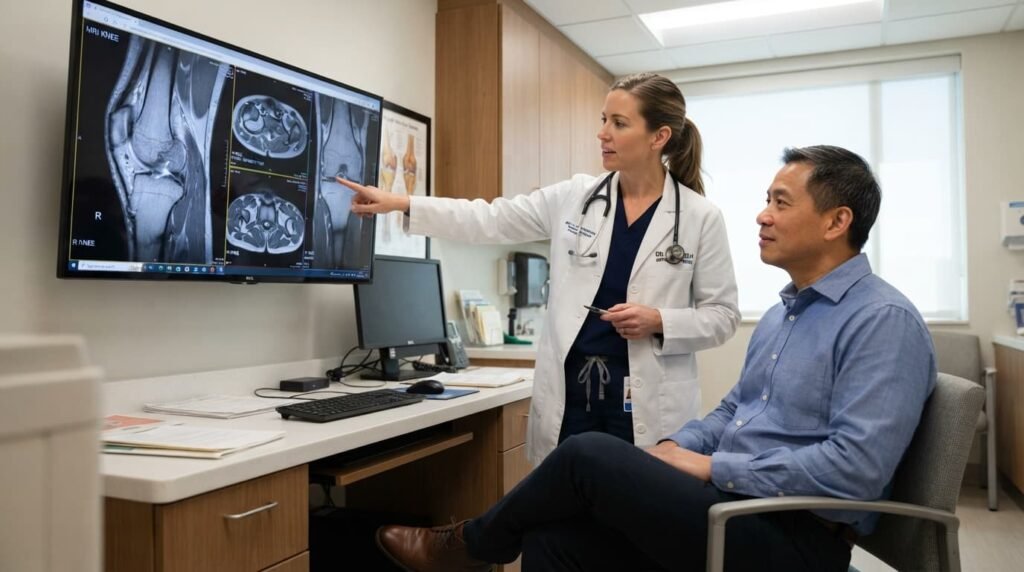
A detailed patient history, including previous injuries and current activity levels, also shapes the assessment considerably. Arthroscopy becomes the next step only when treatment is genuinely needed, or when imaging cannot fully explain ongoing symptoms. Some patients are surprised to learn that surgery is not automatically the outcome of a specialist referral. A staged plan, starting with conservative measures, is often discussed at this early stage.
The Arthroscopic Knee Surgery Procedure
Arthroscopic knee surgery follows a structured sequence, from preparation through to closure.
Before Surgery
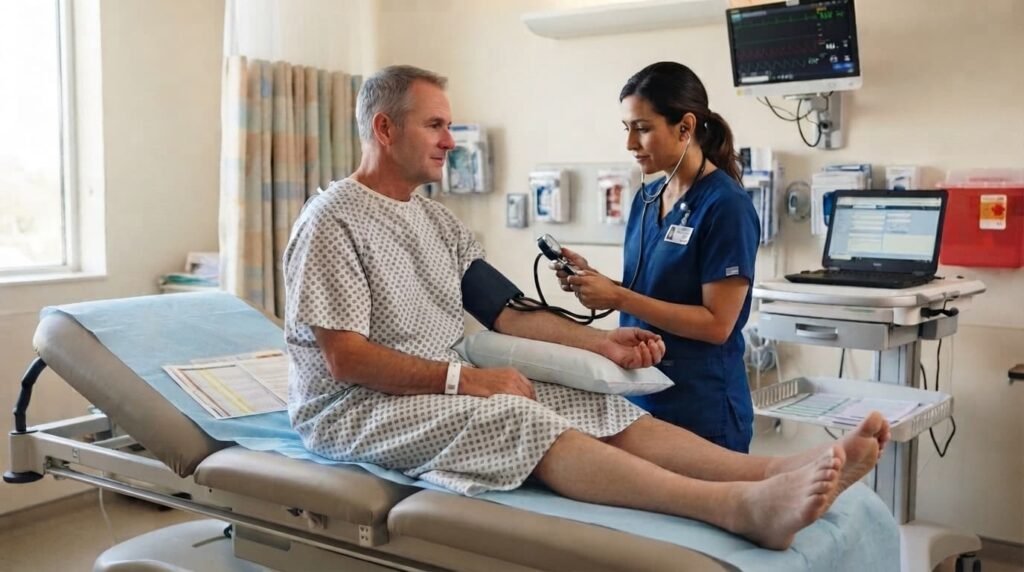
Patients usually stop eating and drinking several hours beforehand. This follows standard anaesthetic guidance for safety. Certain medications, particularly blood thinners, may need pausing in advance. Smokers are often advised to stop, since smoking raises infection risk. It also slows healing considerably during the weeks that follow. A pre-assessment appointment confirms fitness for anaesthesia. It also answers any outstanding questions about the day itself.
During Surgery
The surgical team positions the leg for full joint access. Sterile fluid fills the knee to improve visibility. The arthroscope then enters through a small port. Every structure inside the joint gets examined before any repair begins. Depending on findings, the surgeon may trim torn cartilage or reconstruct a ligament. Loose fragments get removed, and tissue samples are sometimes taken for testing. This minimally invasive knee surgery approach keeps trauma to the surrounding tissue to a minimum. Once treatment finishes, the fluid drains away completely. Incisions are closed with sutures or adhesive strips, and a dressing covers the knee. Patients then move to a recovery area for monitoring.
Risks and Complications
Serious complications remain uncommon, but no operation is entirely risk-free. Mild side effects, such as short-term swelling, are far more typical. Recognised risks of knee arthroscopy include:
- Infection within the joint or incision sites
- Blood clots, including deep vein thrombosis, after knee surgery
- Bleeding or persistent joint swelling
- Nerve irritation causing numbness around the knee
- Stiffness that limits full bending or straightening
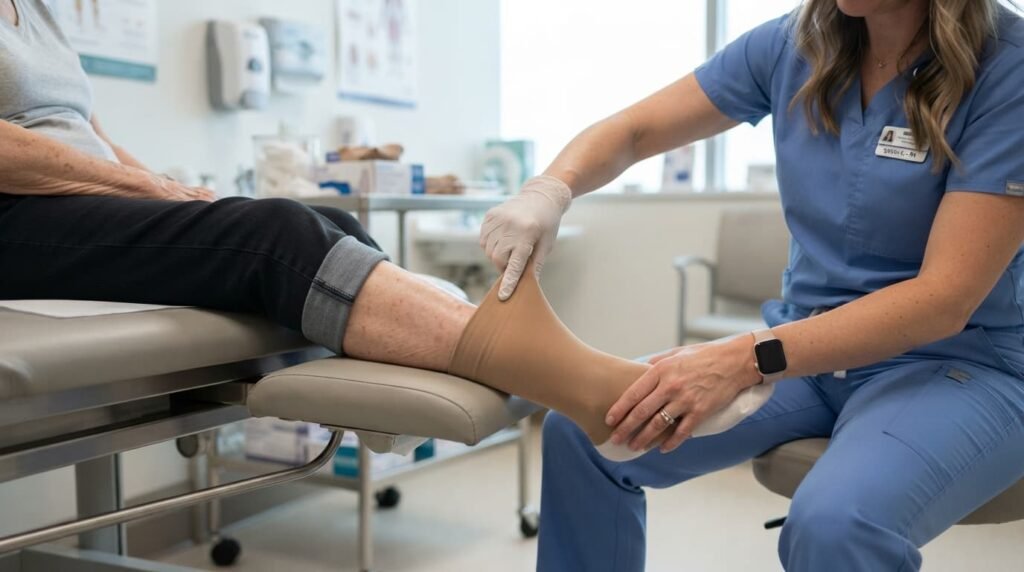
Surgeons take preventive steps to reduce these risks. Sterile technique, compression stockings, and early mobilisation all play a role. Patients with cartilage removal face a slightly higher long-term chance of osteoarthritis. The protective cushioning is simply thinner afterwards. Anyone noticing fever, worsening pain, or calf swelling after surgery should contact their surgical team promptly.
Recovery Timeline After Knee Arthroscopy
Knee arthroscopy recovery varies by individual, but most people follow a broadly predictable path. Recovery time depends heavily on which structures were treated during surgery.
The First Week
Swelling and discomfort peak in the first few days. The RICE approach, meaning rest, ice, compression, and elevation, helps control both. Wound checks confirm healing progresses without infection. Recovery time for simple diagnostic procedures is often shorter than for reconstructive surgery. Sleep can be disrupted during this period. Elevating the leg overnight often helps settle swelling by morning. Pain relief prescribed at discharge should be taken as directed, rather than skipped once discomfort eases slightly.
Crutches and Bracing
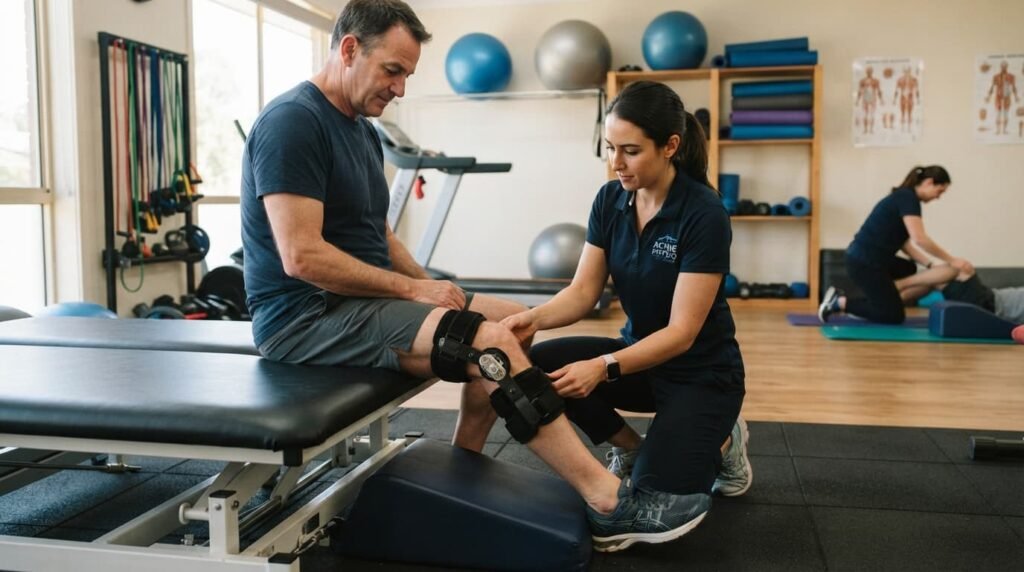
Many patients need crutches after knee surgery immediately afterwards, particularly following ligament repair. Guidance on how to use crutches after knee surgery usually comes from the physiotherapy team before discharge. A knee brace after arthroscopy protects the repaired tissue and controls the movement range during early healing. Wearing time depends entirely on the specific procedure performed. Surgeons set instructions to suit each case individually. A physiotherapy plan often begins once bracing eases.
Physiotherapy and Strengthening
Physiotherapy after knee arthroscopy restores range of motion, rebuilds muscle strength, and retrains balance. Sessions typically begin within one to two weeks. They continue for several months after ligament reconstruction, in particular. Consistent attendance strongly influences long-term outcomes more than almost any other single factor in the entire process. Home exercises usually complement supervised sessions, and a printed programme often accompanies discharge paperwork for reference.
Returning to Driving and Daily Life
Most patients resume light activity within two to three weeks. Office-based work often resumes sooner than physically demanding jobs. Driving after surgery is generally not allowed until full muscle control returns to the leg. Insurers may specifically require confirmation of this before cover applies. High-impact sports typically wait several months, particularly after ligament reconstruction. Aftercare instructions usually include a clear timeline set for the individual procedure performed.
How Much Does Knee Arthroscopy Surgery Cost in the UK?
Surgery cost varies depending on the surgeon, hospital and complexity of repair needed. Diagnostic-only procedures sit at the lower end of the private pricing scale. Ligament reconstruction, by contrast, costs considerably more due to longer theatre time.
NHS or Private: Which Route Actually Suits Better?
NHS waiting times for non-urgent knee surgery can stretch for many months. Private treatment offers faster scheduling, though patients pay for that convenience directly.
A quote that looks cheap on paper can still hide costly gaps in cover. A private quote should always include the surgeon’s fee, hospital charges, anaesthesia and follow-up appointments.
Patients researching options in London sometimes also review Arthrosamid injection treatment as a comparison point. It avoids theatre time altogether for suitable candidates with osteoarthritis rather than mechanical joint damage.
Are There Alternatives to Knee Arthroscopy?
Surgery is not always the first or only option available. Non-surgical routes include physiotherapy, weight management, bracing and targeted injections such as an Arthrosamid injection for knee osteoarthritis.
Research suggests arthroscopy offers limited benefit for pain caused purely by wear and tear. This is why many surgeons now reserve it mainly for mechanical problems, such as a locked or catching knee. Patients with pure osteoarthritis are often steered into non-surgical routes first.
Patients comparing injection options often weigh Arthrosamid against hyaluronic acid before choosing a non-surgical route. Others look into a modern alternative to knee replacement surgery once the joint has become more severely worn.
A structured knee brace built for osteoarthritis can also delay the need for any surgical intervention. Combining bracing with strength work often buys valuable time before a bigger decision is needed.
The Knee Arthroscopy Aftercare Checklist Worth Following
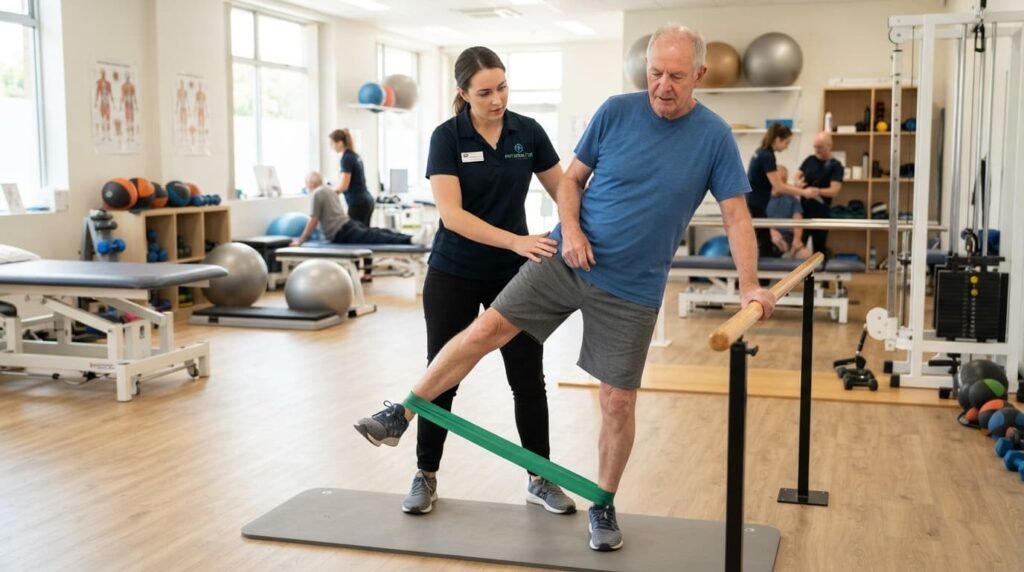
Following clear aftercare guidance reduces complications and speeds recovery considerably:
- Keep the wound clean and dry until cleared by a clinician
- Take prescribed pain relief on schedule, not just when pain peaks
- Attend every physiotherapy session booked after surgery
- Avoid driving until formally cleared by the surgical team
- Watch closely for calf swelling, fever or increasing redness
- Build activity back up gradually rather than rushing into sport
Rushing back to full activity is the single most common reason recovery stalls. A short video on non-surgical knee care from Dr SNA Clinic offers a useful visual companion. It walks through gentle, joint-friendly movement in plain, practical terms.
Getting Back to Work and Sport Safely
Office-based roles often allow a return to work within one to two weeks. Physically demanding jobs, involving lifting or long periods on the feet, may need four to six weeks off. Every case differs, so employer conversations should happen early rather than at the last minute.
Contact sports and heavy training are usually paused for at least six weeks. Some injuries, particularly ligament repairs, need several months before high-impact activity resumes safely. A physiotherapist can set realistic milestones rather than a single fixed date.
Swimming and stationary cycling often return to the routine earlier than running or contact drills. Low-impact movement keeps the joint mobile without adding excess strain during healing. Gradual reintroduction, guided by pain response rather than the calendar, tends to produce the safest outcome.
Flying also carries a small added risk in the days immediately after surgery. Most surgeons advise waiting four to six days before any long-haul travel, partly due to clot risk. Checking with the surgical team before booking flights avoids last-minute disruption.
Frequently Asked Questions
How long does knee arthroscopy recovery take?
Most patients recover within two to six weeks, depending on the extent of treatment carried out during surgery. Ligament repairs generally take longer than diagnostic procedures alone.
Is knee arthroscopy a major surgery?
It is less invasive than open surgery or joint replacement, but it still involves anaesthesia and carries genuine surgical risk. It should be treated with the same seriousness as any operation.
What is the average surgery cost in the UK?
Private pricing varies by hospital, surgeon and procedure complexity. A detailed quote covering every stage of care is the only reliable way to compare providers fairly.
When can crutches be stopped after surgery?
Most patients reduce crutch use gradually over one to two weeks. Pain levels and the surgeon’s specific advice guide the exact timeline.
Can this procedure help osteoarthritis of the knee?
Evidence suggests limited long-term benefit for pain caused purely by wear and tear. Many surgeons instead recommend physiotherapy, weight management or Arthrosamid injections for that group of patients.
What are the main risks involved?
Infection, stiffness, nerve irritation and deep vein thrombosis are the most discussed risks, though serious complications remain uncommon overall.
Is driving allowed straight after surgery?
No. Full muscle control and pain-free braking are required first. This usually takes one to two weeks, depending on the leg treated and the surgery performed.
Knee arthroscopy offers a minimally invasive route to diagnosing and treating common knee injuries. Coverage here spans cartilage damage, ligament injury, and patellar instability alike. Recovery follows a structured path involving early rest, supported movement, and dedicated physiotherapy. Costs and suitability vary by individual case, making proper assessment essential before any decision. Choosing the right treatment path starts with an accurate diagnosis, not guesswork.
Mr Syed Nadeem Abbas, Consultant Orthopaedic Specialist based in London, provides a detailed assessment for patients considering this procedure. Consultation-led guidance helps match each case to the most appropriate treatment route.
Read more: How Ultrasound-Guided Knee Injections Improve Pain Relief
Read more: How Patellofemoral Pain Syndrome Differs From Knee Osteoarthritis


