
Fat pad impingement knee pain develops when a cushion of fatty tissue beneath the kneecap becomes pinched. The surrounding bones cause the pinching. More than four million adults in the UK live with some form of knee osteoarthritis. A smaller group develop fat pad impingement as a related or standalone problem. The condition is also known as Hoffa’s fat pad impingement, named after the tissue involved, or infrapatellar fat pad impingement. Pain usually settles just below the kneecap. It tends to worsen when the leg straightens fully. Many cases overlap with other front-of-knee pain conditions. Accurate diagnosis matters before treatment begins, since the wrong approach can slow recovery considerably.
What Is Fat Pad Impingement in the Knee?
The infrapatellar fat pad, often called Hoffa’s fat pad, sits behind the patellar tendon and below the kneecap. It fills the space where the thigh bone meets the shin bone. This tissue contains a dense network of nerve endings. That nerve density explains why even minor pinching can trigger sharp, disproportionate pain.
The fat pad is not simple padding. It helps distribute load across the joint. It also supports kneecap tracking during bending and straightening. Three separate fat pads sit around the knee in total. The infrapatellar version causes by far the most clinical concern, largely due to its position directly in the compression line. Fat pad impingement occurs when this tissue becomes trapped between the kneecap, thigh bone and shin bone. This most often happens as the knee straightens completely.
Researchers believe the fat pad also plays a role in position sense. Nerve signals from the tissue help the body judge where the knee sits in space. This function partly explains the intensity of pain when the fat pad becomes irritated. The area is unusually sensitive compared with surrounding structures.
Where the Knee Fat Pad Sits Within the Joint
The fat pad’s position means it sits close to several other structures. The patellar tendon passes directly over it. The synovial lining of the joint surrounds it. This proximity explains why fat pad problems often develop alongside other knee injuries rather than in isolation. It is part of why the word “syndrome” is often attached to the diagnosis.
What Causes Fat Pad Impingement Syndrome?
The condition rarely has a single trigger. Researchers point to several contributing factors rather than one clear-cut cause.
- Direct trauma: A fall onto a bent knee, or a blow to the joint, can bruise the fat pad.
- Repetitive overextension: Movements pushing the knee past its natural straight position place repeated pressure on the tissue. This pattern is common in dance, football and gymnastics.
- Postural habits: Standing with knees locked backwards reduces reliance on the thigh muscles. This posture increases strain on the joint structures instead.
- Existing knee conditions: Some evidence links the syndrome with early-stage knee osteoarthritis. The exact relationship remains unclear.
- Footwear and gait patterns: Flat shoes force greater knee extension during walking. This can aggravate a fat pad that is already sensitive.
- High training volumes: Intense or rapidly increased activity levels appear linked to fat pad swelling in some studies. The exact mechanism is still under investigation.
Once the tissue swells or thickens, it loses the flexibility needed to slide freely. The cycle of pinching then tends to repeat.
Common Triggers Behind Fat Pad Knee Pain
Athletes training through pain often unknowingly worsen the problem. Continuing high-impact activity without addressing swelling allows scar tissue to form. That scar tissue further restricts the fat pad’s natural movement, making recovery slower once treatment finally starts.
Who Is Most Likely to Develop Fat Pad Impingement Knee Pain?
Certain groups face a higher likelihood of developing this condition, largely due to repeated knee extension or occupational strain.
- Runners and sprinters: The repetitive straightening motion involved in running places consistent load on the fat pad over time.
- Dancers and gymnasts: Hyperextended knee positions, common in these disciplines, increase pinching risk substantially.
- People with a history of knee injury: A previous ligament tear or dislocation can leave the joint mechanically altered.
- Those with occupations involving kneeling or overhead lifting: Construction and warehouse roles often combine repeated bending with straightened-leg loading.
- People who habitually hyperextend their knees while standing: This posture, often called “locking the knees,” reduces active muscle support.
Recognising these risk patterns early allows targeted prevention advice, rather than waiting for symptoms to become established. Middle-aged and older adults with early joint changes sometimes overlook fat pad symptoms entirely. The discomfort gets mistaken for general knee stiffness rather than a distinct, treatable problem.
Fat Pad Impingement Symptoms to Recognise
Fat pad impingement symptoms usually centre on the area just below and to either side of the kneecap.
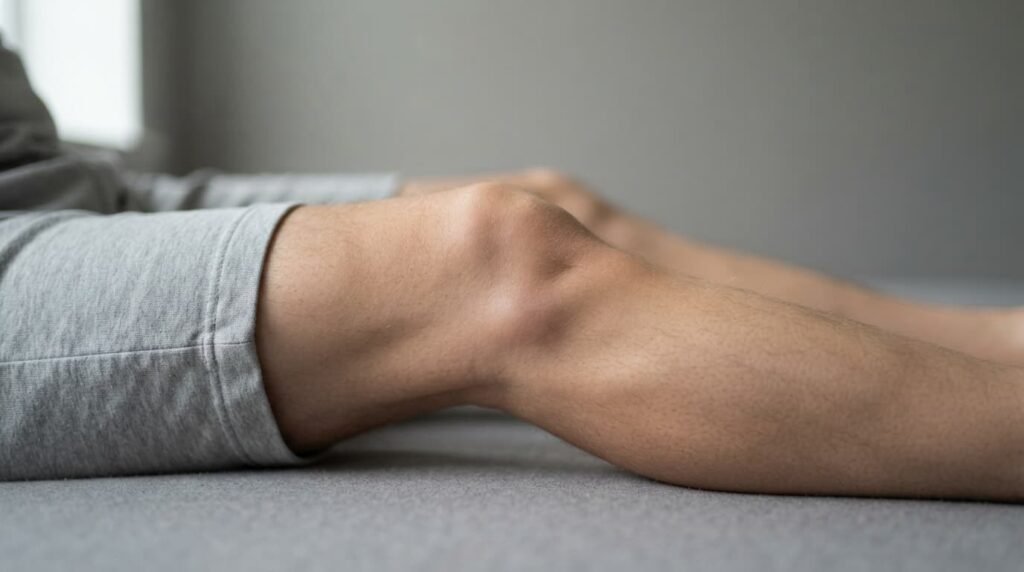
- A burning or aching sensation deep to the patellar tendon
- Visible puffiness beneath the kneecap
- Pain that intensifies when the knee straightens fully
- Discomfort after prolonged sitting with a bent knee
- Increased pain when climbing stairs or standing for long periods
- Tenderness when pressure is applied directly over the fat pad
- A sensation of fullness or tightness at the front of the joint
How Fat Pad Impingement Differs From Other Anterior Knee Pain
Anterior knee pain has several possible sources, and fat pad impingement is frequently confused with other conditions in this category. Pain worsening during squats or bent-knee loading points toward the patellar tendon or kneecap joint. The fat pad is less likely to be involved in these cases. Fat pad discomfort typically eases in a slightly bent position instead, which is a useful distinguishing clue during self-assessment.
Some clinicians compare fat pad impingement against patellofemoral pain syndrome during assessment. Both conditions share a similar general location, yet the underlying mechanisms and treatment approaches differ considerably. Getting this distinction right shapes the entire recovery plan.
How Is Fat Pad Impingement Syndrome Diagnosed?
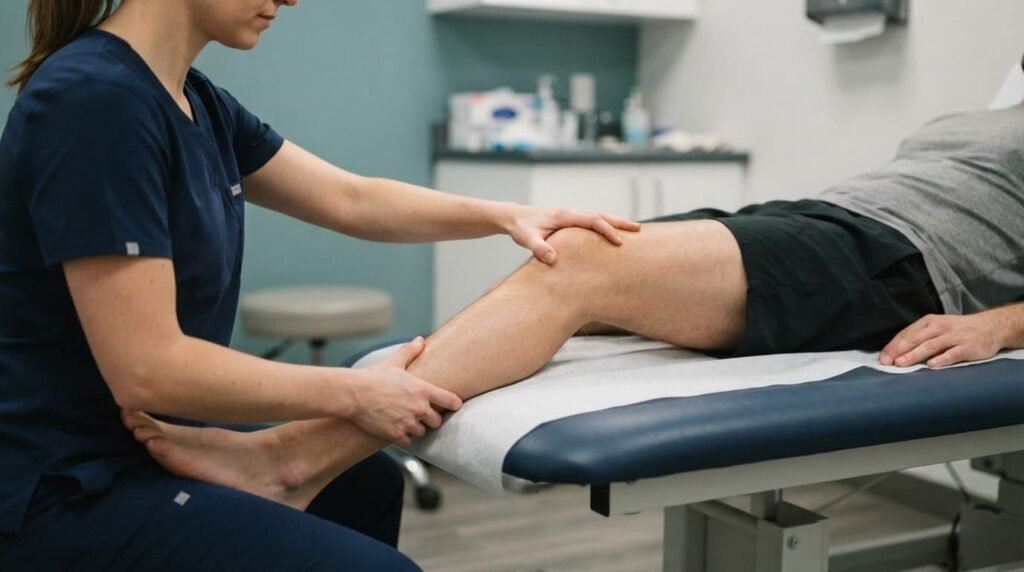
Diagnosis relies mainly on clinical assessment rather than imaging alone. A physiotherapist or doctor typically reviews how the injury began. Questions usually cover where the pain sits and how the knee reacts to specific movements.
Pushing the leg into full extension usually reproduces pain when fat pad impingement is present. Adding a firm quadriceps contraction strengthens this test further. This simple test often provides more useful information than a scan. An MRI becomes helpful only when the diagnosis remains uncertain. Scanning also matters when other structures, such as the meniscus or ligaments, need to be ruled out.
Because front-of-knee pain overlaps with several diagnoses, misdiagnosis remains common. Pressing on the fat pad alone is not a reliable test on its own. The tissue can feel tender even when a different structure is the true source of the pain. A broader assessment is always recommended for this reason. A short video overview of knee anatomy and non-surgical treatment principles sits on the Dr SNA Clinic YouTube channel. It offers useful additional visual context.
Fat Pad Impingement Treatment Options
Treatment usually follows a staged approach. Clinicians start with the simplest interventions and progress only if pain persists.
Rest, Ice and Activity Changes
Avoiding fully straightened knee positions gives the tissue a chance to settle. Ice applied for short periods can reduce swelling and ease acute discomfort. These adjustments are temporary rather than permanent. Normal movement should return gradually as pain reduces.
Footwear plays a supporting role too. Shoes with a slight heel, or heel-raising insoles, reduce the degree of knee extension needed during walking. This small change can calm an irritated fat pad more quickly than expected.
Fat Pad Impingement Taping and Physiotherapy
This physiotherapy technique involves tape applied across the lower kneecap. The tape tilts the kneecap slightly and reduces pressure on the tissue beneath. Evidence for the technique remains limited, though many patients report noticeable relief within days. A partner or physiotherapist usually applies it, since self-application over a relaxed leg proves difficult.
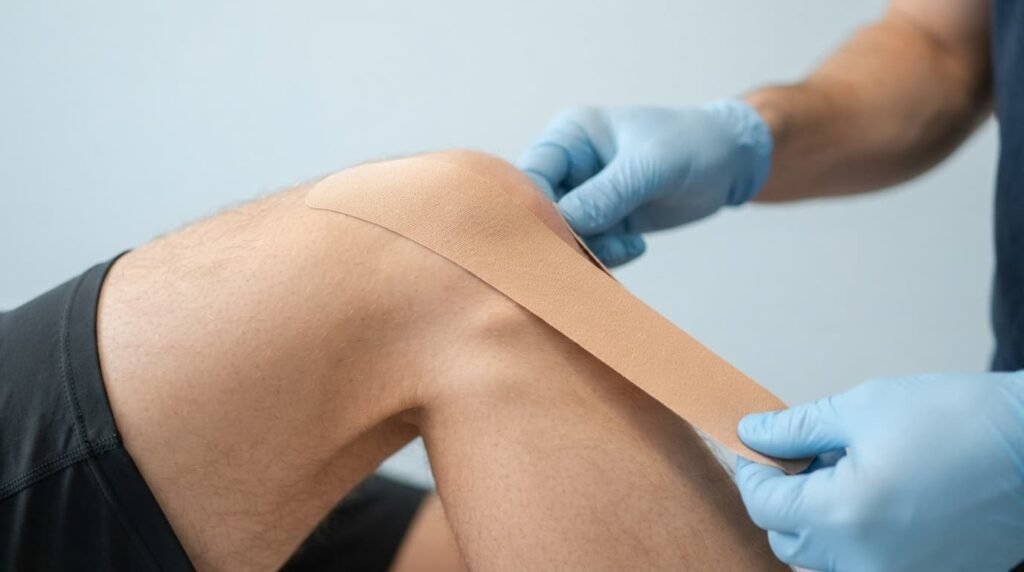
Physiotherapy often combines manual therapy with a structured low-impact exercise programme. Programmes are designed to restore movement without provoking further irritation, and progress is usually reviewed every few weeks.
Exercises Used to Treat Fat Pad Impingement
Structured exercises focus on strengthening muscles that support the knee without loading the fat pad directly.
- Gluteal strengthening: Clam exercises improve hip control and reduce strain transferred to the knee.
- Hamstring activation: Bridge exercises help control knee extension during walking and running.
- Gentle quadriceps work: Isometric holds with the knee slightly bent build strength safely, avoiding full extension.
- Foot and ankle exercises: Correcting excessive inward foot roll can reduce abnormal loading through the joint.
Quad-focused stretching should wait until acute pain has settled. Early stretching often increases irritation rather than easing it. The patellar tendon presses directly against the fat pad during this movement.
Managing Pain With Medicines and Injections
Over-the-counter anti-inflammatory medicines can help reduce pain and swelling during flare-ups. A steroid injection for knee pain treatment provides meaningful short-term relief for stubborn cases that fail to settle with physiotherapy alone.
However, corticosteroid injections carry a specific risk of fat pad impingement. Repeated use may cause the fat pad to shrink, which can create new pain rather than resolving the original problem. Clinicians generally reserve steroid injections for cases that have not responded to conservative treatment, weighing the risks carefully before proceeding.
When Surgery Becomes Necessary
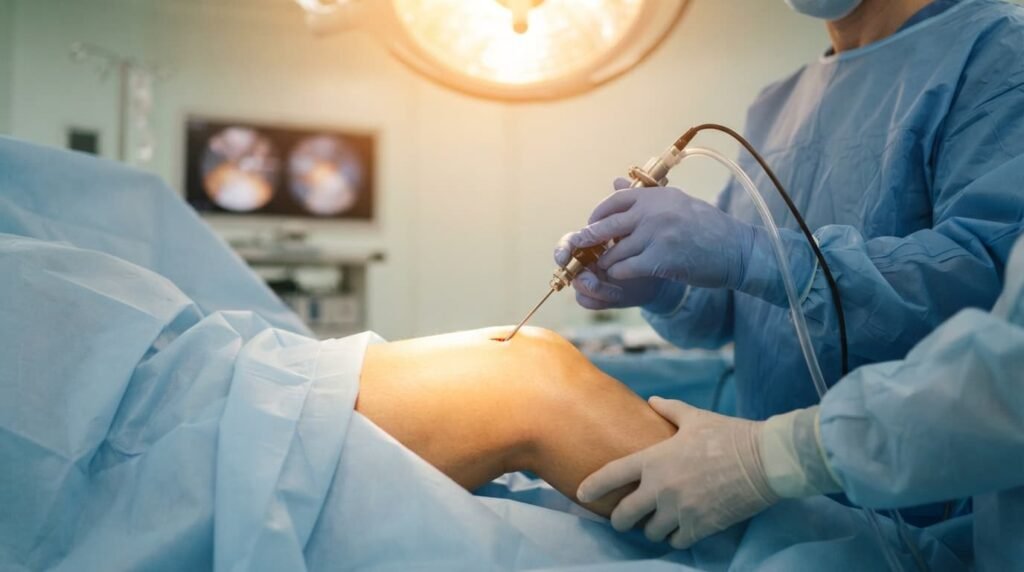
Surgery remains a last resort. Most patients recover fully without needing it. When conservative treatment fails, keyhole surgery can remove thickened or scarred sections of the fat pad. The healthy tissue that remains stays fully preserved.
Recovery Timeline and What to Expect
Recovery speed depends heavily on how early treatment begins. Mild, freshly developed cases often respond within two to four weeks of rest, taping and activity adjustment. Cases present for several months, particularly where scar tissue has formed, tend to need a longer physiotherapy course. This course typically lasts eight to twelve weeks.
Following surgery, most patients regain full range of motion within four to six weeks. Building confidence for sport or heavy activity generally takes an additional few months. A structured, gradual return-to-activity plan works better than a fixed calendar date.
Patience during this period matters more than most people expect. Returning to full training too early, before the fat pad has settled, commonly causes symptoms to flare up again. A staged return, tracked against pain response rather than the calendar, tends to produce more reliable long-term results.
Preventing Fat Pad Knee Pain From Returning
Prevention centres on avoiding repeated overextension and building supporting muscle strength early. Gradual increases in training load, rather than sudden spikes, reduce the chance of the fat pad becoming irritated again.
Addressing gait abnormalities, such as excessive foot pronation, also lowers the risk of recurrence. Maintaining a healthy body weight reduces overall load through the knee joint. This benefits the fat pad alongside every other structure inside it.
Anyone managing broader joint concerns may find it useful to explore wider strategies for staying active with knee osteoarthritis. Posture and movement patterns affect the whole knee, not just the fat pad in isolation.
Reviewing footwear regularly, warming up properly before sport, and returning to activity gradually after a flare-up all support long-term prevention. Small, consistent habits tend to matter more than occasional intense efforts. This applies especially to anyone who has already had one episode of this condition.
Frequently Asked Questions
What is fat pad impingement knee pain?
Fat pad impingement knee pain happens when the infrapatellar fat pad becomes pinched. This pinching occurs between the kneecap, thigh bone and shin bone. It typically causes a burning ache below the kneecap that worsens with a fully straightened leg.
Is Hoffa’s fat pad impingement the same as infrapatellar fat pad impingement?
Yes, both terms describe the same condition. Both are named after the fat pad involved and appear throughout medical literature interchangeably. No meaningful clinical difference exists between them.
Can fat pad impingement exercises be done without professional guidance?
Gentle exercises, such as clam movements or bridges, can begin at home in many cases. Professional guidance still helps ensure correct technique and timing, particularly around introducing quadriceps loading safely.
Does fat pad impingement taping actually work?
Taping helps many patients feel more comfortable during recovery, though formal research on its overall effectiveness remains limited. It is generally considered safe to trial under physiotherapy guidance.
When should a steroid injection be considered for this condition?
Steroid injections are usually considered only after physiotherapy and activity changes have been tried without success. Repeated corticosteroid use is avoided due to the risk of fat pad shrinkage over time.
How long does recovery from fat pad impingement usually take?
Mild cases often settle within a few weeks with rest and activity changes. More persistent or recurrent cases involving physiotherapy and taping can take several months to resolve fully.
Can fat pad impingement knee pain come back after treatment?
Recurrence is possible, particularly if the original triggers are not addressed. Overextension habits and unsuitable footwear are common examples worth reviewing alongside symptom treatment.
Fat pad impingement knee pain often improves with rest, targeted exercises and simple activity adjustments. Most people avoid surgery entirely with early, appropriate management. Persistent or worsening knee pain deserves a proper clinical assessment rather than guesswork.
Mr Syed Nadeem Abbas, a consultant specialising in non-surgical knee osteoarthritis treatment, reviewed this article for clinical accuracy.
Read more: Knee Pain Treatment Options That Actually Relieve Discomfort
Read more: Osteoarthritis Exercises Help Ease Knee Pain and Restore Movement


