✅ Medically reviewed
Preventing knee pain is far easier than repairing a joint that has already worn down. Arthritis UK estimates that 5.4 million people in the UK live with knee osteoarthritis. The condition develops slowly, so early habits shape how the joint ages.
The knee is the body’s largest joint, and it carries the day’s workload. Every staircase, squat and school run adds stress. Small, steady changes protect the joint better than occasional heroic efforts.
Regular exercise, strong thigh and hip muscles, a healthy weight, supportive shoes, and upright posture all reduce load on the knee. None of these needs a gym membership or a degree in biomechanics.
What causes knee pain and who faces the highest risk
Knee pain rarely appears from nowhere. Most cases build from a mix of overload, muscle weakness and age-related change. Knowing the main triggers makes prevention far more targeted.
Common knee pain causes
Several knee pain causes recur in clinic. Overuse, weak thigh muscles and stiff hips top the list. Poor footwear, sudden jumps in activity and heavy lifting with a rounded back add further strain. Structural problems such as arthritis, torn cartilage and ligament injury also play a part. Inflammation usually settles with rest, ice and gentle stretching. Structural damage tends to linger and needs proper assessment.
Everyday habits that quietly strain the knee
Daily routines add up. Long hours of sitting stiffen the hips and weaken the glutes. The knee then takes on more load when you stand. Weekend warriors often pay the price. Five quiet days followed by a long hill walk or a five-a-side match overload unprepared tissue. Carrying heavy bags up stairs, twisting on a planted foot and ignoring early aches add further strain. Spreading activity evenly across the week keeps the joint conditioned.
Family history of osteoarthritis and age
A family history of osteoarthritis raises risk, but it does not seal the outcome. Genes load the dice, yet daily habits still influence many of the rolls. Age matters too, because joint tissue changes gradually after the late forties. Relatives who needed knee replacements are a reason to start protecting the joint early. The daily habits that protect joints for decades apply equally to the knees. Learning how to prevent knee osteoarthritis begins with the factors that people can control. The Dr SNA Clinic YouTube channel explains joint pain relief options in video form.
Preventing knee pain with regular, low-impact movement
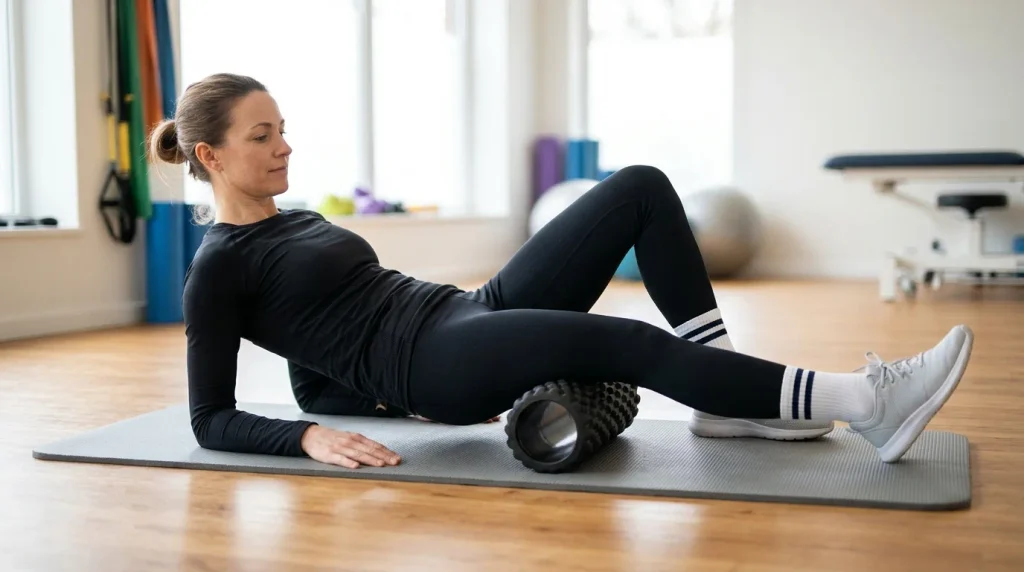
Rest feels kind, but the knee prefers motion. Cartilage has no direct blood supply, so movement drives nutrients through the joint fluid. Regular activity keeps the joint nourished and the muscles ready.
How movement protects the joint
Movement spreads joint fluid across the cartilage surface. It also helps control inflammation and supports a healthy weight. Motion is the cheapest joint supplement on the market, and it needs no prescription. Preventing knee pain depends on consistent activity rather than occasional bursts. Worry about harming a sore knee is common, and fear of movement keeps many people inactive.
Low-impact exercises for knees
Low-impact exercises for knees spread the load without jarring the joint. Good options include:
- Walking on level ground
- Cycling indoors or outdoors
- Swimming and water aerobics
- Using an elliptical trainer
UK health guidance suggests 150 minutes of moderate activity each week. Spreading that time over several days works better than one long session. Even ten-minute walks count toward the total. Kneeling, deep knee bends and downhill running deserve caution. Those moves raise joint stress sharply.
Gentle exercise when the joint already aches
Exercises for knee pain should start gently and build slowly. Mild aching during activity is acceptable, but sharp pain is a stop sign. Pain that lingers into the next day means the dose was too high. Reducing the effort, not abandoning the habit, is the usual fix.
A simple traffic-light rule helps. Green means mild discomfort. Amber means moderate soreness that settles quickly. Red means sharp pain, so the session stops.
Strength training for stronger, steadier knees
Muscles act as shock absorbers for the joint. Strong thighs, hips and calves share the load that would otherwise land on cartilage and ligaments. Preventing knee pain gets easier with two short strength sessions each week.
Knee strengthening exercises that target the right muscles
Knee strengthening exercises should focus on the quadriceps, hamstrings and glutes. These muscles absorb force with every step. Age-related muscle loss makes that job harder, which is why strength work matters more with each decade.
Simple moves to start at home
Four beginner moves cover most of the ground:
- Step-ups: Use a low step. Lift the body with one leg, then lower slowly. Complete 10 to 15 repetitions per leg.
- Straight leg raises: Lie on your back with one knee bent. Lift the straight leg to the height of the bent knee. Repeat 10 to 15 times per leg.
- Glute bridges: Lie on your back with both knees bent. Lift the hips, pause, then lower. Repeat 10 to 12 times.
- Side-lying leg lifts: Lie on one side with the legs straight. Raise the top leg slowly, then lower it. Repeat 10 to 12 times per side.
Start light, add repetitions first and add resistance second. Rest days matter as much as work days. Muscles strengthen during recovery, not during the set.
Hamstring stretches and hip flexor work
Tight hamstrings and tight hips pull on the knee from both directions. Hamstring stretches ease the pull from behind. The standing hip flexor stretch opens the front of the hip. Pain felt at the knee sometimes starts in the hip, so hip mobility deserves attention. Hold each stretch for 30 seconds and repeat twice per side.
Warm-ups and stretches that prepare the joint
Stiff muscles force the knee to work harder than necessary. A few minutes of preparation costs little. It also saves a lot of limping later.
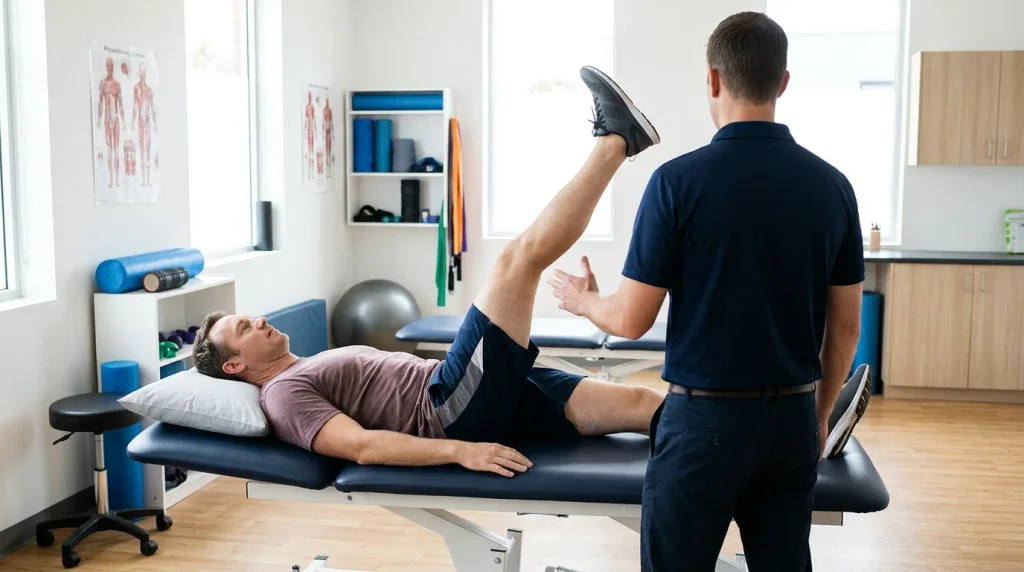
Easing stiffness with daily stretching
Stretches for knee pain should target the calves, hamstrings, quadriceps and hips. Hold each stretch for 30 to 60 seconds. Breathe normally and avoid bouncing. A stretch should feel firm, never sharp. Short daily sessions beat one heroic weekend effort.
Warming up before runs
A knee warm-up before running takes ten to fifteen minutes. Begin with brisk walking or easy jogging, then build speed gradually. This slow ramp-up prepares muscles and joint fluid for the load ahead. Jumping straight to full speed is the knee’s least favourite surprise.
Building activity without overload
Sudden jumps in distance or speed overload the knee. Increase running or walking time gradually, and alternate hard days with easy ones. Softer surfaces such as trails and tracks reduce impact compared with concrete. Cross-training on a bike or in a pool gives the joints a break while fitness keeps rising. Progress is a staircase, not a rocket launch.
Weight control and knee load
Body weight multiplies the force that passes through the knee. Even modest changes alter that load. Preventing knee pain therefore includes sensible weight management.
How extra weight loads the joint
Johns Hopkins Arthritis Centre reports a striking figure. Ten extra pounds (4.5 kg) add 30 to 60 pounds (14 to 27 kg) of force per step. Every step turns small extra weight into a large extra load. Thousands of daily steps add that load up quickly. Weight also influences surgical planning, including knee replacement weight limits used in the UK.
Weight loss and knee pain relief
A loss of 10 per cent of body weight can reduce pain in overweight people with knee osteoarthritis. Daily function often improves too. Diet and activity work best as a pair. Crash diets cost muscle, and muscle protects the knee. Gradual loss protects the muscle that protects the joint. A GP or dietitian can set a safe pace.
Practical habits that support steady weight loss
Small changes last longer than strict plans. Protein at each meal helps protect muscle during weight loss. Walking after meals adds easy daily movement. Sleep matters too, because tired bodies tend to crave more snacks. Perfection is optional, but consistency is not. Anyone taking medication or living with a long-term condition should discuss changes with a GP first.
Shoes, heels and posture
Alignment starts at the feet and runs through the spine. Poor footwear and slouching shift load onto the wrong tissues. Preventing knee pain often needs only simple adjustments here.
Choosing the best shoes for knee pain
The best shoes for knee pain offer cushioning, arch support and a stable heel. Worn trainers lose shock absorption long before the uppers look tatty. Replace running shoes every 300 to 500 miles, or sooner if the sole wears unevenly. A professional fitting at a specialist running shop helps new runners choose well.
Heels and joint strain
Many wearers report knee pain after long days in high heels. Raised heels tip body weight forward, so the thigh muscles work harder to keep the knee straight. Stilettos belong at weddings, not on every commute. Low block heels or flats ease the strain. Footwear is only one of several factors behind knee pain in women.
Posture and knee pain
Muscle fatigue links posture and knee pain. A forward lean shifts the centre of gravity, and the leg muscles compensate. Those muscles tire, and the knee absorbs the extra strain. Head over shoulders and shoulders over hips is the simplest alignment check available. Strong core muscles help the body stay balanced. Glute bridges, yoga and Pilates all build that support. Desk workers benefit from standing and moving for a couple of minutes every 30 minutes. Sitting with both feet flat and hips level keeps the knees in neutral alignment.
Warning signs and when to seek specialist advice
Prevention has limits. Some symptoms need assessment rather than another stretch. Preventing knee pain also means acting early when something changes.
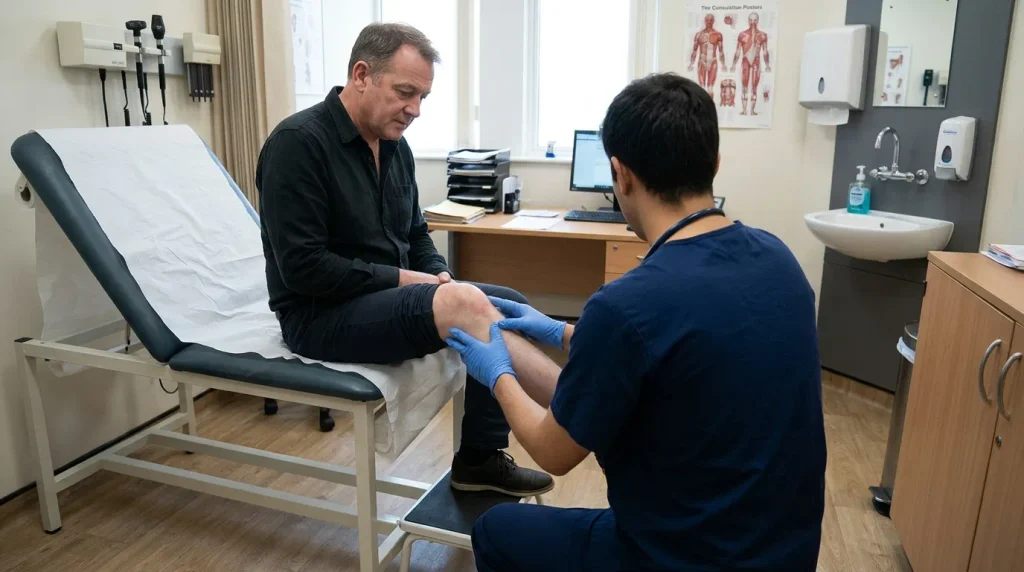
Persistent swelling and other symptoms
A swollen knee that lasts beyond a week or two needs medical review. Mild swelling after exercise usually settles with rest, ice and gentle movement. Persistent swelling, locking, giving way or night pain suggests a structural problem. The diagnosis of knee osteoarthritis rests on a clinical assessment, with scans used only where they add value.
A hot, red, rapidly swelling knee, fever, deformity or inability to bear weight needs urgent care.
Pain during deep bends
Knee pain when squatting often points to weak hips, tight calves or irritation around the kneecap. Squatting down to a chair reduces depth and load. Pain that persists despite sensible changes deserves a hands-on examination.
Non-surgical options when pain persists
Persistent pain does not always lead to surgery. Physiotherapy, strengthening and weight management usually come first. For suitable patients with knee osteoarthritis, a specialist may discuss an Arthrosamid injection. Arthrosamid is a hydrogel injection that may reduce pain in some patients. It does not reverse joint damage or cure arthritis. Candidate selection follows clinical criteria.
A simple weekly routine for healthier knees
Consistency beats intensity. A modest weekly plan fits around most work schedules, even desk-heavy ones.
- Two days: a strength session of 15 to 20 minutes
- Three days: 30 minutes of walking, cycling or swimming
- Daily: five minutes of gentle stretching
- Monthly: a check of shoe wear and a posture review
The whole plan costs less time than a typical coffee queue.
Frequently asked questions
What is the best approach to protecting the knees?
Preventing knee pain depends on several habits working together. Regular low-impact exercise, strong thigh and hip muscles, a healthy weight and supportive shoes all contribute. Consistency over months matters more than intensity in any one week. A specialist can personalise the plan where symptoms already exist.
Which exercises for knee pain are safest to start with?
Walking on level ground, cycling and swimming are gentle starting points. Light strength work with a slow tempo can follow. Mild aching is acceptable. Sharp pain or swelling means stopping and seeking advice.
Is knee pain when squatting a sign of arthritis?
Not always. Weak hips, tight calves and kneecap irritation also cause it. Arthritis becomes more likely when pain comes with stiffness, swelling or grinding. A clinical assessment separates these causes.
Can lifestyle offset inherited joint risk?
Lifestyle cannot erase inherited risk, but it can lower it. Regular exercise, a healthy weight and supportive footwear reduce joint stress. Early habits count the most. A relative’s history is a reason to act sooner, not to worry.
When does a swollen knee need urgent care?
A hot, red, rapidly swelling knee needs same-day medical help. Fever, deformity or inability to bear weight also need urgent attention. Mild swelling after exercise usually settles within days. Swelling that lasts beyond a week or two needs review.
Is a knee warm-up before running really necessary?
It is strongly worthwhile. Ten to fifteen minutes of walking or easy jogging prepares the muscles and joint fluid. Skipping it raises the chance of overuse problems in stiff muscles. Runners who rush the start often pay for it later.
Protecting the knees rests on four habits: regular movement, targeted strength, sensible weight and supportive footwear. Warm-ups, good posture and early review of unusual symptoms close the gaps. Preventing knee pain is a long game. Small habits repeated for years beat dramatic efforts that fade within a fortnight.
Mr Syed Nadeem Abbas, non-surgical knee and joint pain specialist. Book a private consultation for a personalised knee assessment.
Read more: An Arthrosamid Clinic London Patients Can Trust Passes Five Safety Checks
Read more: Arthrosamid and Baker’s cyst can be assessed together before treatment starts