✅ Medically reviewed
Medial vs lateral knee osteoarthritis describes which side of the joint carries the heaviest cartilage wear. Knee osteoarthritis is one of the most common joint conditions in adults, yet the pattern of wear varies widely. In most knees, the inner side wears first, and the outer side joins in later. Isolated outer-side disease is much rarer and often linked to leg shape.
The pattern matters because pain location, leg shape and treatment options all change with it. Many patients also ask whether Arthrosamid injection, a hydrogel injection, suits both sides. Knees, it seems, have a favourite side for wearing out.
Why the medial and lateral split matters
Knee wear is not one single problem. The side that wears decides the symptoms, the scan findings and the treatment plan. Understanding medial vs lateral knee osteoarthritis helps patients ask sharper questions in clinic.
Two knees with the same X-ray grade can behave very differently. One may ache on the inner side with every step. The other may ache on the outer side only on stairs. Treatment follows the pattern. Exercise plans, surgical options and injection decisions all take the worn side into account.
Getting the pattern right also prevents wasted effort. A plan built for the inner side may do little for an outer-side problem.
The three compartments of the knee
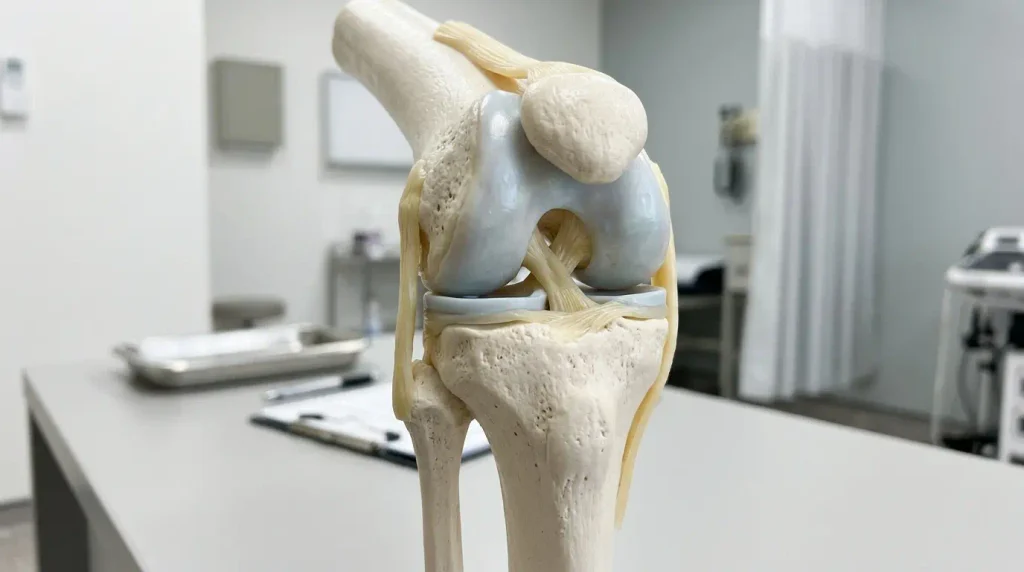
The knee is more than a simple hinge. It contains three separate compartments, and each one can wear at its own speed. Each compartment has its own load, its own cartilage surface and its own typical pain pattern.
Medial compartment
The medial compartment sits on the inside of the knee, where the thigh bone meets the shin bone. It carries most of the body’s weight during walking. That heavy workload explains why it often wears first.
Lateral compartment
The lateral compartment sits on the outside of the same joint. It carries less load in most people. It tends to stay healthier for longer, unless leg alignment shifts weight outwards.
Patellofemoral compartment
The patellofemoral compartment sits behind the kneecap. It wears in its own way and often causes front-of-knee pain on stairs. When all three compartments wear together, specialists describe tricompartmental osteoarthritis of the knee.
Medial compartment knee osteoarthritis: the common pattern
Medial compartment knee osteoarthritis is the pattern seen most often in clinics. Research describes knee wear as commonly starting on the inner side before spreading outwards.
In medial vs lateral knee osteoarthritis, the inner side is the usual starting point. The inner side also tends to produce the clearest symptoms, which makes the pattern easier to spot.
Why the inner side wears first
Walking sends a larger share of force through the inner side of the joint. Over decades, that extra load thins the cartilage there.
Bow-legged shape, known as varus alignment, raises the load further. Each step then pushes the thigh bone harder onto the inner shin bone. Age, an old meniscus injury and extra body weight add to the effect. A few degrees of bend can make one side of the knee work overtime.
Typical symptoms of the medial pattern
Inner knee pain is the signature symptom. It usually builds slowly and worsens with walking, stairs and long periods of standing.
Morning stiffness is common, but it usually settles fairly quickly once the knee is moving. Swelling may come and go through the week. Some patients feel that the knee might give way. Standing X-rays often show a narrowed joint gap on the inner side.
Lateral compartment knee osteoarthritis: the less common pattern
Lateral compartment knee osteoarthritis affects the outside of the joint. It is less common, so it receives less attention. That gap in attention can delay diagnosis. Published surgical reviews describe it as a distinct problem with its own treatment logic.
Why the outer side wears
Isolated outer-side disease links closely to a knock-kneed shape, called a valgus knee. In this pattern, the lower leg angles outwards beneath the thigh.
Weight then shifts towards the outer compartment. Surgical reviews describe the outer structures tightening while the inner ligaments stretch. Previous injury, loss of outer meniscus tissue and inflammatory arthritis can also contribute. Alignment is often the main driver in the lateral pattern. Younger, active patients can also develop outer-side wear, so age alone does not rule it out.
Typical symptoms of the lateral pattern
Outer knee pain is the main clue. It often sits along the joint line on the outside and flares on stairs or uneven ground.
Some patients notice that the knees look knock-kneed or feel unstable. Twisting movements may sharpen the ache. Iliotibial band irritation and outer meniscus tears can mimic this picture. Imaging therefore matters before any treatment decision.
Varus vs valgus knee: how alignment steers the pattern
Alignment is the hidden driver behind both patterns. A varus vs valgus knee comparison explains most of the difference between them.
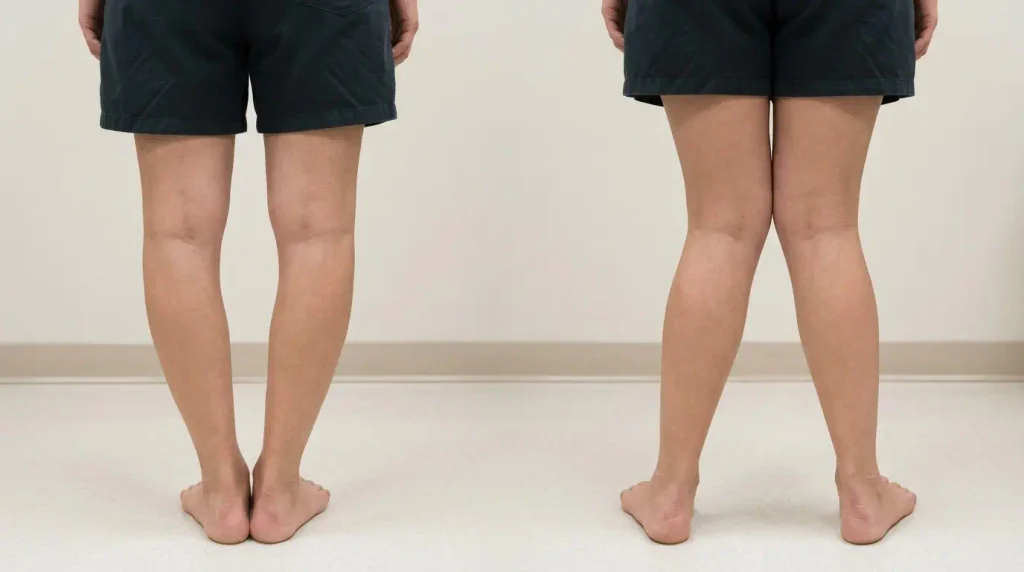
Varus means bow-legged, with the knees bowing outwards and the load landing on the inner side. Valgus means knock-kneed, with the knees angling inwards and the load landing on the outer side. Doctors measure this on long-leg standing X-rays. The images show whether the weight-bearing line passes through the inner or outer compartment. Alignment often decides which treatments make sense and which do not. Cushioning a joint does not straighten a leg, and straightening a leg does not rebuild worn cartilage.
The two patterns at a glance
A quick comparison makes the differences easier to remember. The table below sums up the main points.
| Feature | Inner (medial) pattern | Outer (lateral) pattern |
| How common | Common | Less common |
| Typical leg shape | Bow-legged | Knock-kneed |
| Pain location | Inside of the knee | Outside of the knee |
| Usual order of wear | Often first | Often later |
| Osteotomy site | Shin bone | Thigh bone |
A table helps because medial vs lateral knee osteoarthritis involves several small differences rather than one big one. Real knees rarely read from a textbook. Many show some wear on both sides, with one side clearly worse.
Risk factors shared by both patterns
Several factors raise the chance of knee wear on either side. Some can be changed, and some cannot. Knowing the difference helps with planning. Most of these risk factors apply equally to medial vs lateral knee osteoarthritis.
Factors that cannot be changed
Age is the largest factor. Cartilage becomes thinner and less resilient over the decades. Family history plays a part, because joint shape and cartilage quality run in families. Women are affected more often than men, particularly after the menopause. Previous injury also matters. A torn meniscus or ligament can shift load towards one side for years.
Factors that can be changed
Body weight is the biggest one. Losing weight reduces the load through the knee with every step. Weak thigh and hip muscles leave the joint less protected. Heavy kneeling, squatting or lifting at work can add strain.
Small, steady changes often matter more than dramatic ones. A joint that is loaded kindly tends to complain less.
How specialists tell the two patterns apart
Diagnosis starts with listening and examining. Imaging then confirms which compartment carries the damage.
Clinical examination
The specialist asks where the pain sits, when it appears and what makes it worse. Tenderness along the inner or outer joint line gives an early clue. Standing leg shape is checked next. Walking style, swelling, range of movement and ligament stability complete the picture.
Imaging
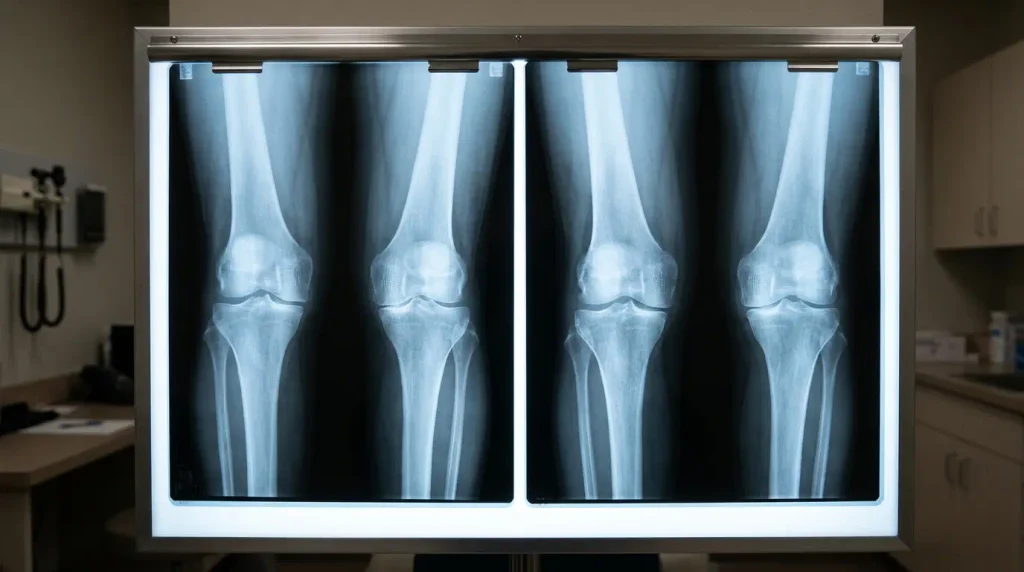
Weight-bearing X-rays show the joint gap on each side. A narrow gap on one side points to the dominant compartment. Skyline views look at the kneecap joint. Long-leg films measure alignment. MRI helps when a meniscus tear, bone bruising or another cause of pain is suspected.
Specialists often grade severity with the Kellgren-Lawrence scale, which runs from mild to severe grades. Mr Syed Nadeem Abbas is a non-surgical knee and joint pain specialist at Knee Pain Clinic UK. He reviews symptoms, alignment and scans together.
Ruling out other causes
Blood tests are not needed to diagnose standard osteoarthritis. They help when inflammatory arthritis or gout is suspected.
Hot, red swelling with fever needs urgent review for infection. A fuller explanation of how knee osteoarthritis is diagnosed covers each test in more detail. Accurate sorting of medial vs lateral knee osteoarthritis depends on that full picture.
Common myths about each pattern
Knee arthritis attracts plenty of folklore. A few myths come up again and again in clinic.
Myth: wear on one side means the other side is fine
Many knees show wear on both sides. One side is simply worse than the other. Scans describe the whole joint, not just the sore spot. Treatment plans should too.
Myth: an injection can straighten the leg
No injection changes the shape of a leg. Alignment is a bone problem, and only surgery changes bone shape. Injections aim at symptoms. They do not correct the angle that loads one side.
Myth: outer knee pain always means arthritis
Outer knee pain has several causes. Iliotibial band strain, an outer meniscus tear and ligament problems can all produce it. Imaging separates these causes from true joint wear. Guessing is a poor treatment strategy.
Does Arthrosamid work for medial and lateral knee osteoarthritis?
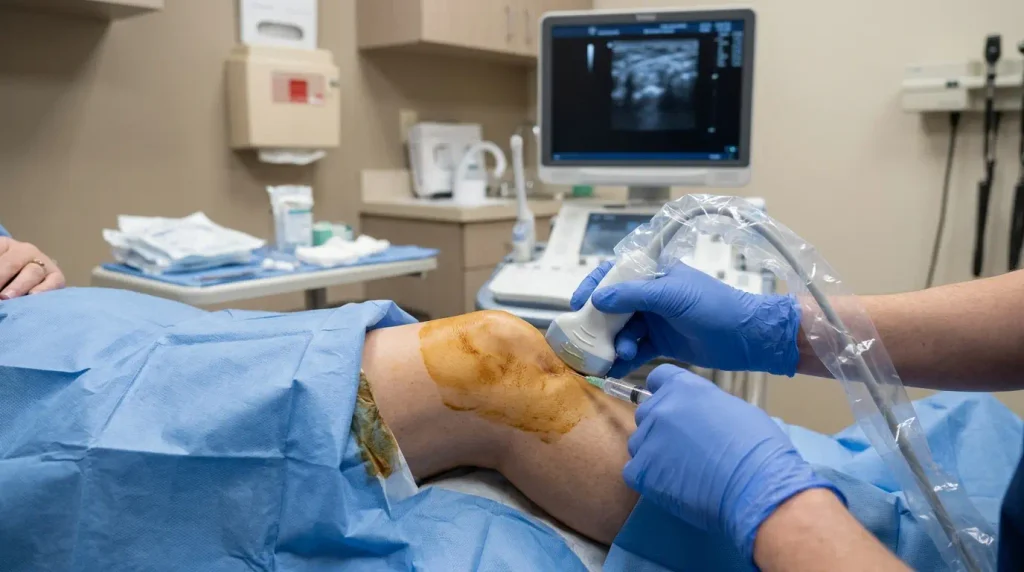
Arthrosamid treats the joint as a whole, so either pattern can be considered. Suitability depends on severity, alignment and symptoms rather than the side alone. A specialist assessment is what confirms whether the treatment fits an individual knee.
What the treatment involves
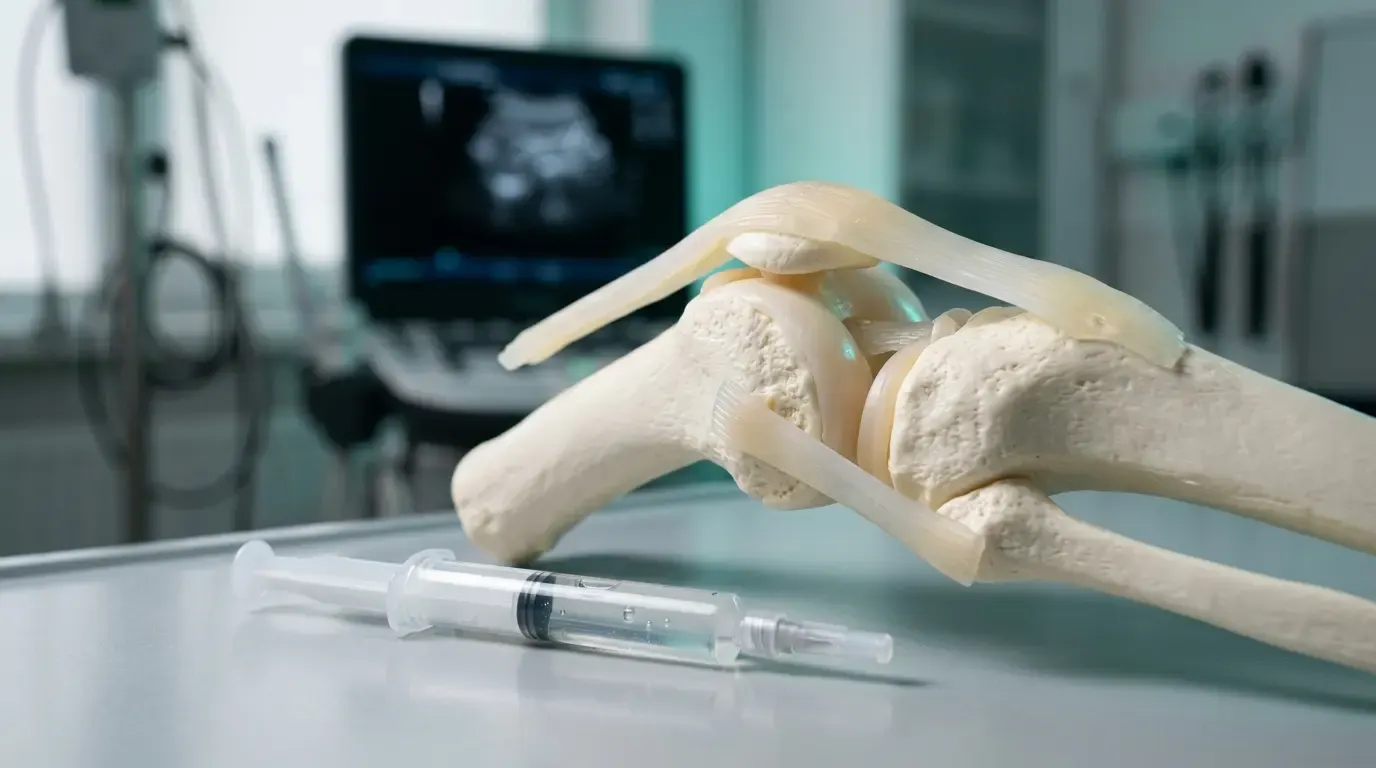
An Arthrosamid injection places a soft hydrogel inside the knee joint. The material is a polyacrylamide hydrogel that does not break down in the body.
The product holds European approval. Published descriptions of the procedure mention ultrasound guidance and local anaesthetic. The gel is reported to integrate into the joint lining. It then acts as a cushion and may calm inflammation.
Why the compartment matters less than expected
The procedure places gel within the joint rather than inside one compartment. Published cohort studies mainly report outcomes for knee osteoarthritis overall, not split by compartment.
No study guarantees better results for the inner side than the outer side, or the reverse. That honest gap is worth knowing before any decision.
What the research says
Published cohort studies tracked patients after injection over a long follow-up. Symptoms improved, especially in older patients without diabetes and with milder disease. Having both knees affected was also linked with a higher chance of meaningful improvement. Researchers called for more work on patient selection.
Where alignment and severity limit results
The gel cushions and calms the joint. It does not straighten the leg. A marked bow-legged or knock-kneed shape keeps loading one compartment. In advanced bone-on-bone disease, results may be weaker, and surgical options often enter the discussion.
Other treatment options for each pattern
Non-surgical care comes first for both patterns. Surgery depends on which compartment is worn and how the leg is aligned.
Non-surgical options shared by both patterns
Exercise therapy sits at the base of treatment. Quadriceps, hamstring and hip strength all help share load across the knee.
The basics of care are the same in medial vs lateral knee osteoarthritis. Weight management matters too. Topical anti-inflammatory gels, simple pain relief and walking aids can ease flares. Steroid injections offer short-term relief during bad spells. More ideas on drug-free knee pain relief support this base.
Surgical options when other care falls short
High tibial osteotomy reshapes the shin bone to shift load away from a worn inner side. It suits younger, active patients with bow-legged alignment.
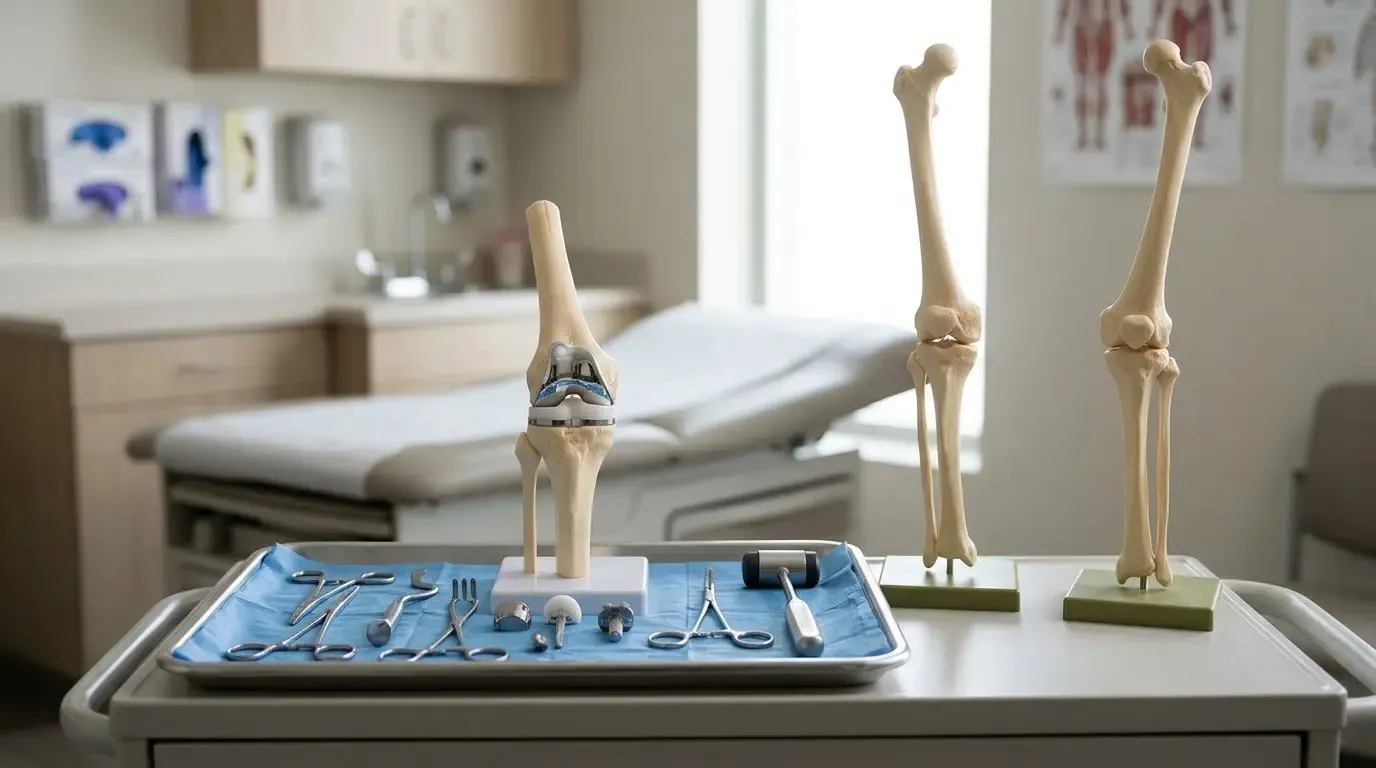
Distal femoral osteotomy reshapes the thigh bone to offload a worn outer side. It is the typical choice for outer-side disease with a knock-kneed shape. Partial knee replacement resurfaces one compartment only. Outer-side partial replacement is rarer and needs a leg shape that can be corrected. Total knee replacement is reserved for widespread wear. Readers weighing that route can read about the NHS knee replacement waiting time before planning.
Who may be a good candidate for Arthrosamid
Candidates usually have mild to moderate wear that has not settled with simple measures. Both inner and outer patterns can qualify.
Exercise, weight control, pain relief and other injections are normally tried first. Milder disease, older age and no diabetes were linked with better outcomes in published cohorts. Alignment and the overall plan still count. Both knees can be treated when both are affected. An active infection in or near the knee rules out any joint injection. Allergies and previous reactions also need discussion.
Arthrosamid does not repair or regrow cartilage, and it is not a cure. It aims to ease pain and stiffness and to improve everyday movement. The treatment is not routinely available on the NHS, so most patients consider a private pathway.
What to expect after the injection
The procedure is an outpatient visit. The skin is cleaned, numbing medicine is used, and ultrasound guides the needle. Most patients rest briefly and then return to gentle activity. The knee needs a short break, not a marathon.
Soreness and swelling can last a few days. Infection is rare but serious, so fever, heat or worsening pain needs prompt medical review. Relief often builds gradually over several weeks rather than overnight. Cohort studies followed patients over a long period.
Follow-up reviews allow the specialist to check progress and adjust the plan. Results vary from person to person. Realistic expectations make the outcome easier to judge.
Self-care that helps either pattern
Daily habits support any treatment plan. Low-impact cardio, such as cycling or swimming, keeps the joint moving without heavy impact. Strength work for the thighs and hips shares the load across the knee. Pacing activity throughout the day helps prevent flare-ups.
Supportive footwear and a healthy body weight further lighten the load. Heat can ease stiffness before exercise. Gentle range-of-motion exercises each morning can ease stiffness. Short walks spread through the day usually suit the knee better than one long march.
Short educational video content on non-surgical joint pain and arthritis can also make home routines easier to follow.
Questions worth asking at a consultation
A consultation works best when questions are ready. The answers shape the whole plan. Asking how medial vs lateral knee osteoarthritis applies to the knee in question is a good first step.
Useful topics include which compartment looks worst on the scans. Leg alignment and its effect on load deserve a mention too. Patients can also ask which treatments match the current severity. How long benefits may last is another sensible question. It helps to ask what happens if symptoms change later. A good plan stays flexible rather than fixed.
Frequently asked questions
Can Arthrosamid be used for lateral knee osteoarthritis?
Arthrosamid is placed inside the knee joint, so the outer side can be considered. Published studies report results for knee osteoarthritis overall, not for the outer side alone. Alignment and severity guide the decision. A specialist assessment confirms suitability.
Which pattern is more common, medial or lateral?
The inner side is far more common. Research describes wear as commonly starting there before spreading outwards. Isolated outer-side disease is much less common and often links to a knock-kneed shape. A bow-legged shape is a major reason for the inner-side pattern.
Can both sides of the knee wear at the same time?
Yes, many knees show wear on both sides, with one side usually worse. When all three compartments are involved, the term tricompartmental applies. Treatment then focuses on the whole joint rather than one compartment. Imaging shows how widespread the wear is.
Does Arthrosamid correct bow legs or knock knees?
No, the gel does not change leg alignment. It cushions the joint and may calm inflammation. Alignment problems may need osteotomy or other measures. A specialist can explain which route suits the knee.
Is Arthrosamid available on the NHS?
Arthrosamid is not routinely available on the NHS. Most patients access it privately. NHS care still covers exercise therapy, pain relief, steroid injections and joint surgery. Local policies can differ, so checking with a GP helps.
Medial vs lateral knee osteoarthritis differs in location, alignment and treatment options. The inner pattern is far more common, while the outer pattern is rarer and often alignment-driven.
Arthrosamid acts on the joint as a whole, so either pattern can be considered. Severity, alignment and overall health matter more than the side alone. Mr Syed Nadeem Abbas is a non-surgical knee and joint pain specialist. Book a consultation to find the right plan for the knee.
Read more: Fear of movement osteoarthritis keeps many knee patients from moving
Read more: Arthrosamid and Baker’s cyst can be assessed together before treatment starts