Private Healthcare Vs NHS: Which Option Should Patients Choose

✅ Medically reviewed | Updated August 2026
Private healthcare vs NHS remains one of the most-searched health topics in Britain today. The National Health Service treats millions of patients each year. Treatment stays free at the point of use, funded through taxation and National Insurance contributions. Private hospitals operate alongside the NHS. They offer faster appointments, dedicated consultant time, and enhanced facilities for those who can pay directly or through insurance. Choosing between the two systems depends on urgency, budget, insurance cover and the condition requiring treatment. Anyone comparing private healthcare vs NHS routes for the first time should find every major factor covered here.
Private Healthcare Vs The NHS Understanding The Basic Differences
Private healthcare vs the NHS comes down to two different funding models. The NHS relies on general taxation and National Insurance contributions. Treatment stays free at the point of use for every UK resident. Private hospitals operate as independent businesses. They charge directly for consultations, diagnostics, surgery and aftercare. Clinical skill rarely differs between the two systems. In fact, most private consultants also work within the NHS. The real difference lies in access speed and the surrounding patient experience. Registration, referral pathways and appointment booking all move faster once payment enters the equation.
How Private Health Insurance UK Works
Private health insurance UK policies spread the cost of treatment across monthly premiums. Policyholders pay a set amount. The insurer then covers eligible treatment up to agreed limits. Premiums vary based on age, medical history, chosen hospital network and excess level. Many policies exclude pre-existing or chronic conditions unless added separately. Therefore, checking policy wording before booking treatment avoids unexpected bills later. Meanwhile, employers increasingly offer cover as a workplace benefit rather than a personal purchase.

How NHS Funding And Access Works
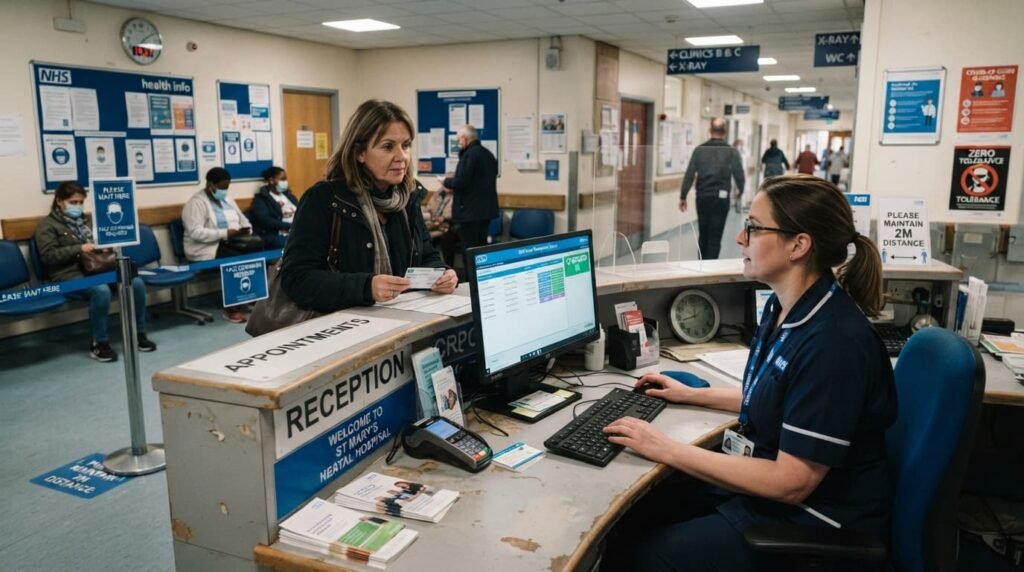
NHS access usually starts with registration at a local GP surgery. Referrals to specialists, scans and hospital treatment flow through this GP gateway in most cases. Emergency care stays free and immediate regardless of insurance status. Non-urgent treatment often involves lengthy referral pathways and waiting list placement. Funding pressures across different governments have shaped how quickly that pathway moves. Regional variation also affects how long each stage takes. For instance, some NHS trusts perform strongly against national targets. While others carry heavier caseloads and longer local queues. Therefore, checking trust-specific performance, rather than relying on national averages, gives a clearer picture of what to expect locally.
NHS Waiting Times And The Case For Going Private
NHS waiting times sit at the centre of most private healthcare decisions. Demand for scans, consultations and surgery has grown faster than capacity in many areas. Patients living with ongoing pain often weigh months of delay against the cost of paying privately. A single delayed diagnosis can mean months of reduced mobility and lost income. Private providers can usually offer a first consultation within days rather than weeks.
NHS Waiting Time 18 Weeks Explained
The NHS constitution sets an 18-week target. This runs from GP referral to the start of treatment for non-urgent conditions. In practice, many trusts fall short of this target. Orthopaedic and joint procedures are affected particularly often. Patients sometimes wait considerably longer once diagnostic scans and pre-assessment clinics are included. Understanding this target helps patients judge whether their own wait feels unusually long. Asking a GP directly about local trust performance offers a realistic picture.
Using The NHS Waiting List Tracker
The NHS waiting list tracker allows patients to check average waiting times by hospital trust and speciality. Entering a postcode and treatment type returns current estimates for that region. This tool helps patients decide whether staying on the standard queue suits their timeline. Comparing tracker figures against a private quote often clarifies the real trade-off between cost and speed. It remains one of the simplest ways to judge current NHS performance before committing to either route.
Should Patients Go Private Or NHS For Knee And Joint Problems
The private healthcare vs NHS question comes up often once knee or joint pain starts affecting daily life. Knee and joint pain sits among the most common reasons patients consider private treatment. Persistent stiffness, swelling or reduced mobility can affect work, sleep and daily independence. Waiting months for an orthopaedic opinion can turn a manageable problem into a disabling one. Private assessment often includes same-week imaging and a same-day treatment plan.
NHS Waiting Times Hip Replacement And Knee Surgery
NHS waiting times for hip replacement and knee replacement lists remain among the longest in orthopaedics nationally. Patients referred for joint replacement frequently face waits stretching well beyond the standard target. Age, activity level and the severity of joint damage all influence how urgently surgery gets prioritised. Private orthopaedic pathways can move from consultation to surgical booking within weeks. Knee pain often worsens gradually with age. Guidance aimed at knee pain in men over 60 explains typical causes and realistic treatment routes.
Private Vs NHS Surgery And The Non-Surgical Alternative
Private vs NHS surgery decisions often come down to timing rather than technique, since both use similar surgical methods. However, surgery is not always the first or only answer for knee osteoarthritis. Non-surgical treatments such as hydrogel injections have grown in popularity among private orthopaedic patients. Many, for instance, are seeking to delay or avoid an operation altogether. Detailed information on Arthrosamid treatment for knee arthritis covers safety, recovery and expected outcomes. Patients weighing regenerative options often compare PRP versus Arthrosamid injections before committing to either route. The DrSNAClinic YouTube channel carries educational videos explaining non-surgical joint pain and arthritis treatment options in plain language.
Is Private Healthcare Worth It: Weighing Quality And Facilities
Whether private healthcare is worth it depends heavily on what a patient values most during treatment. Clinical outcomes tend to be similar across NHS and private settings for standard procedures. Comfort, privacy and consultant continuity, though, differ noticeably between the two. Private patients typically see the same consultant throughout diagnosis, treatment and follow-up. This continuity often matters as much as the treatment itself.

Private Hospital Facilities And Comfort
Private hospital facilities generally include single rooms, en-suite bathrooms and a wider food choice. Reduced ward noise and greater privacy suit patients recovering from surgery. It also helps those managing chronic pain day to day. Visiting hours tend to be more flexible than standard NHS ward policy. These comforts do not change clinical results. They do noticeably improve the recovery experience.
Private Healthcare Quality Of Treatment Versus NHS Standards
Private healthcare quality of treatment is regulated by the same bodies overseeing NHS care, including the Care Quality Commission. Doctors working privately hold identical qualifications and registration requirements to NHS colleagues. Smaller private caseloads often allow longer appointment slots. Patients typically receive more detailed explanations of treatment options as a result. Equipment and diagnostic technology can also be newer in some private facilities. Dedicated investment budgets tend to explain this gap.
Cost Of Private Healthcare UK Insurance Versus Self-Pay
Cost sits at the heart of almost every private healthcare vs NHS conversation. Private healthcare UK treatment cost varies widely depending on procedure, hospital and location. London consultations and surgery typically cost more than equivalent treatment outside the capital. Getting a written quote before committing prevents unwelcome surprises on the final invoice. Two main payment routes exist for patients without existing cover. Understanding NHS vs private cost differences upfront helps set realistic expectations before booking anything.
Private Medical Insurance UK And The Work Perk Route
Private medical insurance UK premiums depend on age, health history and the level of cover chosen. Work private medical insurance perk schemes have become one of the most common ways employees gain access to private treatment. Many employers now include cover as a standard benefit rather than an optional extra. Checking policy exclusions remains essential. Chronic and pre-existing conditions are frequently excluded from standard plans.
Private Healthcare Without Insurance Self-Pay Options
Going private healthcare without insurance is entirely possible through self-pay packages offered by most hospitals. Fixed-price packages cover consultation, procedure and a set number of follow-up appointments. This route suits patients needing a single, defined treatment. A knee injection or minor procedure fits this model well. Payment plans and interest-free finance options are increasingly available for larger procedures.
Private GP Appointment And NHS GP Vs Private GP Access
A private GP appointment can usually be booked for the same day or next day. This compares favourably with a longer standard wait. The NHS GP vs private GP difference mostly comes down to appointment length. Availability also plays a part, rather than the quality of advice given. Private urgent care clinic services handle minor injuries, infections and non-life-threatening conditions without requiring an A&E visit. These clinics suit patients needing prompt assessment for sprains, minor fractures or persistent pain. Serious symptoms, including chest pain, stroke signs or major trauma, still require an immediate 999 call or NHS A&E attendance.

Combining NHS And Private Healthcare Together
Combining NHS and private healthcare is one of the most common questions raised during consultations. The two systems are not mutually exclusive. Mixing them is both legal and common practice. A patient might see a private GP for a quick diagnosis, then return to the NHS for a subsidised procedure. Others follow the reverse route, using an NHS referral before switching to private surgery to bypass a lengthy queue. This hybrid healthcare plan UK approach lets patients control both cost and speed. Insurance providers should always be consulted first. Some policies restrict mixing pathways mid-treatment. Patients often describe this as a private healthcare bypass NHS waiting list strategy. It remains entirely legitimate, provided the private route is funded independently.
NHS Vs Private Hospital Statistics And Demographics
NHS vs private hospital statistics show steady growth in private treatment volumes over recent years. Private health insurance demographics indicate coverage skews toward working-age adults. Those in their forties and fifties represent the largest single group. Employer-provided policies account for a large share of total private cover across the UK. Self-pay treatment has also expanded. More patients are seeking to bypass lengthy NHS waiting list queues entirely. Wider private healthcare UK statistics point toward continued growth in both insured and self-pay treatment over the coming years. Orthopaedic and joint procedures consistently rank among the highest-volume private treatment categories. This reflects how many patients turn to private care specifically for knee and hip problems.
Private Healthcare Comparison UK: Choosing The Right Fit
Every private healthcare vs NHS comparison eventually comes down to individual circumstances rather than a single right answer. A useful private healthcare comparison UK approach starts with three questions. These cover urgency, budget and insurance status. Patients facing emergencies should always default to NHS A&E without hesitation. Those managing manageable but persistent conditions, such as ongoing knee pain, often benefit most from private assessment speed. Budget-conscious patients can still access private urgent care or single self-pay procedures without full insurance cover. Weighing NHS vs private healthcare UK options this way avoids an all-or-nothing decision.

Frequently Asked Questions
Is private healthcare worth it for minor conditions?
For minor, non-urgent issues, private healthcare vs NHS often comes down to speed rather than necessity. Many minor conditions resolve well under standard NHS GP care. Private treatment adds value mainly through faster appointments and consultant continuity.
Should patients go private or NHS for knee pain?
Persistent knee pain affecting daily life often benefits from a private assessment. This helps avoid a long referral wait. NHS treatment remains appropriate for stable, well-managed joint conditions. A private consultation can clarify whether surgery, injection therapy or physiotherapy suits the case best.
What does the NHS waiting time 18 weeks target measure?
This target measures the maximum recommended wait from GP referral to treatment start for non-urgent conditions. Many orthopaedic and joint pathways exceed this figure in practice. Checking the tracker gives a realistic, area-specific estimate.
Can NHS and private healthcare be used together safely?
Yes, patients can combine NHS and private care without losing entitlement to free NHS treatment. Insurance terms should be checked first, since some private policies restrict switching mid-pathway. Many patients use a private consultation for diagnosis, then continue NHS treatment afterwards.
Is going private without insurance affordable?
Self-pay packages make going private without cover realistic for single, well-defined procedures. Fixed-price packages and payment plans reduce the upfront financial burden. Costs still vary by hospital, location and the complexity of treatment required.
Does private healthcare quality of treatment differ from the NHS?
Clinical standards remain closely regulated across both settings. The main differences lie in facilities, appointment length and consultant continuity rather than outcomes. Both systems employ doctors holding identical UK medical qualifications.
Is a private GP appointment worth it for a knee problem?
A private GP appointment can speed up referral to an orthopaedic specialist considerably. This suits patients whose knee pain is worsening or limiting daily activity. Combining a fast private assessment with an eventual NHS or private treatment plan often gives the best of both routes.
Private healthcare vs NHS ultimately depends on urgency, budget and the specific condition involved. The NHS remains the right choice for emergencies and well-managed long-term conditions. Private treatment suits patients facing long waits or wanting faster, personalised care. Combining both systems through a hybrid approach often delivers the best balance of cost and speed. Reviewing waiting list data alongside a private quote gives the clearest picture before deciding.
Mr Syed Nadeem Abbas, MBBS, MRCSEd, MSc, is a Harley Street consultant. His clinical work focuses on non-surgical knee and joint pain treatment. Patients are supported in avoiding unnecessary surgery through evidence-based alternatives.
Read more: How Much Does Arthrosamid Cost in the UK?
Read more: Single Injection For Knee Osteoarthritis Offers Real Relief