Prolotherapy for Knee Pain Works by Repairing Ligaments Naturally

✅ Medically reviewed | Updated August 2026
Prolotherapy for knee pain is drawing attention from people who have tried rest, painkillers and physiotherapy without lasting results. It is an injection-based treatment built on a different idea. Rather than numbing discomfort, it aims to trigger the body’s own repair process. This process targets the ligaments and tendons holding the joint together. That distinction matters, because it changes what a patient should realistically expect from treatment.
Chronic knee pain rarely has one single cause. Sometimes cartilage has worn thin. Sometimes the ligaments around the joint have loosened after an old injury. This lets the bones move slightly out of alignment with every step. Prolotherapy was developed specifically for that second group. Its use has since expanded to cover a wider range of joint conditions. Choosing prolotherapy for knee problems means committing to a process, not a single quick fix. Understanding that trade-off early makes the whole course easier to follow.
What Is Prolotherapy?
Prolotherapy is a series of injections designed to encourage tissue repair rather than mask pain. A clinician injects a mild irritant, most commonly a dextrose solution, into the area around a damaged joint. The theory is simple: a controlled, minor irritation prompts the body to send repair cells to the site. Those cells are thought to lay down new collagen fibres, gradually thickening and strengthening weakened tissue.
The technique has been used since the 1950s, though it took decades to reach mainstream private clinics in the UK. What is prolotherapy actually treating, in practical terms? Usually, it targets ligament laxity, tendon damage, or early joint degeneration rather than advanced structural loss.
The evidence base remains mixed. Some clinical trials report meaningful, lasting improvement. Others suggest part of the benefit comes from a placebo response, since needle-based treatments often carry a strong psychological effect. Patients considering treatment should weigh both sides honestly, not just the success stories printed on a clinic brochure. Understanding this mechanism properly is the first step before considering prolotherapy for knee problems. This matters more than jumping straight to booking a course.
How Prolotherapy Works for Knee Pain
A prolotherapy knee injection targets the ligaments, tendons and joint capsule surrounding the knee, rather than the cartilage itself. Many cases of long-term knee pain actually involve loose or weakened ligaments underneath the surface. This includes cases simply labelled as normal wear and tear. When those supporting structures cannot hold the joint steady, movement becomes uneven. Cartilage wears down faster as a result, and pain builds gradually over months or years.
By injecting directly into the lax tissue, the treatment aims to tighten and strengthen it across several sessions. The goal is structural improvement, not a quick numbing effect that wears off within days. That single idea underlies every clinical decision made regarding prolotherapy for knee care. It shapes how often sessions are scheduled and which structures get targeted first.
Dextrose Prolotherapy in Detail
Dextrose remains the most researched irritant used in this field. Concentrations typically range from 10% to 25%. This depends on whether the injection targets the joint space or the surrounding soft tissue. A dextrose injection knee protocol usually alternates between intra-articular and extra-articular sites during the same session. This covers both the joint and its supporting ligaments.
The Role of Ultrasound Guidance
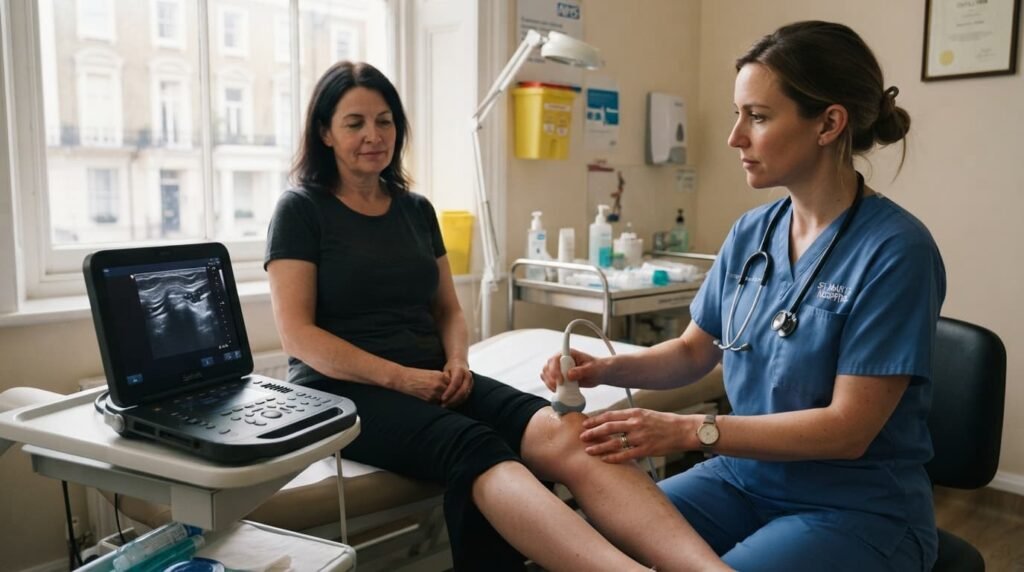
Reputable clinics now rely on scanning equipment for every session. Ultrasound-guided knee injection technique allows the clinician to see the exact ligament or tendon attachment being treated. This is more precise than working from anatomical landmarks alone. This reduces the risk of missing the target tissue and improves consistency between sessions.
Conditions Prolotherapy Treats in the Knee
Prolotherapy for knee osteoarthritis is the most common reason patients seek this treatment. It is far from the only application, however.
Managing Knee Osteoarthritis With Prolotherapy
Osteoarthritis develops when cartilage gradually breaks down, leaving bone surfaces rubbing against each other during movement. The injection cannot regrow lost cartilage. It may, however, stabilise the joint and reduce the mechanical stress that drives further damage. Several trials report reduced pain scores after a full course. This applies particularly to mild to moderate cases where some cartilage still remains intact.
Prolotherapy for Bone-on-Bone Knee Arthritis
Prolotherapy for bone-on-bone knee cases is more limited in what it can achieve. There is little remaining cartilage left to protect. Even so, some patients report reduced pain and improved stability, likely from tightened ligaments taking pressure off the joint surface. It is rarely presented as a substitute for knee replacement at this stage. It can, however, delay that decision for some patients.
Prolotherapy for Knee Instability and Ligament Laxity
Ligament laxity knee treatment is often overlooked as a cause of chronic pain. This is especially true for patients who never had a dramatic injury. A knee that gives way, clicks, or feels unstable on stairs may signal loose ligaments. This differs from pure arthritis. Prolotherapy for knee instability focuses on tightening these structures directly. It addresses the mechanical problem at its source, rather than just the pain it causes.
Prolotherapy for Knee Ligament Damage
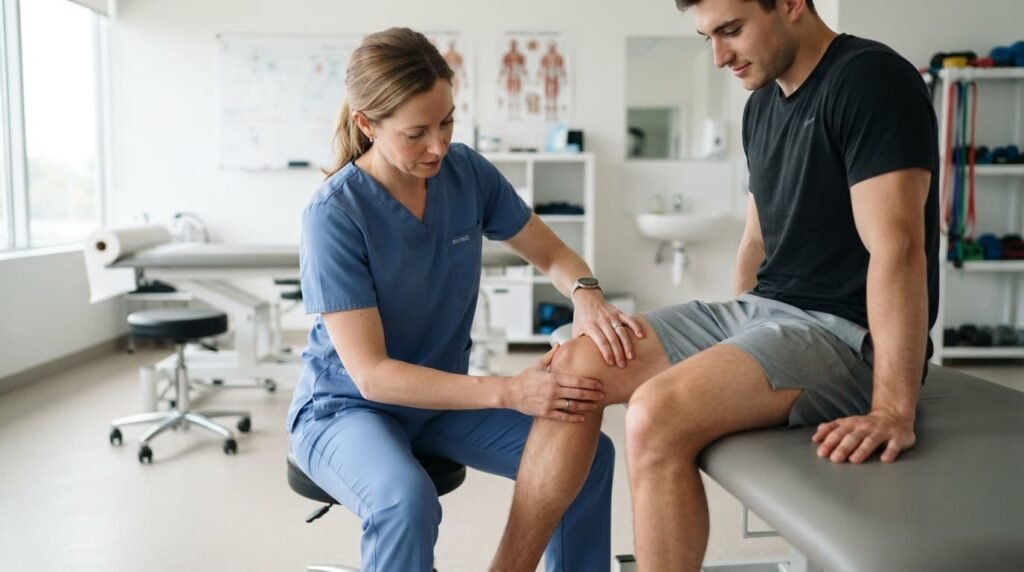
Prolotherapy for knee ligament damage specifically targets the ACL, MCL and PCL attachment points, where laxity most often begins. It is aimed at loosened, weakened ligament tissue rather than a fully torn or ruptured ligament, which usually needs surgical repair instead. Knee ligament injection treatment of this kind is often combined with a structured strengthening programme for best results. Stronger surrounding muscles help protect the treated area between sessions.
Prolotherapy for Meniscus Tear
Prolotherapy for meniscus tear cases tends to work best with smaller, degenerative tears. Large traumatic tears usually still need surgical repair. The injection supports the surrounding tissue and joint capsule. This can ease pain even when the tear itself remains structurally unchanged.
Prolotherapy for arthritis more broadly, including early joint degeneration outside the knee, follows the same underlying logic. So does prolotherapy for tendonitis, where the injected solution targets the tendon attachment point directly rather than the muscle belly.
Prolotherapy for Knee London Options
Interest in prolotherapy London clinics has grown steadily, partly because private options offer faster access than lengthy NHS referral pathways. Anyone searching prolotherapy near me should check the clinic’s equipment first. Look for scanning technology and practitioners trained in regenerative injection therapy knee protocols. General aesthetic staff offering it as an add-on service is a red flag. Prolotherapy knee London providers vary widely in experience. Credentials and training history matter more than simple proximity to home or work.
What a Prolotherapy Treatment Course Involves
A typical course of prolotherapy injections runs to three to six sessions, spaced roughly three to five weeks apart. Most clinics review progress at every visit and adjust the plan if the response is slower or faster than expected. The procedure itself is quick, usually completed within thirty minutes, and does not require sedation or general anaesthetic.
What to Expect After Each Session
A mild ache or stiffness for a day or two afterwards is expected. This generally signals that a healing response has started, rather than a sign that something has gone wrong. A clinician planning prolotherapy for knee cases will usually explain each step in advance. This means nothing about the process should feel unexpected.
Prolotherapy Recovery Time and Aftercare
Prolotherapy recovery time is short compared with surgical alternatives. There is little to no formal downtime, and most patients resume normal daily activities almost immediately. Strenuous exercise is usually best avoided for a few days after each session. This gives the tissue time to settle as local inflammation calms down.
Simple Aftercare Tips
Realistic aftercare habits make the difference between prolotherapy for knee sessions that work well and ones that disappoint. Simple habits tend to support better outcomes overall:
- Light movement rather than complete rest
- A gradual return to sport or heavy activity, rather than jumping straight back in
- Avoiding anti-inflammatory medication immediately after injection, since some inflammation is part of the intended healing response
- Following the clinician’s specific guidance between sessions, rather than a generic online plan
Patience matters more than most people expect. The gap between sessions is when the actual tissue repair happens, not during the injection itself.
Prolotherapy Side Effects and Safety
Prolotherapy side effects are generally mild and short-lived. Soreness at the injection site is common for a day or two, and occasional bruising is nothing to worry about. Serious complications, such as nerve or joint damage, are rare overall. This is especially true when a properly trained practitioner uses scanning guidance.
Who Should Avoid Prolotherapy
Is prolotherapy safe for most people? For the majority, yes, though it is not entirely risk-free and is not suitable for everyone. Anyone taking blood-thinning medication should discuss alternatives with a GP first. The same applies to anyone with an active infection near the injection site. As with any injection-based treatment, results and safety depend heavily on practitioner skill. The solution used matters less than who delivers it.
Prolotherapy vs Other Knee Treatments
Choosing between treatments often comes down to how each one actually works inside the joint. Marketing claims matter far less than mechanism.
Prolotherapy vs Cortisone
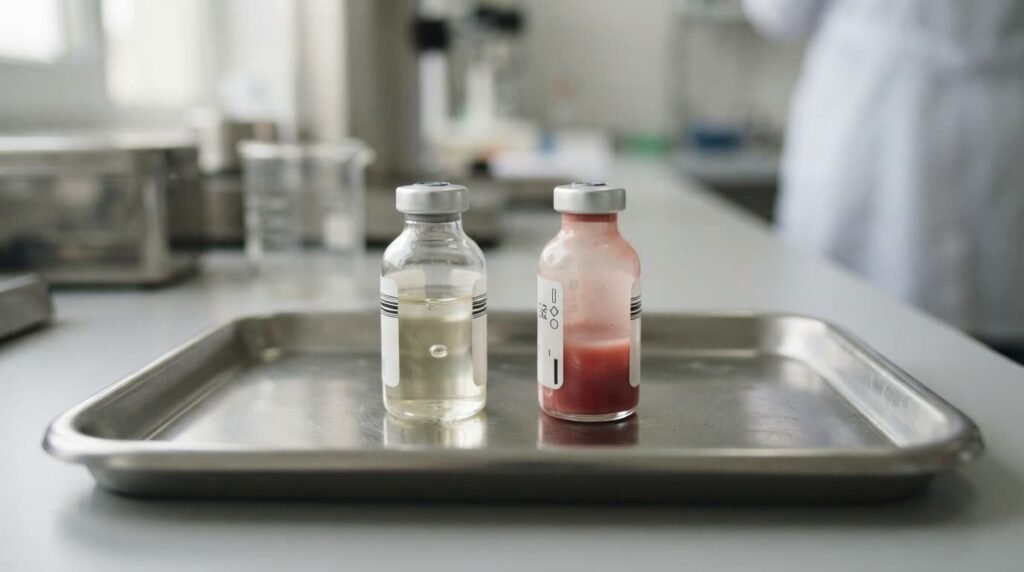
Cortisone injections are widely available on the NHS and privately, and they reduce inflammation quickly. The relief, however, tends to be short-lived, often lasting only a matter of weeks. Repeated cortisone use has also been linked to accelerated cartilage breakdown over time, which is a genuine long-term concern. Prolotherapy vs cortisone comparisons generally favour prolotherapy for lasting structural support. Cortisone still has a place for managing acute flare-ups quickly.
Prolotherapy vs PRP for the Knee
Prolotherapy vs PRP knee comparisons come up frequently, since both are regenerative rather than purely symptomatic treatments. PRP uses a concentrated sample of the patient’s own blood, rich in growth factors, injected directly back into the joint. Prolotherapy vs PRP differs mainly in cost and mechanism. PRP tends to cost more per session and may work faster in some patients. Prolotherapy is generally more affordable and has a longer research history behind it. Neither option is universally superior. The right choice depends heavily on the specific diagnosis involved.
Some patients researching regenerative options also consider Arthrosamid injection for knee osteoarthritis, a single-visit hydrogel alternative that works through an entirely different mechanism.
Prolotherapy for Back Pain, Arthritis and Tendonitis
While this guide focuses mainly on the knee, prolotherapy for back pain follows a similar underlying principle. Weak spinal ligaments contribute to chronic lower back discomfort. This happens in much the same way loose knee ligaments cause instability higher up the leg. Patients managing both knee and back symptoms at once may find extra reading useful. This applies particularly to older men dealing with several joint issues together.
Prolotherapy Injections Cost
Knee prolotherapy cost varies by clinic, location, and the number of sessions required to complete a course. In the UK, prolotherapy injections cost typically fall between £150 and £300 per session privately. A full treatment course often totals £600 to £1,500, depending on the provider. This sits below many biological alternatives on the market. Patients should always request a written cost breakdown before committing to a full plan.

Does Prolotherapy Work?
Does prolotherapy work for everyone who tries it? No treatment does, and any clinic claiming otherwise should raise a flag.
What the Evidence Shows
Evidence supports meaningful improvement for a defined subset of patients, particularly those with ligament laxity or mild to moderate osteoarthritis. Results vary by individual and by how long symptoms have been present. Consistency in completing the full course of sessions also matters. Patients expecting a single injection to reverse years of joint damage will likely be disappointed. Those expecting gradual, cumulative improvement across several sessions tend to report far higher satisfaction.
Non-Surgical Knee Treatment Without Surgery
For many patients, prolotherapy for knee issues represents a reasonable middle step before surgery is even discussed. The real appeal lies in avoiding an operating table altogether. Non-surgical knee treatment London options have expanded considerably in recent years. This gives people genuine alternatives before surgery becomes the only option left. Knee instability treatment without surgery now forms a recognised middle ground. Both prolotherapy and prolozone therapy knee protocols sit between physiotherapy and full joint replacement.
Managing Symptoms Alongside Treatment
Cold weather can also worsen existing joint stiffness. This is worth factoring into any long-term knee plan. Mr Syed Nadeem Abbas also discusses joint inflammation and its role in chronic knee pain. His explanation is available on the Dr SNA Clinic YouTube channel, worth watching alongside this guide.
FAQs
What is prolotherapy used for besides the knee?
Prolotherapy is also used for the back, shoulder and ankle. It similarly targets weakened ligaments and tendons across each joint. The underlying injection technique stays largely the same wherever it is applied.
Is prolotherapy for knee osteoarthritis better than surgery?
It is far less invasive and carries fewer risks than an operation. Severe structural damage may still require surgical treatment eventually, though. Many patients use it to delay that decision rather than avoid it entirely.
How many sessions of prolotherapy injections are usually needed?
Most courses involve three to six sessions, spaced several weeks apart. The exact number depends on how the joint responds along the way. Clinics typically reassess progress at each visit before booking further sessions.
Does prolotherapy work faster than PRP?
Not typically, based on current evidence. Prolotherapy vs PRP knee comparisons show PRP may act slightly faster in some patients. Prolotherapy often needs a longer course to reach the same level of improvement.
Is prolotherapy safe for older patients?
Yes, in most cases, when delivered by a properly trained clinician. Anyone with underlying health conditions should still be assessed individually first. Blood-thinning medication and active infections are the main factors that need discussion beforehand.
Prolotherapy for knee pain offers a genuine non-surgical route for the right patient. This particularly suits those with ligament laxity or early osteoarthritis, rather than advanced joint loss. It works best alongside realistic expectations, a proper course of sessions, and a practitioner who uses scanning guidance throughout. Prolotherapy for knee treatment remains a considered decision rather than an impulsive one. It rewards patients who commit to the full course, instead of stopping after a single session.
Anyone weighing up regenerative options, including how prolotherapy compares with Arthrosamid injection, can seek further guidance. Mr Syed Nadeem Abbas, a non-surgical knee specialist with MRCSEd and MSc qualifications, offers this detailed advice. Booking a consultation is the best next step for anyone ready to explore this treatment further.
Read more: How Much Does Arthrosamid Cost in the UK?
Read more: What Knee Arthroscopy Involves and How Recovery Actually Works