
Finding the right knee pain doctor starts with recognising how symptoms behave over time. A dull ache after walking can mean almost nothing, or it can signal the first stage of a developing problem. The real difficulty rarely lies in the pain itself but in knowing which doctor to consult.
Starting With a GP Is Usually the Right Move
For most people, a GP for knee pain remains the sensible first step. A general practitioner rules out anything urgent, asks how the pain began, and suggests simple measures such as rest, ice, over-the-counter relief, or a short course of physiotherapy. A large share of knee complaints settle at this stage without needing anything further.
What doctor to see for knee pain first often comes down to severity rather than preference. Unless a serious injury has occurred or the joint looks visibly deformed, starting with a GP makes more sense than booking straight into a specialist. GPs act as the gateway to further care and refer patients onward when symptoms fail to fit a simple explanation. What kind of doctor treats knee pain beyond this first stage depends entirely on what the GP finds during that initial assessment.
Signs the Pain Needs More Than Rest

Certain symptoms signal that waiting is no longer the right approach.
- Persistent knee pain for more than two weeks despite rest, ice, and basic painkillers
- Knee swelling and bruising that fail to settle after a few days
- Difficulty bearing weight on the knee, or a noticeable limp while walking
- Reduced range of motion in knee movement, including trouble bending or straightening fully
- A popping or tearing sensation felt at the exact moment of injury
- A sense of instability, as though the knee gives way underneath
Meniscus tear symptoms typically include a pop at the moment of injury, swelling within hours, and catching or locking during movement. These signs point toward a structural problem rather than a simple strain. Physical examination of the knee usually confirms this distinction quickly during an initial consultation, often ruling out more serious injury within minutes.
Knee instability symptoms, including a wobbly or giving-way feeling on stairs, often mean ligaments have been affected. This pattern can also indicate joint degeneration beyond what is expected for a given age. When to see a doctor for knee swelling becomes relevant once swelling starts returning after ordinary activity rather than settling within days. Recurring swelling after mild activity is rarely something rest alone resolves.
Working Out Which Specialist Is Actually Needed
Once a GP decides a case needs more than basic care, several specialists could become involved, and each covers different ground.
Orthopaedic Surgeon vs Rheumatologist
Orthopaedic surgeon vs rheumatologist is the distinction most patients encounter first. An orthopaedic surgeon manages the mechanical, structural side of the knee, including torn ligaments, cartilage damage, and fractures. A rheumatologist instead treats inflammatory and autoimmune joint conditions, managing them primarily through medication rather than surgery.

When to see an orthopaedic surgeon for knee pain generally follows a specific injury or ongoing mechanical trouble such as locking or instability. Rheumatologist for knee pain visits make more sense when pain arrives alongside morning stiffness, multiple affected joints, or general fatigue, since that pattern suggests inflammation rather than wear.
Sports Medicine and Joint Pain Specialists
A sports medicine doctor for knee pain focuses on activity-related injuries and structured rehabilitation planning, often working alongside physiotherapists to restore full function. A joint pain specialist typically manages chronic, degenerative conditions such as osteoarthritis without surgery, concentrating instead on injections, lifestyle adjustment, and long-term symptom control.
The broader terms knee pain doctor and orthopaedic knee doctor cover any of the above, since exact titles vary between clinics. General practitioner vs orthopaedic doctor confusion usually resolves once scope becomes clear: a GP coordinates first-line care, while an orthopaedic doctor takes over once imaging, injections, or surgical judgement become necessary.
When to see a specialist for knee pain follows a simple rule of thumb. Symptoms failing to improve after two to three weeks of sensible self-care warrant a referral rather than continued waiting.
Getting There: Referrals and Access
Do I need a referral to see a knee specialist depends entirely on how the consultation gets funded. NHS pathways normally require a GP referral before secondary care becomes accessible. Private clinics frequently allow direct booking, without any referral letter at all. Insurance-funded routes often still expect a GP referral or prior authorisation before cover applies.
This is the primary care vs specialist for knee pain question in practice. Primary care usually serves as the entry point, and the next step depends on cost, waiting times, and how quickly answers are needed. NHS waiting times for a first specialist appointment frequently extend beyond several months in many regions, which pushes some patients toward the private route for faster access.
What Treatment Might Look Like
Surgery represents only one branch of orthopaedic knee treatment options, and often the last one considered. Non-surgical routes cover a wide range of knee osteoarthritis treatment options, including physiotherapy, weight management, anti-inflammatory medication, and injection-based treatments.
Hyaluronic Acid and Gel Injections
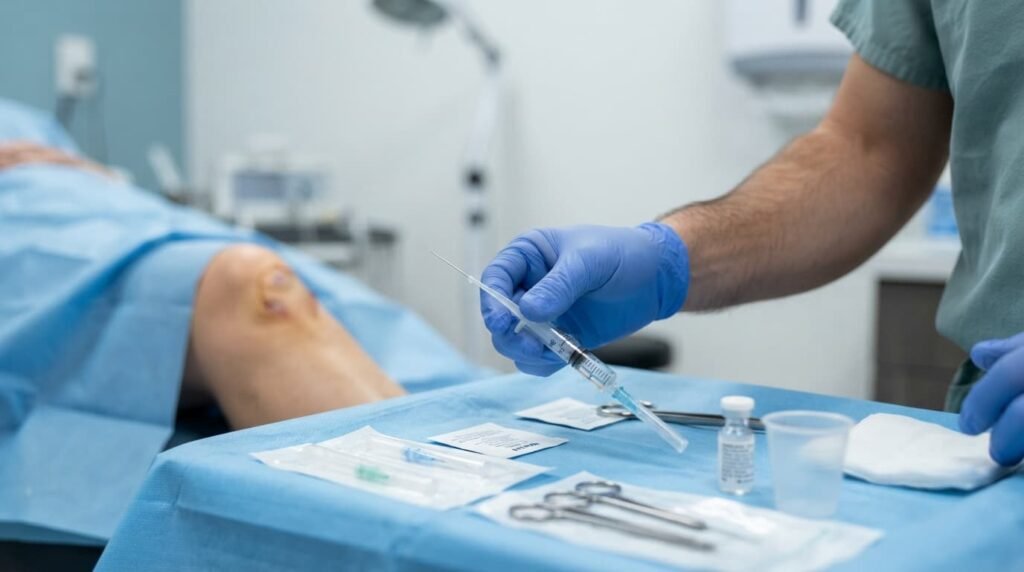
Viscosupplementation describes the umbrella category of injections designed to restore lubrication inside the joint. Hyaluronic acid injections for knee pain remain the most established example, typically easing symptoms for several months before repeat treatment becomes necessary. These are also described more broadly as gel injections for knee pain, a category including newer hydrogel-based options built for longer-lasting effects.
Longer-Acting Alternatives
Arthrosamid injection offers one such hydrogel alternative, integrating with the joint lining rather than acting as a temporary lubricant. Comparing Arthrosamid against standard hyaluronic acid shows a considerably extended duration of benefit for suitable patients. Those weighing Arthrosamid against PRP treatment will find a single-visit outcome rather than repeated blood draws and multiple sessions.
Precision Through Imaging Guidance
Accuracy matters greatly with any of these injections. A fluoroscopy-guided knee injection uses live X-ray imaging to confirm exact needle placement inside the joint. Ultrasound-guided injection offers similar precision without radiation exposure. Injections placed without imaging guidance risk missing the joint space entirely, undermining treatment before it even starts. Further explanation of these techniques appears in video form on the Dr SNA Clinic YouTube channel, covering non-surgical arthritis treatment in practical detail.
Finding a Doctor Worth Trusting, Nearby
Searching for a knee doctor near me, or the best orthopaedic doctor near me for knees, can surface dozens of results within seconds. Most of these results look equally polished regardless of actual quality. A short checklist separates a genuinely qualified specialist from a clinic skilled mainly at marketing.
- Confirm GMC registration for the treating doctor
- Check postgraduate qualifications against the specific procedure needed
- Ask directly how many times that exact treatment has been performed
- Look for CQC registration status, not just star ratings
- Request outcome data or evidence of results where available
When comparing orthopaedic doctors near you, convenience should never override these basics. A slightly longer journey to a well-qualified specialist usually outweighs a nearby clinic unable to answer direct questions clearly. Choosing the right London-based specialist often comes down to exactly these regulatory checks rather than marketing alone.
Questions Worth Asking Before Committing to Treatment
A short set of direct questions reveals a great deal about a clinic’s trustworthiness before treatment proceeds.

- What exactly is causing this pain, beyond a general label
- What options exist, surgical and non-surgical, not only the one being offered
- How many times has this specific procedure actually been performed
- What outcome is realistic within the first three months
- What happens if this treatment does not work
A specialist confident in results answers these questions plainly. Vague or evasive responses are worth treating as a genuine warning sign.
Frequently Asked Questions
What doctor to see for knee pain first?
A GP for knee pain suits most mild or recent symptoms initially. Persistent pain beyond two weeks usually warrants a specialist referral. Severity and duration largely determine which route makes sense.
Orthopaedic surgeon vs rheumatologist — how to tell which is needed?
Orthopaedic surgeons manage structural damage such as ligament tears. Rheumatologists treat inflammatory conditions involving stiffness and multiple joints. A GP assessment usually clarifies which pattern applies first.
Do I need a referral to see a knee specialist privately?
Self-funding patients can often book a private consultation directly. Insurance-funded appointments frequently still require GP referral or authorisation. NHS pathways almost always require referral through primary care first.
How much does viscosupplementation or Arthrosamid cost in the UK?
Pricing typically falls between £2,000 and £3,500 per knee for hydrogel-based treatment. Costs vary by clinic and by what the package includes. Written confirmation from the treating clinic avoids confusion later.
When to see a doctor for knee swelling that keeps returning?
Swelling that returns repeatedly after activity usually signals ongoing joint irritation. This pattern warrants specialist assessment rather than continued self-management. Imaging often clarifies the underlying cause quickly.
What questions to ask a knee doctor before starting treatment?
Ask what is causing the pain and what options exist. Ask how many times the specialist has performed the exact procedure. A confident, specific answer signals genuine experience.
Finding the right knee pain doctor depends on recognising symptoms early and understanding which specialist actually fits the underlying cause. Persistent pain, swelling, instability or difficulty bearing weight all justify moving beyond self-care toward proper assessment. Non-surgical options, including Arthrosamid and other injection therapies, now offer genuine alternatives to lengthy waiting times and open surgery.
Mr Syed Nadeem Abbas brings NHS-trained orthopaedic experience to consultant-led, non-surgical knee osteoarthritis treatment. Every consultation includes a full review of imaging, symptoms and realistic treatment goals before any procedure proceeds.
Read more: Losing Weight Reduces Knee Osteoarthritis Pain and Protects the Joint?
Read more: The Best Knee Specialist in London Delivers Lasting Knee Pain Relief


