Knee Pain While Traveling: How to Stay Comfortable on Long Journeys

Knee pain while traveling has a way of turning an exciting trip into a slow, uncomfortable ordeal. Squeezed into an airplane seat for six hours or stuck in a car with limited stops, the knees take a real beating. Prolonged sitting slows blood flow to the joint, restricts synovial fluid circulation the natural lubricant that keeps the knee moving smoothly and causes surrounding muscles to tighten from inactivity. Cramped leg space adds direct pressure on the joint, while dehydration and limited movement make stiffness worse faster than most people expect.
The impact is sharper for those already managing arthritis, a past meniscus injury, or chronic knee pain from overuse. For these travelers, discomfort doesn’t build gradually it can set in within the first hour and linger long after arrival.
Why Travel Triggers Knee Pain — and Who Feels It Most
The Science Behind Knee Joint Stiffness While Sitting
When you sit still for a long time, your body stops moving the synovial fluid that keeps your knee joints lubricated. Think of it as the oil in a car engine without regular movement, things start to grind. The result is knee joint stiffness while sitting that gets worse the longer you stay put.
Add cramped leg space into the equation typical of economy airline seats and the back seat of a compact car — and you have very little room to shift, extend, or flex your legs. That pressure and immobility can cause inflamed knee joints, especially in people with underlying conditions. This is exactly why knee pain while traveling tends to feel worse than the everyday discomfort you experience at home.
Knee Pain for People Over 50: A Higher Risk During Travel
I see this pattern frequently. Knee pain for people over 50 is more common during travel because cartilage naturally thins with age, and the knee absorbs less shock than it once did. For anyone with knee arthritis, the lack of movement during a long flight or road trip can make symptoms significantly worse.
Younger travelers are not entirely off the hook either. Knee pain from overuse common in runners, cyclists, and active adults can also flare up after hours of sitting in a fixed position. And if you have a history of meniscus damage, prolonged pressure on the knee without movement can aggravate that, too.
Planning Ahead: Smart Moves Before You Leave Home
Consult Your Doctor Before a Long Trip
If you know your knees are an issue, speak with your orthopedic surgeon or sports medicine specialist before you travel. This is especially worth doing for anyone managing knee arthritis, recovering from a knee injury, or dealing with symptoms that flare up after sitting for more than an hour.
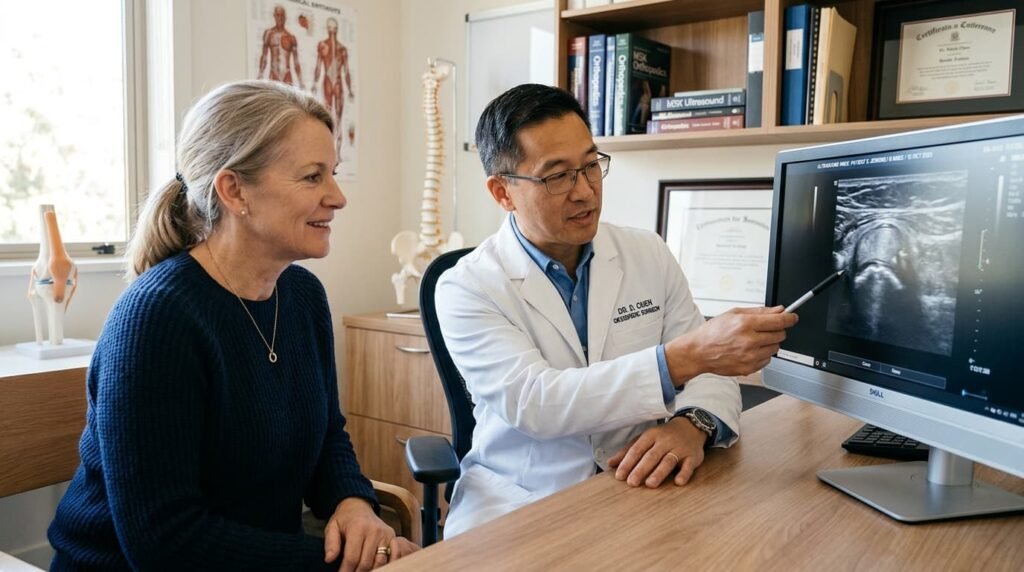
Your provider can recommend the right supportive gear compression socks, a knee brace, or anti-inflammatory medication and time any treatments around your departure date. This step alone can spare you a lot of discomfort on travel day.
Pack Light and Use Rolling Luggage
Lifting heavy bags awkwardly puts serious stress on your knees. One simple holiday travel knee pain tip: switch to rolling luggage with four smooth wheels and push it in front of you rather than dragging it to one side. For anyone managing knee pain while traveling, proper luggage handling is often the first practical change I recommend.
Rolling luggage joint protection is not just about the suitcase. It is about proper body mechanics. Bend at the hips and knees when lifting, keep bags close to your body, and ask for help at the baggage carousel. Your knees will thank you before you even board the plane.
Wear Comfortable, Supportive Footwear
Good shoes matter more than most travelers realize. Supportive footwear absorbs some of the shock your knees would otherwise feel while walking through airports or train stations. Skip the fashionable but flat sandals on travel day. Opt for well-cushioned, low-heeled shoes that support your arches and align your joints from the ground up.
Knee Pain on Long Flights: Choosing Seats and Staying Active
Always Book an Aisle Seat for Knee Pain
This one is non-negotiable. An aisle seat for knee pain gives you the ability to stand, stretch, and walk without climbing over other passengers. Window seats may have a view, but they are your knees’ worst enemy on a long flight.
When booking, look for bulkhead or exit row seats as well. These offer extra legroom that reduces the pressure of cramped leg space on your joints. Even a few extra inches makes a real difference during a transatlantic flight.
In-Seat Exercises That Improve Blood Circulation While Sitting
You do not need to do yoga in the aisle to keep your joints moving. Simple, low-key in-seat movements are enough to improve blood circulation while sitting and prevent stiffness from setting in.
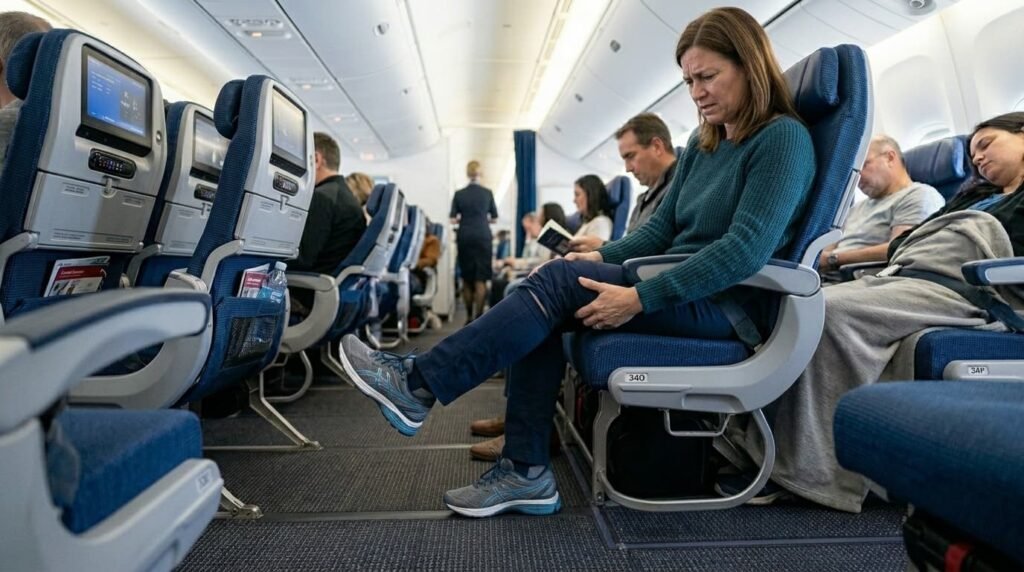
Here are a few exercises that work well during flights:
Easy Seated Exercises for Knee Pain on Long Flights
• Ankle circles: Rotate both ankles clockwise, then counterclockwise, 10 times each
• Knee lifts: Alternate lifting each knee gently toward your chest
• Leg extensions: Straighten one leg, hold for five seconds, lower slowly
• Foot pumps: Press your heels down, then your toes, alternating steadily
Aim to do these every 45 to 60 minutes. Set a quiet timer if it helps. Getting up to walk to the bathroom every couple of hours is also a good way to stretch during travel without making a production of it.
Proper Sitting Posture for Knee Health at 30,000 Feet
Sitting posture matters even when you are at cruising altitude. Keep both feet flat on the floor rather than tucking them under your seat. Avoid crossing your legs, as this restricts circulation and can put uneven pressure on the knee joint. Adjust your seat back slightly to take some load off your lower back and hips, which in turn reduces tension on the knee.
Proper posture and knee health are directly linked — even in a cramped airplane seat. A small lumbar support pillow or rolled-up jacket behind your lower back can help you maintain that alignment throughout a long flight.
Road Trip Knee Pain Relief: Tips for Car Rides
The Problem With Knee Pain in Car Rides
Long car rides present a different challenge. You are usually in a fixed driving position or locked into the same passenger seat angle for hours at a time. Knee pain in car rides is often worse for drivers because the foot is held in an active position on the pedals, which keeps the leg muscles tense without any real movement. Many of my patients tell me that knee pain while traveling by car surprises them more than flights do, because they assume a familiar setting means less risk.

Passengers have it slightly easier but still face joint stiffness from prolonged sitting if they do not make a point of moving.
Stop Every 90 Minutes — Without Negotiation
Plan rest stops into your route before you leave. Every 90 minutes to two hours, stop somewhere you can get out, walk for five minutes, and do a few leg stretches. This is one of the most effective road trip knee pain relief strategies available — and it costs nothing.
If you are the driver, do calf raises against the car while the others use the restroom. Simple ankle circles seated in the parking lot also count. The goal is to break up the long periods of static sitting that make joint stiffness prolonged sitting so hard on the knees.
Adjust Your Seat Position for Better Knee Alignment
Passengers can slide the seat back to allow more room for the legs to extend. Drivers should position the seat so the knee is slightly bent at the fullest extension of the pedal — not locked straight. Avoid sitting too close to the dashboard, which forces the knee into a tight angle for hours.
A small cushion under the knee can also reduce direct pressure on the joint during long stretches of highway driving. Keep one in the car as part of your standard road trip kit.
Anti-Inflammatory Foods for the Road
What you eat during a road trip can affect inflammation levels. Processed snacks, salty chips, and sugary drinks can increase inflammatory responses in the body — not ideal if your knees are already sensitive.
Pack fruit, nuts, and water instead. Staying hydrated helps maintain the lubrication of your joints and can reduce the severity of any flare-up during the drive.
Medical Solutions: Injections That Help Before You Go
Sometimes lifestyle adjustments are not enough — particularly when the joint is already inflamed or damaged. For patients who experience significant knee pain while traveling, medical treatment arranged before departure can make a substantial difference to how the trip feels.
Corticosteroid Injections for Fast Pre-Trip Relief
Corticosteroid injection knee pain treatment is one of the most common options for travelers who need quick, reliable symptom control. The injection delivers a powerful anti-inflammatory agent directly into the knee joint, reducing swelling and pain relatively quickly — often within three to seven days.
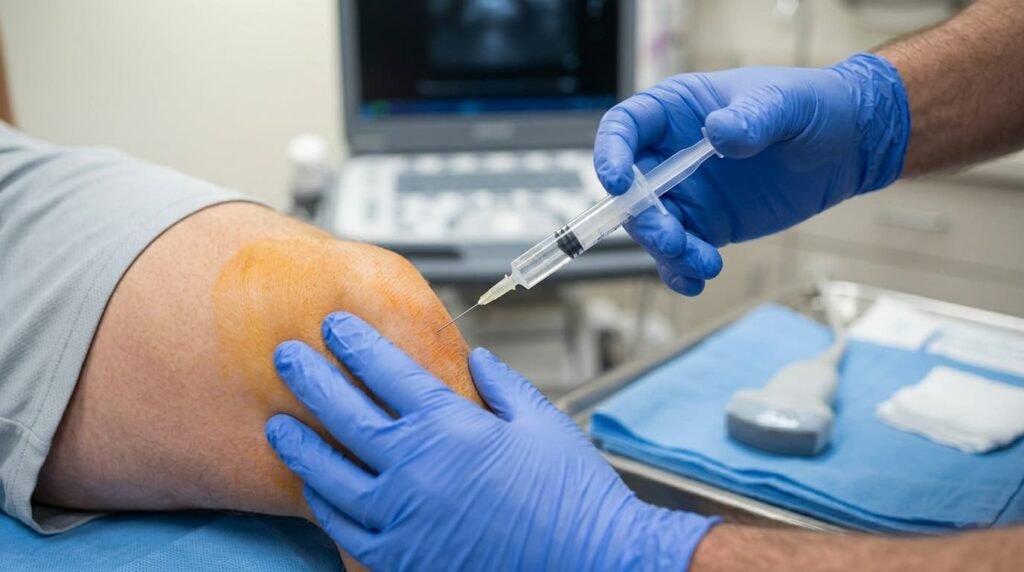
Relief from knee pain relief injections like this typically lasts a few weeks to a couple of months. If you are planning a major holiday trip, scheduling an injection two to three weeks beforehand gives it time to work before you leave.
PRP Injection Knee Pain Treatment for Longer-Lasting Results
For those who want more durability, PRP injection knee pain therapy — also known as platelet-rich plasma knee treatment — uses your own blood platelets to promote natural healing within the joint. It takes longer to kick in, usually three to six weeks, but the effects can last six to twelve months.
A PRP injection is a better fit for people planning well in advance of their travel. If you know a major trip is coming up in two or three months, this is worth discussing with an orthopedic surgeon knee pain specialist. The personalized knee treatment plan they design around your joint condition makes a real difference in outcomes.
Joint Injections Before Travel: Timing Is Everything
Both options fall under joint injections before travel, and timing them correctly is essential. Corticosteroids work faster. Platelet-rich plasma knee treatment requires more lead time. Your doctor will factor in your condition, your travel schedule, and your treatment history before recommending one over the other.
If you have not had an on-site ultrasound knee diagnosis before, it is worth asking about. Imaging helps confirm exactly where the problem is and guides the injection to the right spot — which improves accuracy and results.
When to See an Orthopedic Specialist for Travel-Related Knee Pain
Not every achy knee after a long flight needs medical attention. But some do. If your knee pain persists for more than a week after returning from a trip, or if you notice swelling, locking, or a catching sensation in the joint, that is worth having evaluated. Knee pain while traveling can sometimes signal a more serious underlying issue that only becomes obvious after the journey ends.
These symptoms can point to meniscus damage symptoms, early arthritis, or a knee injury travel complication that worsened because of extended inactivity. Catching problems early is always better than waiting until they affect your daily routine.
What an Orthopedic Knee Treatment Visit Looks Like
At a sports medicine or orthopedic knee treatment center, the assessment typically includes a physical examination, a review of your history and symptoms, and often imaging. Ultrasound is particularly useful because it provides real-time feedback on the joint — tendons, bursae, and fluid levels can all be evaluated quickly.
From there, a personalized treatment plan is designed around what your knee actually needs — not a one-size-fits-all approach. That might include physical therapy, injection therapy, or a combination of both. Sports medicine knee care focuses on keeping you functional and mobile, not just reducing pain in the short term.
Knee Pain Prevention Tips for Your Next Trip
Once your current symptoms are managed, the goal shifts to prevention. Strengthening the muscles around the knee — the quadriceps, hamstrings, and calves — provides better joint support during periods of prolonged inactivity like travel. Even light activity during sitting has measurable benefits on joint health over time.
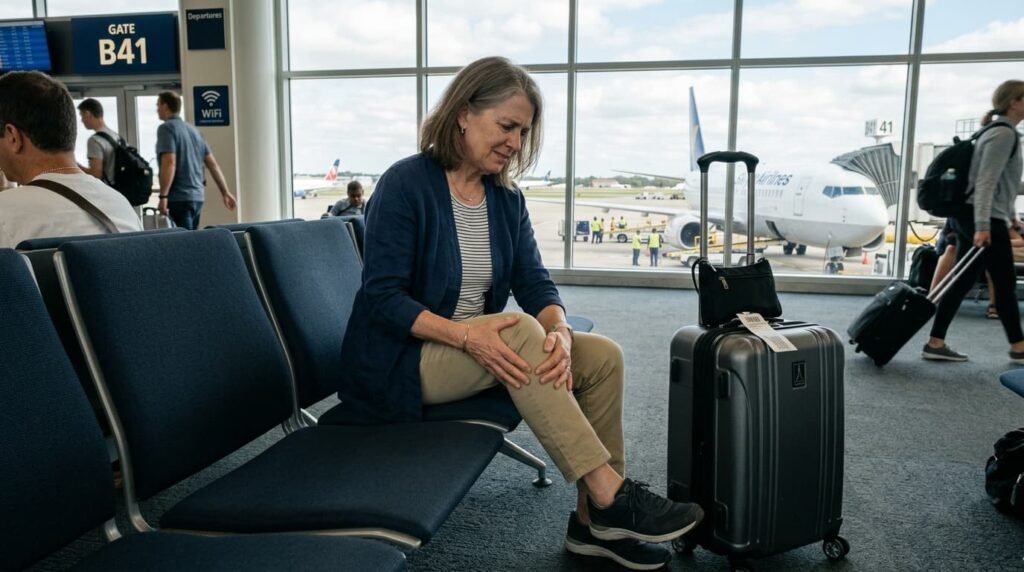
If you travel frequently for work or pleasure, consider building a pre-trip knee routine into your schedule. A few weeks of targeted exercises, followed by a check-in with your provider, can go a long way toward reducing knee pain while traveling on future trips.
FAQ
What causes knee pain while traveling by plane or car?
The main cause is prolonged sitting without movement. When you stay still for extended periods, the synovial fluid in your knee joints becomes less effective, leading to knee joint stiffness while sitting. Cramped leg space makes it worse by preventing you from shifting or extending your legs. People with pre-existing conditions like arthritis or meniscus damage feel the effects more acutely.
What are the best holiday travel knee pain tips for long flights?
Book an aisle seat for knee pain so you can stand and move freely. Perform simple in-seat exercises like ankle circles and leg extensions every 45 to 60 minutes to improve blood circulation while sitting. Maintain proper posture by keeping your feet flat on the floor and avoiding crossed legs. If possible, select a seat with extra legroom to reduce pressure from cramped leg space.
How can I get road trip knee pain relief during long car rides?
The most effective strategy is to plan regular stops every 90 minutes. Get out, walk for five minutes, and stretch your legs. Adjust your seat so your knee is slightly bent at full pedal extension if you are driving. Passengers should slide their seat back to allow more leg room. Avoid sitting in the same position for more than two hours without a break.
Are joint injections before travel a good idea for knee arthritis sufferers?
Yes, for many patients they are. Corticosteroid injection knee pain treatment can reduce inflammation within a week and provide relief for several weeks — long enough to cover a holiday trip. For longer-lasting coverage, PRP injection knee pain therapy (platelet-rich plasma knee treatment) may be more suitable, though it requires three to six weeks to take full effect. Speak with an orthopedic surgeon knee pain specialist to decide which option fits your timeline.
Is knee pain worse for people over 50 during travel?
Typically, yes. Knee pain for people over 50 is more common during travel because cartilage naturally thins with age and joints absorb less impact. Older adults are also more likely to have underlying conditions like arthritis or previous knee injuries that flare up with inactivity. Knee arthritis travel tips — like proper seating, regular movement, and pre-trip medical consultation — become especially important with age.
When should I see an orthopedic specialist about travel-related knee pain?
If pain persists more than a week after your trip, or if you experience swelling, locking, or a catching sensation in the knee, schedule a visit. These may indicate meniscus damage symptoms or worsening arthritis that needs professional evaluation. An on-site ultrasound knee diagnosis can clarify what is happening inside the joint and guide a personalized knee treatment plan. A sports medicine knee care provider or orthopedic surgeon is the right person to see.
What stretching during travel is safe to do in a small space?
Plenty. Ankle circles, foot pumps, and gentle knee lifts are all low-profile exercises that work well in tight spaces. Straightening one leg at a time and holding for a few seconds also helps reduce joint stiffness from prolonged sitting. These movements cost you nothing and take less than two minutes to complete. They are especially effective when done every hour on long flights or road trips.
Knee pain while traveling does not have to sideline your plans. With the right seat, the right movement habits, the right footwear, and if needed the right medical support, most people can travel comfortably even with significant knee problems.
Prepare before you leave. Move while you are in transit. Know when to ask for help. Those three things alone will make your next trip far more comfortable than your last.
Read more: Arthrosamid Knee Injection Long Lasting Relief or a Permanent Solution
Read more: How Vitamins and Joint Pain Are Connected: A Complete Guide