Osteoporosis and Osteoarthritis Are Two Different Conditions

Osteoporosis and osteoarthritis are often confused for the same condition, yet they affect the body in two completely different ways. Osteoporosis weakens the inside of bones, making fractures more likely. Osteoarthritis wears down the cartilage that cushions joints, making movement painful. Both conditions become more common after age 50, both affect women more often than men, and both can develop silently for years before a diagnosis arrives.
That overlap in age, risk, and timing is exactly why so many people end up comparing osteoporosis and osteoarthritis side by side. The short answer: one is a bone disease, the other is a joint disease. The longer answer covers shared risk factors, overlapping symptoms, and a few surprising ways the two conditions interact — all covered below.
What Is Osteoporosis?
Bones look solid from the outside, but the inside resembles a honeycomb, full of small spaces that give bone its light weight and flexibility. Osteoporosis widens those spaces. Bone density drops, the outer layer thins, and bones become fragile enough to fracture from a minor fall, a hard cough, or even a bumpy car ride.
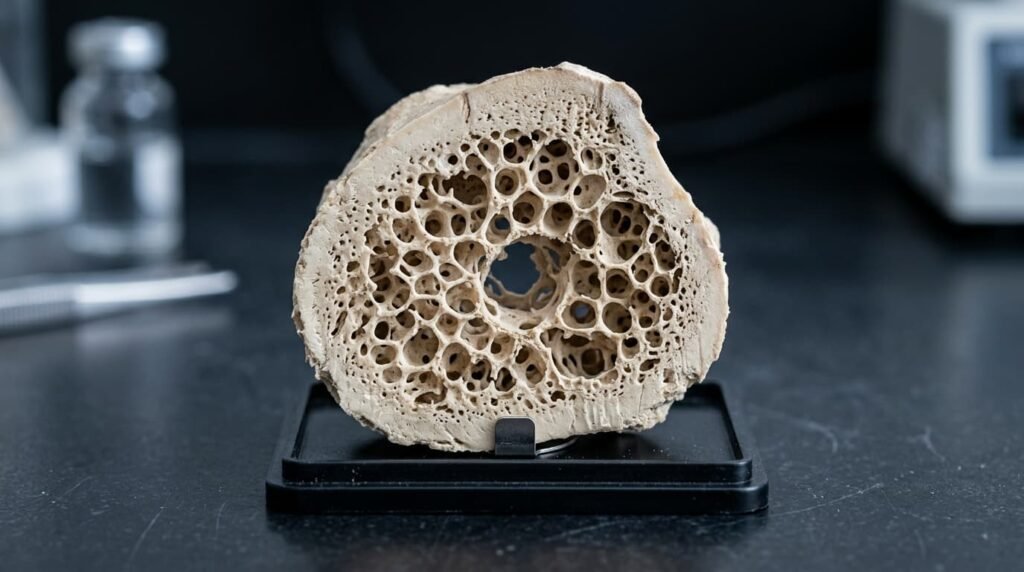
Osteoporosis develops gradually. The body naturally breaks down bone tissue faster than it can rebuild it starting around age 30, which is why the bone density built earlier in life matters so much later on. Peak bone mass acts like a savings account — the higher the balance at 30, the more room there is to absorb losses decades later.
Osteoporosis Symptoms to Watch For
Most cases stay silent until a fracture happens, which is why osteoporosis carries the nickname “the silent disease.” Still, a few early symptoms of osteoporosis sometimes show up before a break does:
- Brittle hair and nails
- Receding gums
- A noticeably weaker grip
- Gradual loss of height
- A stooped or hunched posture
- Back pain that develops without an obvious injury
A broken wrist, hip, or vertebra after a small bump is often the very first real clue that bone density has already dropped.
What Causes Osteoporosis?
Several factors influence bone strength over a lifetime. What causes osteoporosis usually comes down to a mix of biology and daily habits:
- Age — bone loss accelerates after 30 and speeds up further after 50
- Menopause — falling estrogen levels speed up bone loss in women
- Genetics — a family history of fractures or low bone density raises risk
- Body frame — smaller, slimmer frames carry less bone mass to lose in the first place
- Lifestyle factors — smoking, low calcium or vitamin D intake, and inactivity all weaken bone over time
What Is Osteoarthritis?
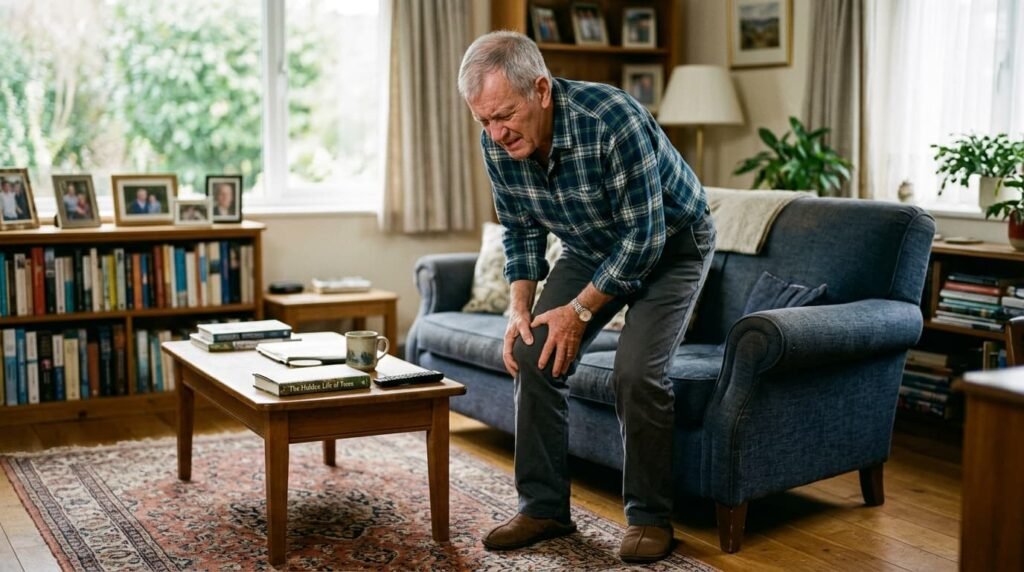
Osteoarthritis targets a different part of the skeleton entirely. Cartilage — the smooth tissue cushioning the ends of bones inside a joint — gradually breaks down, eventually leaving bone to grind against bone. The knees, hips, hands, lower back, and neck usually take the brunt of it.

Unlike osteoporosis, osteoarthritis pain shows up during movement rather than after a fracture. Stiffness after rest, swelling, and a grinding or clicking sensation in the joint are typical early signs. Morning stiffness usually fades within thirty minutes; stiffness that lingers far longer points toward an inflammatory condition such as rheumatoid arthritis rather than ordinary wear and tear. Osteoarthritis is also far more common worldwide, affecting hundreds of millions of people, largely because it ties so closely to age and decades of ordinary joint use.
There is no single test that confirms osteoarthritis the way a DEXA scan confirms osteoporosis. Diagnosis usually relies on a combination of reported symptoms, a physical exam checking range of motion, and imaging that shows narrowed joint space or bone spurs forming where cartilage once cushioned the joint.
Osteoporosis vs Osteoarthritis: Key Differences
Despite the matching first half of their names, osteoporosis vs osteoarthritis is really a comparison between a bone disease and a joint disease — two very different problems that happen to share a waiting room.
Difference Between Osteoporosis and Osteoarthritis
| Feature | Osteoporosis | Osteoarthritis |
| What it affects | Bone density and strength | Cartilage inside joints |
| Main symptom | Fractures, height loss | Joint pain, stiffness |
| Pain trigger | Usually a fracture | Movement and weight-bearing |
| Detected by | DEXA scan | X-ray, physical exam |
| Most affected areas | Spine, hip, wrist | Knees, hips, hands, spine |
Osteoarthritis vs osteoporosis pain also feels different in practice. Osteoarthritis pain builds gradually with use and eases with rest. Osteoporosis pain, when it happens at all, tends to appear suddenly, tied to a fracture rather than ordinary daily wear.
Does Osteoporosis Cause Joint Pain?
This question comes up constantly, and the honest answer is: not directly, but often indirectly. Osteoporosis itself does not inflame joints the way arthritis does — bone loss alone is usually painless. So does osteoporosis cause joint pain on its own? Rarely. But can osteoporosis cause joint pain through related effects? Quite often, yes.
Compression Fractures and Spinal Fracture Risk
The spine absorbs the heaviest hit from osteoporosis. An osteoporosis spinal fracture happens when a weakened vertebra collapses under ordinary pressure — sometimes from something as minor as a sneeze. Compression fracture symptoms include sudden back pain, a visible loss of height, and a forward curve developing in the upper back. That collapsed vertebra can irritate nearby spinal joints, which is exactly where osteoporosis and joint pain start to overlap.
An osteoporosis hip fracture follows a similar pattern, though it typically results from a fall rather than a slow collapse. Joint pain caused after a hip fracture often trace back to surrounding muscles and joints overcompensating during the long recovery period.
Rheumatoid Arthritis and Osteoporosis
Rheumatoid arthritis and osteoporosis share a tighter, more direct connection than osteoarthritis ever does. RA is an autoimmune disorder, meaning the immune system mistakenly attacks the joint tissue itself, leaving behind chronic inflammation that does not simply fade on its own. That inflammation, combined with reduced activity and certain RA medications, speeds up bone loss. People with RA face a measurably higher risk of developing osteoporosis, and bone loss tends to concentrate right around the joints RA has already damaged.
Low bone density and joint pain can also feed into each other in an unhelpful loop. Reduced activity from joint pain leads to weaker bones, weaker bones raise fracture risk, and that fracture risk limits activity even further. Breaking that cycle early is one of the stronger arguments for screening both conditions at the same visit, rather than treating them as unrelated.
Osteoporosis Risk Factors
Many osteoporosis risk factors overlap with those for osteoarthritis, which explains why the two conditions show up together in the same patient so often.
Factors that cannot be changed:
- Age over 50
- Female sex, particularly after menopause
- Caucasian or Asian ethnicity
- Family history of fractures or osteoporosis
Factors that can be managed:
- Long-term steroid or anticonvulsant use
- Low calcium and vitamin D intake
- Inactivity or a sedentary daily routine
- Being underweight or having a small frame
- Smoking
- Heavy alcohol use
None of these controllable factors guarantee osteoporosis on their own, but they tend to stack. A person who smokes, skips exercise, and takes in too little calcium is not facing three separate small risks — those risks compound, which is part of why bone density can drop faster than expected in people who assumed they were still years away from any concern.
Diagnosing Bone and Joint Conditions
Catching either condition early changes the long-term outlook considerably, and the two rely on different diagnostic tools entirely.
DEXA Scan: The Standard Bone Density Test
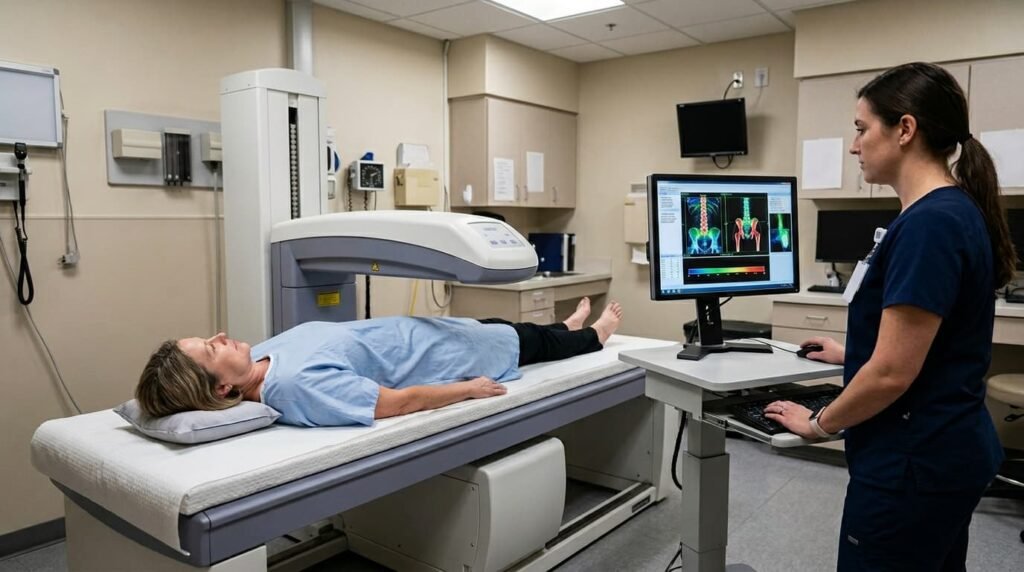
A DEXA scan (dual-energy X-ray absorptiometry) measures bone density at the hip, spine, and sometimes the wrist. The test takes roughly ten to twenty minutes, involves no needles, and exposes the body to a radiation dose smaller than a standard chest X-ray. Results return as a T-score, comparing bone density against that of a healthy young adult. For a test that decides so much, it asks remarkably little in return — no fasting, no prep, just lying still for a few minutes.
Osteoporosis Screening Guidelines
General osteoporosis screening guidelines recommend testing:
- Women starting at age 65
- Men starting at age 70
- Anyone with a fracture after age 50
- Anyone starting a medication known to affect bone density
Osteoarthritis, by contrast, is usually diagnosed through a physical exam and a standard X-ray showing narrowed joint space or bone spurs. Blood tests can help rule out rheumatoid arthritis and other inflammatory causes of joint pain.
Osteoporosis Treatment Options
Osteoporosis treatment typically combines medication with lifestyle changes. Bisphosphonates remain the most commonly prescribed class of drugs, slowing bone breakdown and reducing fracture risk. Other options include hormone-related therapies and newer bone-building medications reserved for more severe cases. Treatment choice usually depends on T-score results, fracture history, and how quickly bone density has been declining, so two patients with the same diagnosis can end up on noticeably different plans.
For joint pain linked to compression fractures or RA-related bone loss, pain management specialists often add targeted treatments such as joint injections, nerve blocks, or viscosupplementation. None of these treat osteoporosis directly, but they can ease pain enough to make physical therapy and ordinary daily movement realistic again — which, in turn, supports bone health over time. Skipping that pain relief step often backfires: less movement means weaker bones, and weaker bones mean more pain down the line.
Lifestyle Habits That Protect Bones and Joints
Medication addresses the disease. Daily habits largely decide how well that treatment actually works.
Osteoporosis Diet and Calcium and Vitamin D for Bones
An osteoporosis diet built around calcium and vitamin D for bones gives skeletal tissue the raw material it needs to stay dense. Adults under 50 generally need around 1,000 mg of calcium daily; postmenopausal women need closer to 1,200 mg. Vitamin D, which helps the body absorb that calcium, comes from sunlight, fortified milk, and supplements when sun exposure runs short. More is not automatically better here — exceeding 2,000 mg of calcium daily raises the risk of kidney stones and digestive trouble.

Osteoporosis Exercise for Stronger Bones
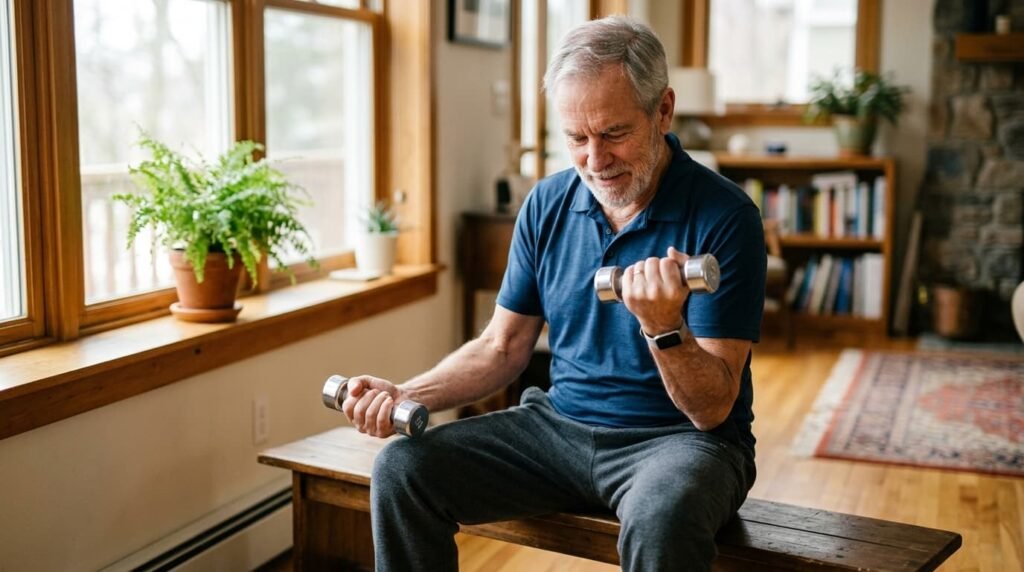
Weight-bearing and resistance exercise sends bone tissue a direct signal to stay dense. Brisk walking, light weightlifting, and resistance band work all qualify. For anyone managing osteoarthritis alongside osteoporosis, lower-impact options like swimming or cycling protect joints while still supporting bone strength, just with less direct bone-loading benefit than weight-bearing work delivers.
Smoking and Bone Health
The link between smoking and bone health is well documented and entirely one-directional: smoking weakens bone, full stop. Quitting will not instantly reverse existing damage, but research shows bone markers improve measurably within months of stopping — proof that bones, unlike grudges, are willing to forgive eventually.
How to Prevent Osteoporosis: Quick Recap
A short summary of how to prevent osteoporosis, pulled from everything above:
- Get enough calcium and vitamin D daily
- Do weight-bearing exercise several times a week
- Avoid smoking and limit alcohol
- Get a DEXA scan at the recommended screening age
- Treat related conditions like rheumatoid arthritis promptly
When to Talk to a Doctor
A sudden loss of height, unexplained back pain, a fracture from a minor fall, or joint pain that lingers for more than a few weeks are all reasonable triggers for a medical visit. Catching either osteoporosis or osteoarthritis early generally opens up more treatment options and a better long-term outlook. Waiting rarely helps either condition — bones and joints do not quietly repair themselves in the background while life carries on.
How These Topics Connect to Osteoporosis and Osteoarthritis
Each term covered in this guide ties back to the bigger picture in a specific way:
- Osteoporosis symptoms / symptoms of osteoporosis — the early warning signs that bone density is dropping, often missed until a fracture forces the issue
- What causes osteoporosis — the mix of aging, hormones, genetics, and habits behind bone loss
- Osteoporosis vs osteoarthritis / osteoarthritis vs osteoporosis / difference between osteoporosis and osteoarthritis — the core comparison between a bone disease and a joint disease
- Does osteoporosis cause joint pain / can osteoporosis cause joint pain / osteoporosis joint pain / osteoporosis and joint pain — the indirect pathway from bone loss to joint discomfort
- Compression fracture symptoms / osteoporosis spinal fracture / osteoporosis hip fracture — the most common fracture sites and their warning signs
- Rheumatoid arthritis and osteoporosis — the inflammatory condition most closely tied to accelerated bone loss
- Bone density and joint pain / joint pain causes — how reduced density and joint damage often reinforce one another
- DEXA scan / osteoporosis screening guidelines — the standard testing process and recommended screening timing
- Osteoporosis treatment — medical and lifestyle management once a diagnosis is confirmed
- Osteoporosis risk factors — the combined controllable and uncontrollable contributors to bone loss
- Osteoporosis diet / calcium and vitamin D for bones / osteoporosis exercise / smoking and bone health / how to prevent osteoporosis — the daily habits that shape long-term bone strength
Frequently Asked Questions
Does osteoporosis cause joint pain directly?
Not usually. Osteoporosis weakens bone rather than inflaming joints, but fractures and related conditions like rheumatoid arthritis can lead to joint pain indirectly.
What is the main difference between osteoporosis and osteoarthritis?
Osteoporosis affects bone density and strength, while osteoarthritis affects the cartilage inside joints. One is a bone disease; the other is a joint disease.
What are the earliest symptoms of osteoporosis?
Brittle nails, a weaker grip, gradual height loss, and back pain without a clear cause are common early symptoms of osteoporosis, though many people have no symptoms at all until a fracture occurs.
How is osteoporosis diagnosed?
A DEXA scan measures bone density at the hip and spine and remains the standard test for diagnosing osteoporosis and tracking treatment progress over time.
Can lifestyle changes really prevent osteoporosis?
Diet, exercise, and avoiding smoking will not guarantee prevention, but they meaningfully lower risk. Adequate calcium and vitamin D for bones, paired with regular weight-bearing exercise, remain the most effective non-medical strategies for how to prevent osteoporosis.
Is rheumatoid arthritis linked to osteoporosis?
Yes. Rheumatoid arthritis and osteoporosis are closely connected — chronic inflammation, certain medications, and reduced activity from RA all contribute to faster bone loss.
Can osteoporosis and osteoarthritis happen at the same time?
Yes, and fairly often. Age, sex, and inactivity raise the risk for both conditions, so a diagnosis of one is a reasonable cue to get screened for the other.
Conclusion
Osteoporosis and osteoarthritis share a few overlapping risk factors and a habit of showing up together in older adults, but they remain two separate conditions with two separate treatment paths. One weakens bone from the inside; the other wears down the cushioning between joints. Knowing which one is behind a particular symptom — a fracture versus a stiff knee — makes a real difference in choosing the right treatment. A bone density scan, a joint exam, and a conversation with a doctor will usually answer that question faster than weeks of guessing ever could.
Read more: Knee Pain Exercises for Women: Your Guide to Stronger, Healthier Knees
Read more: How Vitamins and Joint Pain Are Connected: A Complete Guide