
Untreated knee pain is not just an inconvenience; it’s a gradual progression toward something much more serious. Many people dismiss early knee discomfort as a sign of aging or as a consequence of overexertion at the gym. They rest for a few days, take pain relievers, and continue with their daily activities. While this may seem like a temporary solution, the truth is that knee pain rarely resolves on its own. Left untreated, it slowly worsens week by week, month by month until what once felt manageable becomes a full-blown crisis.
In the UK alone, over 8.5 million people live with osteoarthritis or knee pain, and the knee joint is the most commonly affected area. Despite its prevalence, many individuals delay seeking appropriate care. Some fear surgery, others believe nothing effective can be done, and a few simply hope the pain will pass. Unfortunately, this approach can lead to long-term damage and more invasive treatments down the line. Early intervention is crucial in managing the condition before it escalates.
Why Ignoring Knee Pain Is a Costly Mistake
Knee pain is your body’s early warning system. It is telling you that something inside the joint cartilage, bone, fluid, or soft tissue is under stress. Ignoring that signal does not make the problem disappear. It just means the damage continues without resistance.
Osteoarthritis, the most common cause of knee pain in adults over 45, is a degenerative condition. The cartilage that cushions your knee joint gradually wears away. Bone begins to rub against bone, inflammation sets in, and the pain intensifies. The longer you wait, the less cartilage you have left to work with.
People often say they are “managing” the pain with over-the-counter medication. That is not treatment that is delayed. And delay, in this case, has consequences.
Knee Osteoarthritis Progression: A Stage-by-Stage Reality
Knee osteoarthritis progresses through four broadly recognised stages. In the early stages, you might notice mild achiness after activity, some morning stiffness, or a faint clicking sound when you bend your knee. Easy to ignore. Many people do.
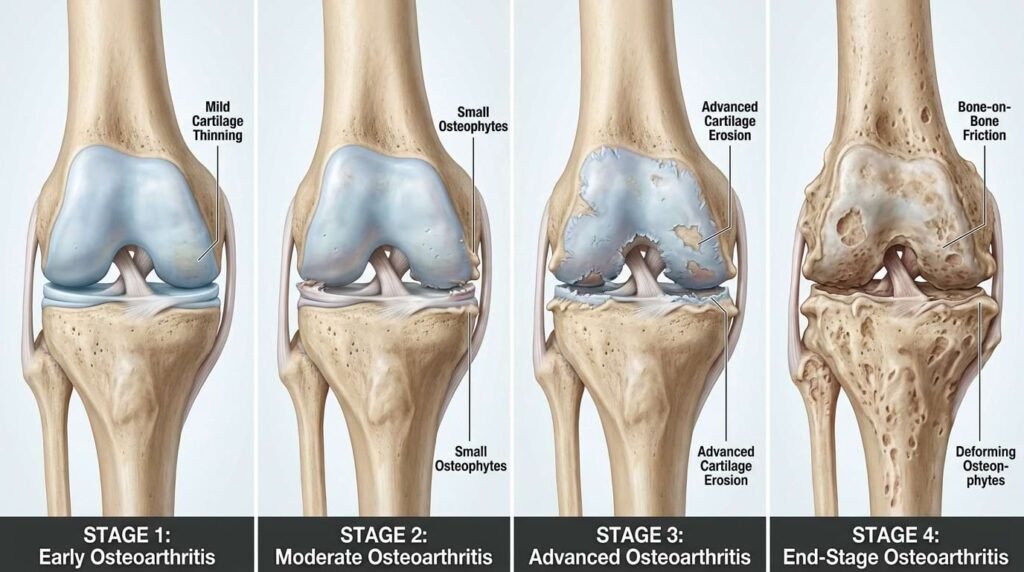
By the middle stages, the pain becomes more consistent. You feel it climbing stairs, getting up from a chair, or walking longer distances. Swelling becomes more noticeable. Range of motion starts to shrink.
In the advanced stages the territory you enter by leaving knee pain untreated for years the cartilage is severely depleted or gone. Bone spurs develop. The joint space narrows dramatically. At this point, many patients are told that knee replacement surgery is the only remaining option. That is a conversation most people would very much prefer to avoid.
Long-Term Consequences of Untreated Knee Pain
Knee Cartilage Damage Becomes Irreversible
Articular cartilage is the smooth, rubbery tissue that covers the ends of the bones in your knee. It allows the joint to move fluidly, absorbs shock, and distributes load evenly. Without it, even walking becomes painful and mechanically inefficient.
Knee cartilage damage progresses silently in the early stages. You may not feel it until significant degradation has already occurred. Once cartilage breaks down, the body cannot regenerate it naturally. This is what makes early intervention so important and delay so damaging.
Chronic Knee Pain Complications
Chronic untreated knee pain complications reach far beyond what most people expect. When the knee hurts, you move less. When you move less, the muscles around the knee weaken and those muscles are supposed to support and stabilise the joint. A weaker knee is a more vulnerable knee.
People with untreated chronic knee pain also report disrupted sleep, low mood, and social withdrawal. When pain stops you from doing the things you enjoy walking the dog, playing golf, keeping up with grandchildren the emotional toll is real and significant.
Knee Swelling and Stiffness: What Gets Worse Over Time
Knee swelling from untreated osteoarthritis is caused by synovitis inflammation of the synovial membrane that lines the joint. When the joint is irritated, it produces excess fluid as a protective response.
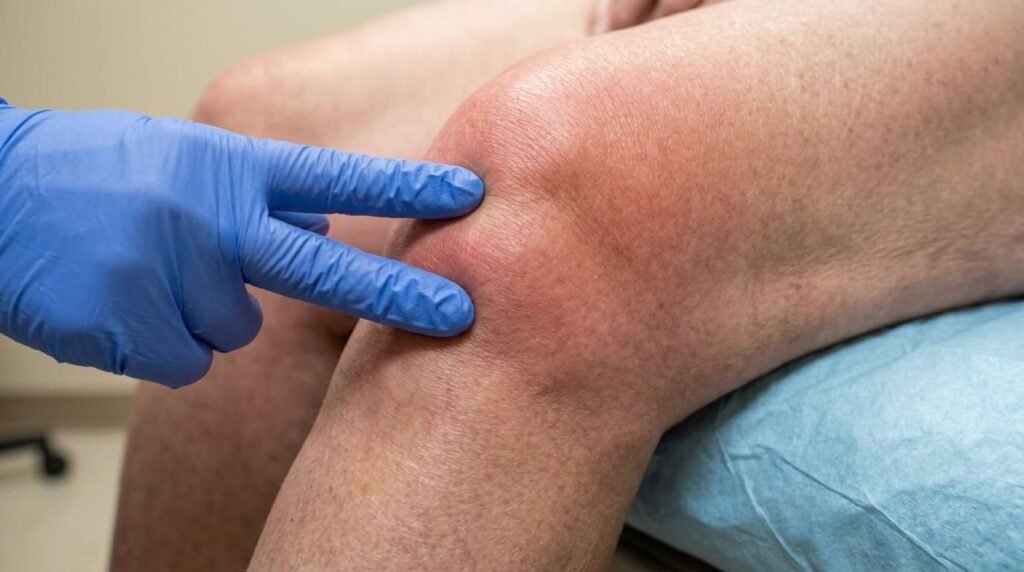
Knee stiffness worsening over time is one of the clearest signs that the condition is progressing. Morning stiffness that initially lasted minutes can stretch to an hour or more. This is not just uncomfortable, it is a functional limitation that affects your ability to get dressed, get out of bed, and go about your day.
Worsening Pain and Limited Movement
What starts as a slight ache or stiffness can quickly develop into chronic pain, swelling, and restricted motion. Over time, this can severely limit your ability to perform everyday activities like walking, climbing stairs, or bending. The pain can become constant, making it difficult to continue a normal routine.
Development of Joint Deformities
As untreated knee pain progresses, the knee joint may begin to change in shape. This can result in deformities such as bone spurs or misalignment, causing the knee to appear bowed or angled incorrectly. These deformities can further limit mobility and increase discomfort.
Increased Friction and Intense Pain
As cartilage wears away, bones begin to rub against each other, creating bone-on-bone friction. This leads to excruciating pain and inflammation, along with a grinding or catching sensation during movement. Over time, this can make it even harder to move the joint.
Reduced Mobility and Loss of Independence
Ongoing knee pain leads to increased instability in the joint. This can cause a loss of mobility, making it difficult to move freely and independently. In more severe cases, the instability can increase the risk of falls, further limiting your ability to care for yourself.
Other Health Complications
The lack of movement caused by knee pain can lead to weight gain, putting even more stress on the knee joint. In addition, the reduced physical activity can have other negative effects on health, including poor sleep, mental health issues like depression, and overall reduced well-being.
Can Knee Pain Cause Permanent Damage If Left Too Long?
Yes. Knee pain permanent damage is a very real outcome of prolonged inaction. The window for conservative, non-surgical management has limits. Once cartilage is fully eroded, once bone spurs are established, and once the joint mechanics are significantly altered, the treatment options narrow considerably.

In some patients, leaving knee pain untreated for years results in a complete loss of the joint space on X-ray, a sign of bone-on-bone arthritis. At this point, knee replacement surgery is often the recommended path. For patients who were hoping to avoid the operating theatre entirely, this is a difficult conversation to have and one that could, in many cases, have been prevented.
The encouraging news is that you do not need to reach this point. There are effective, non-surgical treatments available in the UK that can slow progression, reduce pain, and give your joints a fighting chance provided you act before the damage becomes irreversible.
Knee Replacement Alternatives UK: Your Non-Surgical Options
If you are dealing with untreated knee pain osteoarthritis and are not yet at the point of requiring surgery, there is a range of knee osteoarthritis treatment options UK clinics offer. The goal at this stage is to manage pain effectively, slow cartilage degeneration, and preserve function for as long as possible.
Physiotherapy, weight management, lifestyle modifications, and targeted exercise can all play a meaningful role. So can targeted medical interventions which is where many patients are now turning to specialised injection therapies as a first-line approach before considering any surgical route.
Steroid Injections: Temporary Relief with Limitations
Corticosteroid injections are widely used to reduce knee inflammation and provide short-term pain relief. They can be effective but their benefits are temporary. Most patients notice relief for a few weeks to a few months. Repeat injections are sometimes possible, but frequent use carries its own risks, including accelerated cartilage breakdown. They do not address the structural cause of pain.
Hyaluronic Acid Injections: Lubricating the Joint
Hyaluronic acid injections work by supplementing the natural joint fluid, aiming to improve lubrication and reduce friction. Results vary. For some patients, this provides a noticeable benefit. For others, the effects are minimal. The substance gradually breaks down and is absorbed by the body, so repeat treatment cycles are typically required. It is a management tool rather than a long-term fix.
Arthrosamid Injection for Knee Pain: A Longer-Term Solution
For patients who want a non-surgical treatment that goes further than temporary relief, Arthrosamid injection has emerged as an increasingly sought-after option. If you are exploring non-surgical knee treatment UK options, this is one worth understanding in detail.
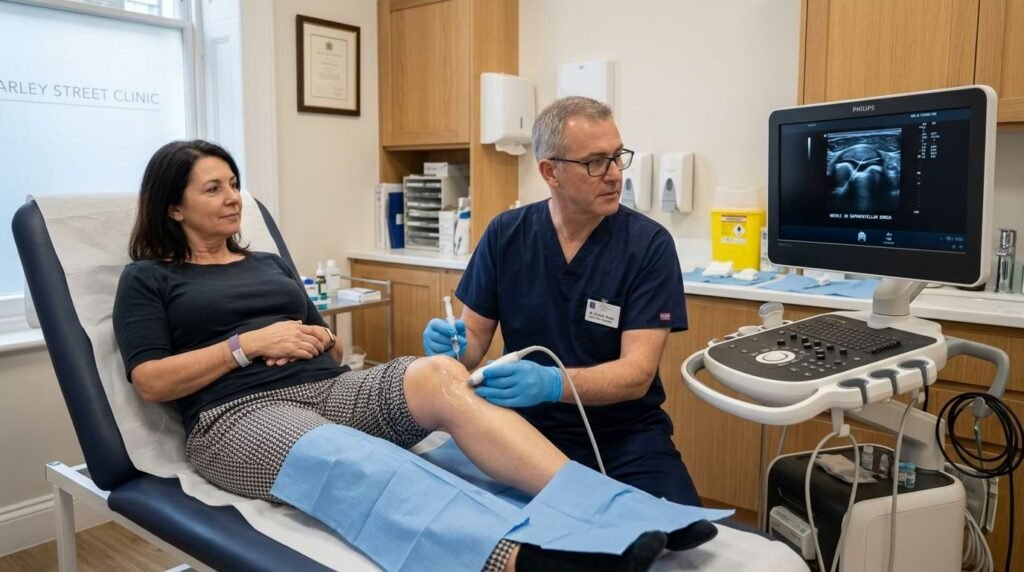
Arthrosamid is a CE-marked polyacrylamide hydrogel designed specifically for knee osteoarthritis. Unlike steroid or hyaluronic acid injections, it does not simply reduce inflammation or temporarily lubricate the joint. Instead, it integrates with the synovial membrane the soft tissue lining of the joint and provides structural cushioning from within. Because it is designed to remain within the joint rather than being absorbed, the effects are intended to be long-lasting.
How Arthrosamid Injection Works
The procedure is performed under local anaesthesia and takes approximately 30 minutes. Using ultrasound guidance to ensure precise placement, the hydrogel is injected directly into the knee joint. There is no hospital admission, no surgical incision, and no general anaesthetic required.
Gradual improvement in pain and mobility typically develops over the following four to twelve weeks. Clinical data suggests that results may last up to five years from a single treatment, a significant advantage over injections that require regular repeat procedures.
Arthrosamid Injection Cost UK: What to Expect
Arthrosamid injection cost UK typically begins from around £3,500 for a single treatment. This reflects the clinical expertise involved, the guided procedure under ultrasound, and the long-term design of the device. For many patients, it compares favourably to repeated rounds of physiotherapy or injection therapy over several years. It is not currently available on the NHS, so it is accessed through private clinics. A thorough consultation is always required first to confirm suitability.
Seeking a Knee Pain Specialist in London: What to Look For
If you are based in or near London and are looking for a private knee pain clinic London patients trust, the quality of the specialist matters enormously. Knee osteoarthritis treatment is not one-size-fits-all. A good specialist will take the time to understand your full history, review your imaging, and tailor a treatment plan to your specific stage of the condition.
At KneePainClinic UK, Mr Syed Nadeem Abbas a Harley Street-based orthopaedic physician with over 25 years of experience leads all consultations and treatment. He specialises in non-surgical approaches and performs all Arthrosamid injections personally, using ultrasound guidance for precision. Patients travel from across the UK and Europe specifically for his expertise.
When assessing any private knee pain clinic London based or otherwise, look for a GMC-registered practitioner, a thorough pre-treatment consultation process, a clear explanation of risks and expected outcomes, and evidence of genuine clinical experience with the treatment being offered. Do not be shy about asking questions. It is your knee, after all.
When is it time to stop postponing and consult a doctor?
There is no gold medal for enduring knee pain silently. If you have been experiencing any of the following, it is time to seek a proper assessment from a qualified knee pain specialist London:
- Knee pain that has persisted for more than six weeks
- Pain that wakes you at night
- Swelling that keeps returning
- Pain that limits your ability to walk, climb stairs, or carry out daily tasks
- Pain that is getting worse despite rest and over-the-counter medication
- A noticeable reduction in your range of motion

The earlier you seek help, the more treatment options remain available to you. Intervention in the mild to moderate stages of osteoarthritis gives you the best chance of managing the condition effectively without surgery. Waiting until it becomes unbearable narrows that field considerably.
FAQ
What happens if knee pain is left untreated for years?
Ans: Leaving knee pain untreated for years can lead to progressive cartilage breakdown, joint stiffness, and bone spurs. In advanced stages, the joint space narrows, causing bone-on-bone contact, often leading to the need for knee replacement surgery.
Can ignoring knee pain lead to permanent damage?
Ans: Yes. Knee cartilage does not regenerate. Once damaged, the joint’s structure is permanently compromised, leading to permanent damage. Early diagnosis and treatment can help preserve cartilage and prevent further damage.
What non-surgical knee pain treatment is available in London?
Ans: Non-surgical knee pain treatments in London include physiotherapy, weight management, steroid and hyaluronic acid injections, and Arthrosamid injection. A consultation with a knee pain specialist will help determine the best treatment for your condition.
Is Arthrosamid injection a good alternative to knee replacement surgery?
Ans: Arthrosamid injection is a promising alternative for patients with mild to moderate knee osteoarthritis. It offers long-term relief, providing structural support within the joint, and has results lasting up to five years. However, it’s not suitable for all patients, so a proper assessment is necessary.
How much does Arthrosamid injection cost in the UK?
Ans: The cost of a single Arthrosamid injection treatment in a private clinic in London is approximately £3,500.This includes consultation, ultrasound-guided injection, and aftercare. Considering its long-lasting effects, it may be more cost-effective than repeated short-term treatments.
When should I see a doctor for knee pain that is getting worse over time?
Ans: If knee pain lasts more than six weeks, worsens, causes swelling, disrupts sleep, or limits daily activities, seek medical help. Knee pain getting worse over time is a sign that the condition is progressing, and early intervention offers more treatment options.
Knee pain does not come with a pause button. Every day that passes without treatment is a day the joint is under stress without support. Knee osteoarthritis progression is gradual, often quiet, and almost always avoidable in its worst outcomes provided you act in time.
If your knee has been trying to tell you something for a while, perhaps it is time to listen. Book a consultation with a qualified specialist, understand where your condition currently stands, and find out what options are available to you. The sooner you do, the more choices you will have.
Read more: Arthrosamid Knee Injection Long Lasting Relief or a Permanent Solution
Read more: Knee Pain in Men Over 60 – Exploring the Condition and Available Treatments


