What Does Bone-on-Bone Knee Pain Really Feel Like?

✅ Medically reviewed | Updated July 2026
Bone-on-bone knee pain develops once cartilage between the joint surfaces wears away completely. Around 8.5 million people in the UK live with osteoarthritis, and it remains the most common joint disease overall. The knee ranks among the most commonly affected joints, alongside the hips and the small joints of the hands. Once cartilage disappears, the femur and tibia grind directly against each other during ordinary movement.
This creates a distinctive, often relentless discomfort that differs sharply from milder joint pain. Recognising the condition early opens access to a wider range of treatment options, both surgical and non-surgical.
What Is Bone on Bone Knee Pain?
Bone-on-bone knee arthritis describes the final stage of joint degeneration. Cartilage normally acts as a natural cushion, absorbing shock with every step, twist, or squat.
Once that cushion thins beyond a critical point, the underlying bone becomes exposed. Movement then produces friction rather than smooth gliding. This friction generates the sharp, grinding sensation many patients describe.
Genetics, repetitive strain, and old injuries all contribute to cartilage breakdown over time. Age remains the strongest single risk factor, since cartilage naturally weakens across decades of use.
Excess body weight further speeds up the process. Each extra kilogram adds several kilograms of pressure through the knee during walking.

Doctors describe the joint as bone-on-bone once imaging shows almost no cartilage space remaining. This typically happens between the femur and tibia. At this stage, treatment decisions carry more urgency than in the earlier phases of osteoarthritis.
How Cartilage Loss Progresses
Cartilage loss rarely happens overnight. It typically progresses through mild, moderate, and severe stages across several years.
Mild cartilage thinning often produces little more than occasional stiffness after activity. Moderate loss introduces more consistent aching and reduced range of motion.
Severe loss, the bone-on-bone stage, brings persistent pain that can affect rest as well as movement. Tracking symptoms across these stages helps specialists judge when conservative care remains sufficient and when more advanced treatment becomes appropriate.
How Long Can Bone on Bone Knee Pain Go Untreated?
There is no fixed timeline for how long anyone can live with bone-on-bone knee pain. Some patients manage symptoms for several years through lifestyle adjustments alone. Others notice a rapid decline within months once cartilage loss becomes severe.
Several factors influence this timeline, including joint alignment, muscle strength, and overall activity levels. Pain severity at rest often signals how quickly a knee is deteriorating. A knee that hurts even while sitting still typically needs faster intervention than one that only aches during activity.
Untreated bone-on-bone knee pain generally worsens gradually rather than suddenly. Stiffness increases, mobility narrows, and the surrounding muscles weaken from reduced use.
Why Early Assessment Matters
This slow decline makes early assessment valuable, since intervention becomes more complex once function drops significantly. Some patients delay seeking treatment out of concern that surgery is the only available option.
In reality, most such cases respond first to conservative measures. Delaying assessment altogether, rather than delaying surgery specifically, tends to cause the greatest long-term harm. An early consultation simply widens the range of choices available later.
Walking With Bone on Bone Knees
Walking with bone-on-bone knees becomes progressively harder as cartilage loss advances. Every step transmits body weight directly through an unprotected joint surface.
Many patients shorten their stride or develop a limp without realising it. This altered gait often shifts strain onto the hips and lower back.
Reduced walking distance leads to weaker thigh and calf muscles over time. Weaker muscles then remove one of the knee’s main sources of natural support. The cycle continues unless addressed through targeted strengthening or medical treatment.
Supportive footwear and a walking aid can ease pressure during this stage, though neither addresses the underlying cartilage loss.
What Causes Osteoarthritis in the Knee?
Osteoarthritis causes vary between individuals, though several risk factors appear consistently across research. Age-related wear remains the most common driver, since cartilage loses elasticity over the decades.
Previous injuries, including ligament tears and fractures, often accelerate joint degeneration later in life. Repetitive occupational strain, such as prolonged kneeling or heavy lifting, raises long-term risk.
Obesity places disproportionate load on the knees during standing, walking, and climbing stairs. Family history also plays a measurable role, suggesting a genetic component to cartilage durability.
Women face a higher lifetime risk than men, particularly after the menopause. Joint misalignment, whether from birth or old injury, distributes weight unevenly. This speeds up wear on one side of the knee.
How Is a Bone-on-Bone Knee Diagnosed?
Diagnosis of bone-on-bone knee changes typically begins with a detailed physical examination. A specialist reviews joint range of motion, swelling, and any grinding felt during movement.
Patients usually describe their pain pattern, including whether bone-on-bone knee symptoms worsen at night or during specific activities. X-rays remain the standard imaging tool, since they clearly show the space between bones.
When that space narrows severely or disappears, it confirms advanced cartilage loss. MRI scans sometimes add further detail about soft tissue and ligament condition. A precise diagnosis shapes every treatment decision that follows, from physiotherapy to surgical planning.
Blood tests occasionally rule out inflammatory joint conditions that mimic osteoarthritis symptoms.
Grading and Tracking Severity
Specialists often grade severity on a standard imaging scale, ranging from mild joint space narrowing to complete cartilage loss. This grading helps guide treatment planning and offers a consistent way to track progression over repeat visits.
Patients sometimes benefit from bringing a symptom diary to their appointment. Noting when pain worsens and which activities trigger it gives the specialist a clearer picture of daily impact.
Osteoarthritis vs Rheumatoid Arthritis: Spotting the Difference
Comparing osteoarthritis vs rheumatoid arthritis helps clarify two conditions that share some symptoms but differ substantially in cause. Osteoarthritis results from mechanical wear and tear on cartilage over time. Rheumatoid arthritis, by contrast, stems from an autoimmune process that attacks joint linings.
Morning stiffness lasting under thirty minutes typically points toward osteoarthritis. Stiffness lasting an hour or longer more often suggests rheumatoid arthritis.
Osteoarthritis usually affects weight-bearing joints asymmetrically, while rheumatoid arthritis often strikes joints on both sides of the body simultaneously. Blood tests can help distinguish between the two conditions when symptoms overlap.
Bone on Bone Knee Treatment Without Surgery
Bone-on-boneknee treatment without surgery works well for a large proportion of patients. Conservative management typically begins with weight loss, activity modification, and targeted physiotherapy.
Anti-inflammatory medication can ease acute flare-ups, though long-term reliance carries its own risks. Bracing, particularly unloader-style braces, redistributes weight away from the most damaged part of the joint.
Advanced Injection Options
For patients whose symptoms persist despite these measures, several advanced non-surgical injections offer meaningful relief. Arthrosamid injection integrates directly into the joint lining, providing structural cushioning that can last several years from a single treatment.
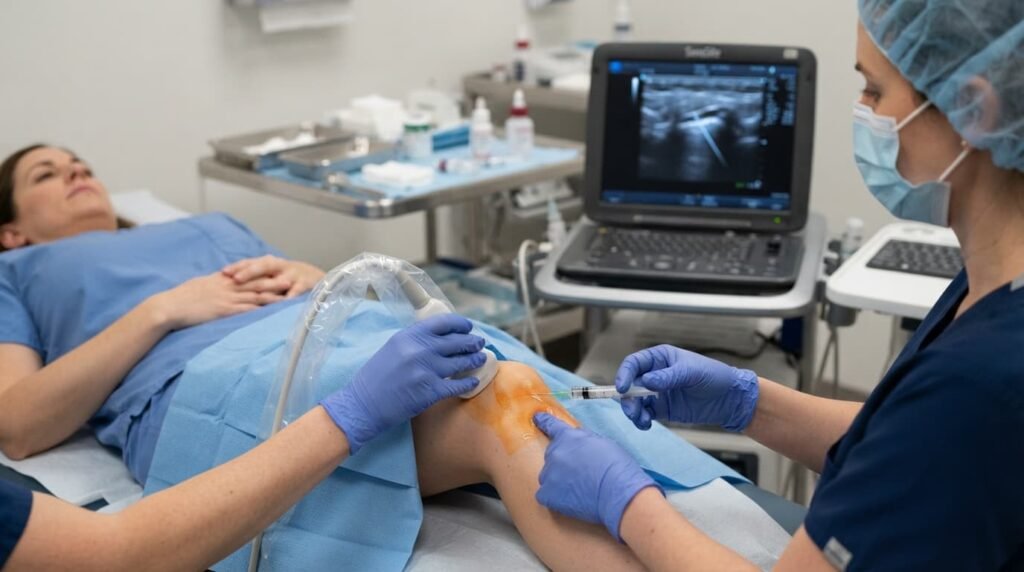
Patients weighing injection options sometimes compare Arthrosamid against platelet-rich plasma therapy before choosing a treatment path with their specialist.
Genicular Artery Embolisation for Knee Pain
Genicular artery embolisation offers another route for patients seeking relief without surgery. GAE for knee pain works by reducing abnormal blood flow to inflamed tissue surrounding the joint.
This minimally invasive, image-guided procedure targets the blood vessels contributing to chronic inflammation. Recovery from GAE typically takes far less time than recovery from joint replacement surgery. Patients often return to light activity within days rather than months.
GAE does not restore lost cartilage, though it can meaningfully reduce pain and swelling. Specialists generally recommend GAE once conservative treatment has failed to provide adequate relief. If symptoms return over time, GAE can sometimes be repeated, subject to a specialist reviewing imaging and prior response.

Other Non-Surgical Approaches
Hot and cold therapy remains one of the simplest tools for managing daily flare-ups. Warm compresses ease morning stiffness, while ice packs reduce swelling after activity.
An anti-inflammatory diet rich in oily fish, leafy greens, and whole grains may support joint health. Glucosamine and chondroitin supplements show mixed evidence, though many patients report modest benefit.
Cold weather often intensifies joint discomfort. Patients managing symptoms through winter months may find further strategies in guidance on arthritis pain during colder weather.
Does a Bone on Bone Knee Always Need Replacement?
Does bone on bone knee need replacement in every case? The honest answer is no; it does not always require joint replacement surgery. Many patients manage symptoms successfully for years through non-surgical treatment alone.
Surgery becomes the recommended path once pain remains severe despite at least six months of conservative care. Significant joint deformity, near-total loss of motion, or inability to perform daily tasks also point toward surgical evaluation.
Partial knee replacement suits patients whose damage stays confined to a single compartment. Total knee replacement addresses more widespread joint damage across all three compartments. Modern implants generally last twenty years or longer with proper care.
Many patients who were told replacement was inevitable delay it for years through structured non-surgical treatment.
Living With Osteoarthritis: Exercise and Prevention
Living with osteoarthritis becomes considerably more manageable through consistent, low-impact activity. Movement nourishes cartilage and strengthens the muscles that support joint stability.
Complete inactivity, by contrast, tends to accelerate stiffness and muscle weakness. A balanced approach combining rest and gentle movement typically produces the best long-term outcomes.
Osteoarthritis Exercise Tips
Osteoarthritis exercise should prioritise low-impact movement over high-stress activity. Swimming and cycling both strengthen muscles while placing minimal load through the knee joint.
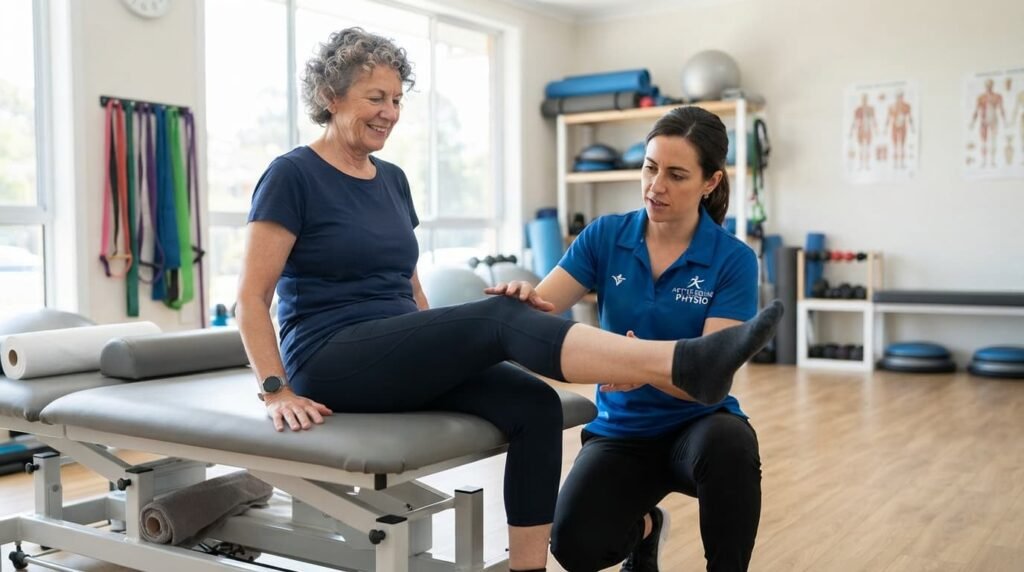
Straight leg raises build quadriceps strength without compressing the joint surface directly. Gentle stretching improves flexibility and reduces the pull on surrounding tendons.
Consistency matters more than intensity, since regular short sessions outperform occasional strenuous workouts. A physiotherapist can tailor a programme to individual joint wear and fitness level.
Warming up gently before exercise reduces strain on stiff morning joints. Gradual progression, rather than sudden intensity increases, protects against flare-ups. Many patients find that pairing strength work with a short daily walk sustains motivation over months rather than weeks.
Posture and Everyday Habits
Good posture reduces uneven strain on the knee during standing and sitting. Staying in one position for long periods, such as at a desk, can stiffen the joint further.
Taking short breaks to stand and move every hour helps maintain flexibility. A chair set at the correct height also lowers unnecessary pressure through the knee when rising.
How to Prevent Further Joint Damage
How to prevent osteoarthritis from worsening involves several practical, evidence-backed habits. Maintaining a healthy body weight remains the single most effective preventive measure available.
Wearing supportive, well-fitted footwear reduces uneven strain during walking and standing. Avoiding prolonged kneeling or repetitive high-impact activity protects existing cartilage.
Addressing osteoarthritis knee stiffness early, before it limits daily function, often slows further decline. Regular movement, balanced nutrition, and prompt attention to new symptoms together support long-term joint health.
Bone on Bone Knee Pain Treatment in London
Patients across London and the wider UK can access specialist assessment for bone-on-bone knee pain. Both NHS and private pathways remain available.
NHS routes typically involve GP referral, physiotherapy, and a waiting list for specialist review. Private clinics often provide faster access to advanced imaging and treatment planning.
Mr Syed Nadeem Abbas, based on Harley Street, leads a specialist practice offering personalised, evidence-based care for knee osteoarthritis. Patients researching non-surgical options sometimes explore additional educational material. The clinic’s video library covers non-surgical joint pain and arthritis treatment in detail.
FAQs About Bone on Bone Knee Pain
Can bone on bone knee pain be lived with long-term?
It is possible to live with bone on bone knee pain for extended periods, particularly with lifestyle adjustments. However, untreated cases often show gradually worsening stiffness and reduced mobility. Most specialists recommend assessment once pain begins interfering with sleep or daily tasks. Early treatment generally preserves more function than waiting until symptoms become severe.
What does bone on bone feel like?
Patients typically describe a deep, persistent ache alongside sharper pain during movement. Grinding, popping, or catching sensations often accompany walking or climbing stairs. Discomfort may also disturb sleep once the joint stiffens overnight. The exact sensation varies depending on how much cartilage remains within the joint.
Does a bone-on-bone knee always need replacement?
No, many patients avoid replacement for years through physiotherapy, bracing, and advanced injections. Surgery becomes appropriate once conservative treatment fails and pain significantly limits daily function. A specialist assessment determines whether non-surgical options remain viable. Joint deformity and severe motion loss are among the clearer indicators for surgery.
How long can bone-on-bone knee pain go untreated?
There is no universal timeline, since progression depends on individual factors like weight and activity level. Some patients manage symptoms for years, while others decline more quickly. Pain at rest, rather than only during activity, often signals faster progression. Specialist review helps clarify the likely trajectory for each case.
Is genicular artery embolisation suitable for everyone with bone-on-bone knee pain?
GAE suits many patients whose pain stems from inflammation around the joint rather than mechanical instability. It does not restore cartilage, so severe structural damage may still require other treatment. A specialist evaluates imaging and symptom pattern before confirming suitability. Recovery is typically faster than surgical alternatives, appealing to patients wanting to avoid extended downtime.
What lifestyle changes help most with osteoarthritis knee stiffness?
Gentle daily movement reduces morning stiffness more effectively than prolonged rest. Maintaining a healthy weight lowers ongoing pressure through the joint. Warm compresses before activity can ease stiffness quickly. Regular, low-impact exercise generally produces better long-term results than occasional intense sessions.
Bone-on-bone knee pain develops gradually, though its impact on daily life can become significant without intervention. Non-surgical treatment, from physiotherapy to Arthrosamid injection and GAE, helps many patients delay or avoid surgery entirely.
Diagnosis through physical examination and imaging clarifies the right treatment path for each individual case. Surgery remains available for advanced cases where conservative care no longer provides adequate relief.
Mr Syed Nadeem Abbas provides specialist assessment and treatment for knee osteoarthritis from a Harley Street practice. Personalised evaluation helps determine the most appropriate path forward for lasting relief.
Read more: Bone on Bone Knee Treatment: Effective Solutions for Relief
Read more: ACL Injury Requires Early Diagnosis and the Right Treatment Choice