Thyroid And Joint Pain Are Closely Linked In Many Adults

✅ Medically reviewed | Updated september 2026
Thyroid and joint pain often occur together, particularly in adults over 40. Around one in twenty people in the UK live with an underactive thyroid. Joint symptoms are among the most overlooked signs of this condition. Many patients spend months treating knee stiffness before a thyroid cause is considered. Understanding this connection helps patients seek the right diagnosis sooner. Recognising the pattern early can also reduce unnecessary knee scans and referrals.
How Hypothyroidism And Joint Pain Are Connected
An underactive thyroid slows the body’s metabolic processes considerably. This slowdown affects cartilage repair, muscle strength and joint fluid production. The result is often persistent aching, stiffness and swelling. These symptoms can mimic ordinary mechanical wear and tear.
Hypothyroid arthropathy describes this specific pattern of joint disease. It typically affects the knees, hands and wrists first. Joint fluid becomes thicker and more viscous over time. This produces a heavy, waterlogged sensation rather than sharp pain.
Thyroid hormone directly influences cartilage cell activity at a cellular level. When hormone levels drop, cartilage repair slows considerably. Over years, untreated hypothyroidism can accelerate osteoarthritis. Weight-bearing joints such as the knees and hips are affected most.
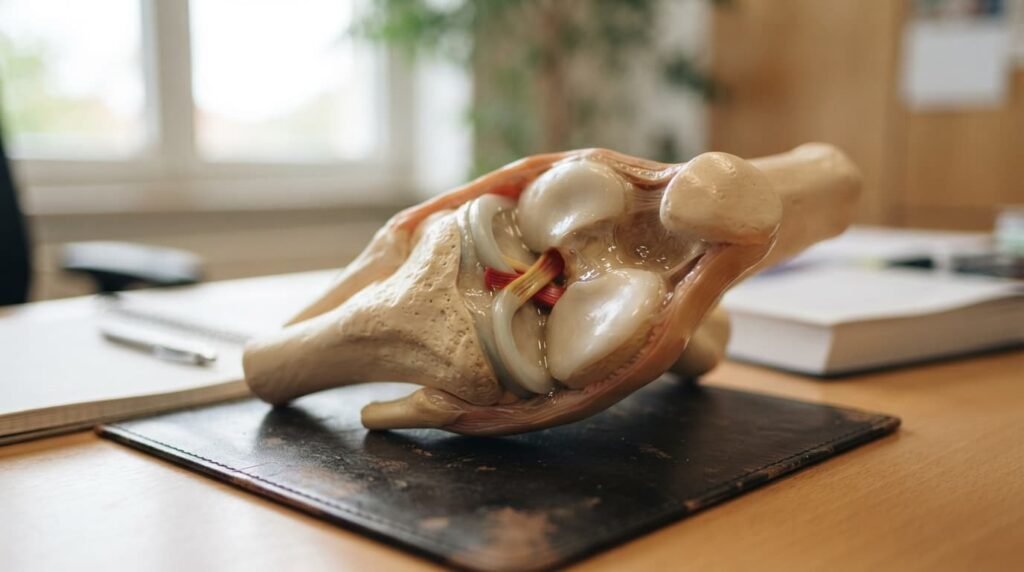
The link between thyroid function and joint health works both ways. People with existing joint disease sometimes develop thyroid problems later. Those with thyroid disease frequently develop joint symptoms as a secondary effect. This bidirectional relationship makes screening valuable for both groups.
Why Some People Face Higher Risk Of Thyroid And Joint Pain
Not everyone with hypothyroidism develops joint symptoms. Genetic factors, disease duration and diagnosis speed all affect severity. Women over 60 face the highest combined risk. Hormonal changes around menopause can compound existing thyroid dysfunction.
Family history also matters considerably here. Relatives with thyroid disease or autoimmune arthritis raise personal risk. Early screening becomes particularly valuable in these families. The American Thyroid Association recommends screening from age 35 onward, repeated every five years.
People with type 1 diabetes or other autoimmune conditions also face elevated risk. Pregnancy and postpartum periods can trigger or worsen thyroid dysfunction too. Anyone with a history of head or neck radiation should also be monitored closely.
Thyroid And Knee Pain: Common Symptoms To Recognise
Knee symptoms linked to thyroid disease follow a recognisable pattern. This pattern differs clearly from injury-related pain. Bilateral involvement is a key clue here. Injuries rarely affect both knees equally at once.
Common signs of hypothyroidism knee pain include:
- Stiffness lasting longer than thirty minutes each morning
- Visible puffiness around both knees
- A heavy or waterlogged sensation when walking
- Pain that worsens noticeably in cold weather
- Fatigue accompanying joint discomfort
- Reduced range of motion without a clear injury
Thyroid and swollen knees often appear together for a specific reason. Fluid retention affects the synovium, the joint’s lubricating lining. This differs from inflammatory arthritis, where redness and warmth typically dominate.
Patients frequently describe early symptoms as heaviness rather than sharp pain. This distinction matters clinically. Heaviness points toward a metabolic cause rather than mechanical joint damage.
Muscle Weakness, Carpal Tunnel And Wider Joint Effects
Hypothyroidism and muscle pain frequently accompany joint symptoms. These rarely occur entirely separately from each other. Weak quadriceps muscles reduce knee stability considerably. This places extra mechanical strain on the joint itself.
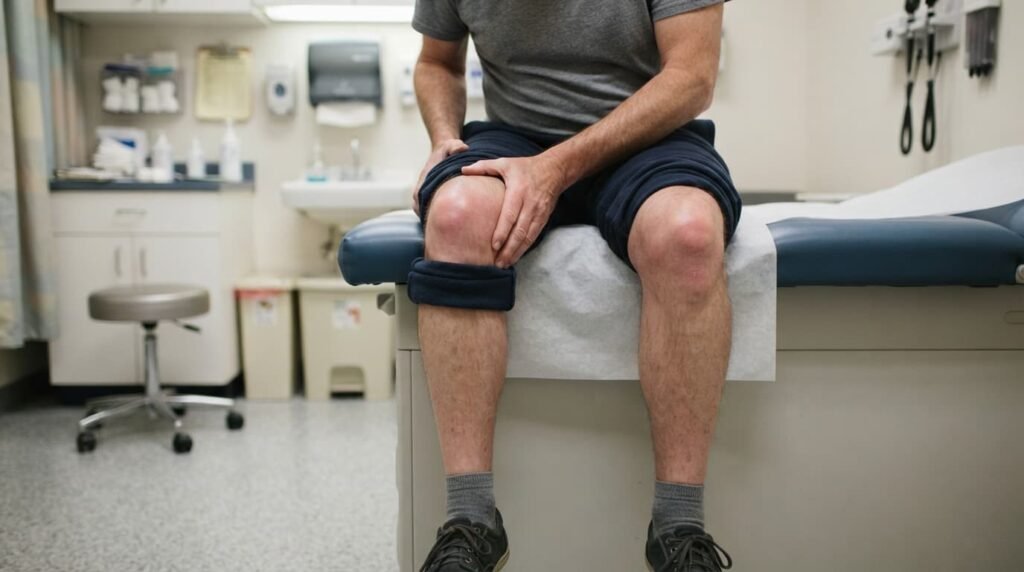
This pattern is sometimes called hypothyroid myopathy. Muscles feel tired, achy and slow to recover after activity. Thyroid-related muscle weakness in the knees is a genuine clinical phenomenon. It is not simply deconditioning from inactivity.
Hypothyroidism and carpal tunnel syndrome are another recognised association worth noting. Slowed metabolism causes tissue swelling around the wrist nerve. Numbness and tingling in the hands often accompany knee symptoms. This points toward a systemic cause rather than a local one.
Grip strength often declines alongside knee weakness in advanced cases. Simple daily tasks such as opening jars can become noticeably harder. This happens without any obvious injury explaining the change.
Underactive Thyroid: Joint Stiffness And Cold Sensitivity
With an underactive thyroid, joint pain often intensifies with temperature changes. Cold sensitivity in thyroid joint pain happens for a clear reason. A sluggish metabolism generates less internal body heat than normal.
Reduced circulation to the extremities makes muscles tense further in cold conditions. Joint fluid also thickens slightly at lower temperatures. This adds noticeably to morning stiffness. Patients often describe knees feeling “rusty” before they warm up.
Morning stiffness lasting well beyond typical warm-up time is a strong clue. Most mechanical knee problems ease within minutes of movement. Thyroid-related stiffness persists much longer, sometimes over an hour.
Seasonal patterns can help confirm this connection clearly. Patients often notice symptoms worsen considerably during winter months. Symptoms often improve somewhat during warmer weather, even without treatment changes.
Autoimmune Links: Hashimoto’s, Rheumatoid Arthritis And Thyroid Arthritis
Autoimmune conditions frequently cluster together in the same person. The reasons for this are still being researched fully. Hashimoto’s and joint pain often coexist for a specific reason. Thyroid antibodies and joint inflammation share overlapping immune pathways.
People with rheumatoid arthritis face a considerably higher risk of thyroid disease. Hypothyroidism and rheumatoid arthritis together create a complex symptom picture. Careful diagnostic separation between the two conditions becomes essential.
Thyroid arthritis is not always autoimmune in nature. Subclinical hypothyroidism joint pain can occur even with mildly abnormal tests. Mild thyroid dysfunction should never be dismissed as clinically irrelevant.
Fibromyalgia also appears more frequently in autoimmune thyroid patients. Widespread pain combined with joint-specific symptoms suggests broader overlap. This overlap points toward multiple conditions rather than one isolated cause.
TSH Levels, Thyroid Blood Tests And Joint Pain Diagnosis
TSH levels and joint pain assessment usually begin with a simple blood test. A GP typically orders this as a first step. Elevated TSH with low free T4 confirms overt hypothyroidism. This requires treatment without significant delay.
Subclinical cases show elevated TSH with normal free T4 levels. These cases still warrant careful ongoing monitoring. A thyroid blood test workup often includes free T3 testing. Thyroid antibody testing is frequently added alongside standard markers.
This combination distinguishes autoimmune Hashimoto’s disease from other causes. It also guides more targeted treatment decisions for each patient. Diagnosis involves careful physical examination beyond blood work alone.
Clinicians assess for synovial thickening during a standard consultation. Joint effusions and reduced muscle strength are also checked. Imaging sometimes helps when the clinical picture remains unclear.
Ultrasound can detect joint effusions accurately in most cases. X-rays help exclude significant osteoarthritis or unrelated structural damage. Both tools support a more complete diagnostic picture overall.
Thyroid And Joint Pain: Prevalence And Diagnosis Timelines
Thyroid and joint pain remains widely underdiagnosed across the UK today. Many patients see multiple clinicians before a thyroid cause is identified. Average diagnosis delays can stretch beyond a year in some cases.

Hypothyroidism itself affects roughly one in twenty UK adults overall. Women are affected considerably more often than men across all age groups. Joint symptoms are reported in a significant proportion of these patients.
This delay often happens because joint pain is treated as a standalone issue. Clinicians may focus on the knee itself rather than broader hormone testing. Raising thyroid and joint pain as a specific possibility can speed up diagnosis.
Differentiating Thyroid Joint Pain From Other Causes
Not all knee pain in thyroid patients stems from the thyroid itself. Osteoarthritis, gout and mechanical injuries can all coexist independently. A careful history helps separate these overlapping possibilities effectively.
Sudden onset pain after activity usually points toward mechanical injury. Gradual, symmetrical stiffness points more toward a metabolic cause instead. Blood tests that normalise without symptom improvement suggest a separate joint condition.
This is why ongoing communication with a GP matters considerably. Reassessment after thyroid treatment stabilises helps clarify the true underlying cause.
Treatment: Levothyroxine, Joint Pain Relief And Non-Surgical Options
Preventing Long-Term Joint Complications From Thyroid Disease
Early treatment reduces the risk of lasting joint damage considerably. Patients diagnosed and treated promptly generally see better long-term outcomes. Delayed treatment allows cartilage and muscle changes to progress further.
Routine screening after age 35 supports earlier detection significantly. Anyone with a family history should discuss earlier testing with their GP. Consistent medication adherence also prevents fluctuating hormone levels over time.
Fluctuating TSH levels can worsen joint symptoms unpredictably between blood tests. Sticking to a consistent levothyroxine brand helps maintain stable hormone levels. This consistency supports steadier joint and muscle symptom control overall.
Levothyroxine joint pain relief typically develops gradually with consistent treatment. Most patients notice improvement within several weeks of starting therapy. Full resolution can take months in some cases, though.
Persistent knee symptoms after thyroid correction warrant separate orthopaedic assessment. Osteoarthritis, cartilage damage or ligament issues may coexist independently. Each requires its own dedicated management pathway going forward.
Non-surgical joint treatments help manage residual pain effectively for many patients. These include targeted injections and physiotherapy-led rehabilitation programmes. Patients researching these options can find clear video explanations elsewhere too.
The DrSNA Clinic YouTube channel covers non-surgical arthritis treatment in detail. It explains joint pain management without requiring invasive surgical procedures.
Physiotherapy plays a particularly valuable role after thyroid-related muscle weakness. Targeted strengthening exercises rebuild quadriceps support around the affected knee. This reduces mechanical strain once hormone levels stabilise fully.
Monitoring Thyroid Treatment And Joint Symptoms Over Time
Regular blood tests track progress once levothyroxine treatment begins. Levels are usually checked every four to eight weeks initially. Once stable, monitoring can extend to six or twelve months.
Any change in medication brand or dose requires repeat testing. Joint symptoms should be reassessed alongside these routine blood checks. This helps confirm whether thyroid treatment alone explains any improvement.
Patients should also mention new medications or supplements during reviews. Certain substances, including iron and calcium, can affect thyroid medication absorption.
Supporting Nutrients That Affect Thyroid And Muscle Function
Certain nutrients influence both thyroid hormone conversion and muscle health directly. Vitamin D deficiency is common in the UK and can worsen joint discomfort. Low B12 levels may also contribute to fatigue and muscle weakness separately.
Magnesium supports muscle relaxation and may ease some stiffness-related symptoms. Iron deficiency can blunt thyroid hormone production if levels drop too low. A GP can check these markers alongside standard thyroid blood tests.
Supplementing without testing is generally discouraged, since excess levels carry their own risks. Correcting a genuine deficiency, however, often supports better overall symptom control alongside standard treatment.
Thyroid Swelling Behind The Knee: When To Seek Help
Thyroid swelling behind the knee can closely resemble a Baker’s cyst. Fluid retention causes protein build-up that traps water in tissues. This creates visible swelling in the back of the knee joint.
Sudden, painful swelling behind the knee always warrants urgent assessment. This rules out blood clots or significant cysts needing separate treatment. Locked knees or fever alongside swelling need same-day medical review.
Persistent swelling that fails to improve after treatment deserves attention. This may indicate a coexisting joint condition rather than an ongoing thyroid cause.
Managing Thyroid And Joint Pain Day To Day
Which Specialist To Consult For These Symptoms
A GP is usually the correct first point of contact for joint and thyroid symptoms. They can order initial blood tests and rule out obvious mechanical causes. Referral to an endocrinologist follows if thyroid dysfunction is confirmed.

An orthopaedic specialist becomes relevant when knee symptoms persist after treatment. This applies particularly when structural damage or osteoarthritis is suspected separately. Working with both specialists together often produces the best overall outcome.
Some patients benefit from a rheumatologist’s input too, especially with autoimmune features. Overlapping conditions such as Hashimoto’s disease and rheumatoid arthritis sometimes require joint management. Coordinated care between specialists avoids conflicting or duplicated treatment plans.
Lifestyle adjustments support recovery alongside medical treatment considerably. Low-impact movement protects joints while maintaining strength and circulation.
Helpful daily strategies include:
- Swimming or water-based exercise to reduce joint loading
- Gentle strength work targeting the quadriceps and hip muscles
- Consistent sleep patterns to support hormone regulation
- Adequate hydration for healthy joint fluid
- Keeping joints warm during colder months
Weight management also considerably reduces mechanical pressure on the knees. Combined with proper thyroid treatment, this often produces noticeable improvement. Many patients report meaningful symptom relief within a few months.
Diet plays a supporting role too, though it never replaces treatment. Anti-inflammatory foods such as oily fish may help reduce general discomfort. Leafy greens and berries offer similar supportive benefits alongside standard thyroid management.
Rest remains important, but prolonged inactivity can worsen stiffness further. A gentle, consistent movement routine tends to work better long-term.
Frequently Asked Questions
Can hypothyroidism cause joint pain in both knees at once?
Yes. Bilateral knee involvement is a hallmark of thyroid-related joint pain, unlike most single-joint injuries.
Do hypothyroidism and rheumatoid arthritis often occur together?
They can. Autoimmune conditions frequently cluster, so thyroid screening is recommended for rheumatoid arthritis patients with unexplained symptoms.
Will levothyroxine joint pain relief happen immediately?
No. Improvement usually takes several weeks to months as hormone levels stabilise fully.
Is thyroid and knee pain different from ordinary osteoarthritis?
Yes. Thyroid-related pain is metabolic and often bilateral, while osteoarthritis is mechanical and frequently asymmetrical.
Can thyroid and joint pain improve without medication?
Mild cases sometimes improve with lifestyle changes, but most patients need thyroid hormone replacement for lasting relief.
How long does thyroid and joint pain take to resolve?
Most patients see improvement within a few weeks, though full resolution can take several months.
Does weight gain from hypothyroidism worsen knee pain?
Yes. Extra weight increases mechanical load on the knees, compounding stiffness caused by thyroid dysfunction.
Should thyroid antibodies be tested if knee pain persists?
Testing thyroid antibodies helps identify autoimmune causes such as Hashimoto’s disease, especially when standard TSH results look borderline.
Thyroid and joint pain share a well-documented biological connection through hypothyroidism. Bilateral stiffness, muscle weakness and cold-related discomfort often signal thyroid involvement rather than simple wear and tear. Anyone asking whether thyroid issues can cause knee pain should start with a simple blood test.
Mr Syed Nadeem Abbas specialises in diagnosing and managing complex knee and joint conditions. His clinical approach combines careful assessment with evidence-based, non-surgical treatment pathways.
Read more: IT Band Syndrome And Knee Pain Often Develop Together In Active People
Read more: Septic Arthritis Treatment Protects The Joint Through Antibiotics And Surgery