Arthrosamid vs Hyaluronic Acid Injection: Which One Works Better?

Arthrosamid vs hyaluronic acid injection is one of the most common comparisons when exploring modern options for knee pain relief. As demand for effective, non-surgical solutions grows, understanding how these injections work inside the joint has become essential. Chronic knee discomfort can affect movement, productivity, and overall quality of life, making the right treatment choice important.
Both injections are designed to improve joint function, but they work differently. Arthosamid forms a hydrogel structure that supports the joint lining, while hyaluronic acid acts as a lubricant to reduce friction. This difference directly affects how long the results last and how well each option manages ongoing discomfort.
While both fall under gel-based treatments, they differ in durability and long-term performance. The key question is not just short-term relief, but which option provides consistent improvement over time.
Patients exploring advanced options, including Arthrosamid Injection London, often focus on treatments that offer long-term stability rather than temporary relief.
Before starting any advanced treatment, it is also important to understand the pricing and availability in your area. Knowing the treatment cost and where it is offered helps you plan better and avoid confusion later. That is why many patients research arthrosamid injection cost UK early in their decision-making process.
Understanding Knee Pain and Injection Treatments
Knee pain usually develops due to wear and tear of cartilage, especially in people dealing with knee osteoarthritis treatment. As cartilage breaks down, the joint loses its natural protection. The result is often reduced mobility, swelling, and a noticeable feeling of stiffness.Over time, even simple activities like walking or climbing stairs can become uncomfortable.
Many patients try exercise, physiotherapy, and medication first. These methods can help in early stages, but they do not always provide long-term relief. When symptoms persist, doctors often recommend knee pain injection treatment as the next step.
These injections aim to improve joint function and reduce inflammation without surgery. They work directly inside the joint, which allows targeted relief. Compared to oral medication, injections often provide faster and more noticeable improvement.
When comparing arthosamid vs hyaluronic acid injection, it is important to understand that both belong to the category of gel injection for joints, but they behave very differently inside the body. One focuses on long-term structural support, while the other focuses on temporary lubrication.

What Is Arthrosamid Injection for Knee Pain?
Arthrosamid injection for knee pain is a hydrogel-based treatment designed to provide long-term support inside the knee joint. Unlike temporary solutions, this gel integrates with the synovial tissue, creating a cushioning effect that supports the joint over time.
Once injected, it stays in place and becomes part of the joint lining. This is one of the key reasons why many specialists consider it a strong option for people dealing with ongoing discomfort. Instead of wearing off quickly, it continues to provide support and stability.
This treatment helps reduce friction between joint surfaces and improves overall movement. Patients often notice that their knee feels more stable and less irritated during daily activities. It also supports cartilage protection, which is important for slowing down joint damage.
Clinics offering Arthosamid Injection London services often recommend this option for patients who want a non surgical knee pain treatment that delivers consistent results. It is especially useful for those who want to avoid surgery but still need long-term improvement.
Hyaluronic Acid Injection for Knee Pain
Hyaluronic acid injection for knee pain works differently from Arthosamid. It focuses on restoring lubrication inside the joint rather than providing structural support. This substance naturally exists in healthy joints, helping them move smoothly.
As joint conditions develop, the level of hyaluronic acid decreases. The injection helps replace that lost lubrication, making movement easier and less painful.
This is why it is commonly known as a joint lubrication injection. It is often recommended for people with mild to moderate symptoms who need short-term relief.
However, the body gradually absorbs hyaluronic acid over time. This means the effect does not last as long. Many patients require repeat treatments to maintain the benefits.
Key Comparison: Arthrosamid vs. Hyaluronic Acid
To make things clearer, here is a direct comparison between the two treatments:
- Duration of Results: Arthosamid is known for its long-lasting effect because it remains within the joint and supports it over time. In contrast, hyaluronic acid gradually breaks down in the body, so its benefits are usually shorter and may require repeat sessions.
- How Each Treatment Works: Arthosamid integrates into the joint lining and forms a soft, supportive layer that helps reduce ongoing irritation. Hyaluronic acid works more like a lubricant, improving movement by reducing friction between joint surfaces.
- Effect on Pain and Function: Both treatments help reduce pain and improve mobility, but Arthosamid tends to offer more consistent improvement over a longer period. Hyaluronic acid can provide quicker relief, but the effect may not last as long.
- Number of Treatments Needed: Arthosamid is typically given once with long-term benefits, while hyaluronic acid often requires repeated injections to maintain results.
- Suitability for Different Conditions: Arthosamid is often preferred for patients with more persistent or advanced joint issues who want a long-term solution. Hyaluronic acid may be more suitable for early-stage discomfort or those exploring initial treatment options.
This comparison gives a clearer picture of how each option performs in real situations, helping patients decide which approach fits their needs and expectations better.
Effectiveness and Duration of Results
One of the biggest concerns for patients is how long the results last. In any knee gel injection comparison, duration plays a major role in decision-making.

Arthosamid often provides longer-lasting benefits because it integrates with the joint tissue. Many patients experience improvement for extended periods, making it a reliable option for chronic conditions.
Hyaluronic acid, while effective in the short term, usually delivers relief for a limited time. As the body absorbs the substance, symptoms may gradually return.
When deciding the best knee injection arthosamid or hyaluronic acid, this difference in duration becomes a key factor. Patients who want fewer repeat treatments often lean toward Arthosamid.
Pain Relief and Mobility Improvement
Both treatments aim to improve movement and reduce discomfort, but their approach differs significantly.
Arthosamid works by stabilizing the joint environment. It reduces ongoing irritation and allows smoother movement over time. This makes it suitable for people dealing with persistent knee issues.
Hyaluronic acid improves mobility by reducing friction between joint surfaces. It can provide noticeable relief quickly, which is why some patients prefer it initially.
However, when comparing hyaluronic acid vs arthosamid knee injection, many patients find that Arthosamid provides more consistent and long-term improvement.
Safety and Side Effects
Safety remains an important factor when choosing any knee pain injection treatment. Both options are generally safe when performed by experienced professionals.
Arthosamid – Safety, Side Effects, and Advantages
- Safety: Stays within the joint and integrates with tissue, providing stable and controlled support
- Side Effects: Usually minimal; mild swelling or discomfort may occur shortly after injection
- Advantages: Long-lasting results with fewer injections, reducing repeated irritation and clinic visits
Hyaluronic Acid – Safety, Side Effects, and Advantages
- Safety: Widely used and generally well tolerated for joint lubrication
- Side Effects: Temporary swelling, stiffness, or mild discomfort, especially with repeated injections
- Advantages: Provides quick relief and improves movement, suitable for early-stage knee pain
For patients comparing both options, Arthosamid often feels more convenient due to its long-term benefits and reduced need for repeated procedures.
Which Injection Is Better for Knee Pain?
Choosing the best injection for knee pain depends on your condition, expectations, and lifestyle. There is no one-size-fits-all answer.
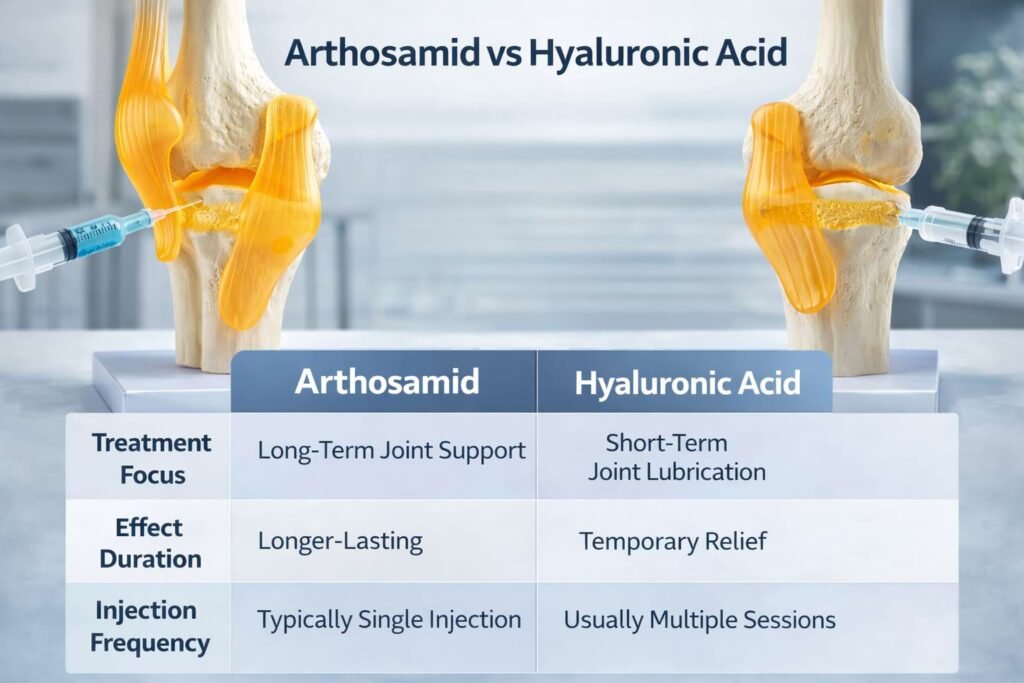
If you want long-term relief and fewer repeat treatments, Arthosamid may be the better option. It supports the joint and delivers consistent results over time.
If your symptoms are mild or you prefer a short-term solution, hyaluronic acid can still be effective. It is often used as a starting point before moving to more advanced treatments.
Doctors usually evaluate joint condition, severity of damage, and activity level before recommending the most suitable option.
Cost and Long-Term Value
Cost is often one of the first factors patients think about, but it should always be viewed alongside long-term value and treatment outcomes. A lower initial price may seem appealing, but if the results do not last, the overall expense can increase over time.
Hyaluronic acid injections are usually considered more affordable at the beginning. However, because the body gradually absorbs the substance, patients often need repeat sessions to maintain relief. Over months or years, these repeated treatments can add up and increase the total cost significantly.
Arthosamid, on the other hand, generally comes with a higher upfront price. This is why many patients look into arthosamid injection costs early in their decision-making process. While the initial investment may seem higher, its long-lasting effect often reduces the need for multiple treatments, making it a more cost-effective option in the long run.
Another important factor is accessibility and choosing the right clinic. Many patients prefer to find a trusted provider by searching for arthosamid injection near me, ensuring they receive treatment from experienced specialists. Location, expertise, and treatment quality all play a role in overall value, not just the price itself.
When viewed from a long-term perspective, Arthosamid often stands out as a practical option for those seeking consistent relief without the need for repeated procedures.
Knee Pain Treatment in London
London clinics offer both Arthrosamid and hyaluronic acid as part of modern knee pain treatment plans. Most specialist clinics position Arthrosamid as the longer-lasting option, while hyaluronic acid is usually presented as a shorter-term treatment that helps improve joint lubrication and movement.

In practice, clinics tend to frame Arthrosamid as a non-surgical treatment for ongoing knee osteoarthritis symptoms, especially where longer relief and fewer repeat injections matter. Hyaluronic acid still appears as a valid option, but usually for more temporary symptom control rather than long-term stability.
Overall, knee pain treatment London clinics now give more attention to treatments that support lasting pain relief, better mobility, and fewer repeat procedures.
FAQ
How long does it take to feel relief after knee injections?
Improvement often begins within a few weeks of treatment, although the exact timeline can vary. Arthosamid usually develops its full effect more gradually as it settles within the joint lining. Hyaluronic acid may ease symptoms sooner, but its benefits are often shorter in duration.
Can knee injections delay surgery?
Yes, knee injections can help delay surgery by reducing pain and improving movement. They allow patients to stay active without invasive procedures. In many cases, they help manage symptoms for a long time.
Are knee injections suitable for all age groups?
Knee injections can work for different age groups depending on the condition. Younger patients may use them for early symptoms, while older patients may need longer-lasting options. A doctor can suggest the best choice based on joint health.
How many injections are usually needed for knee pain treatment?
The number of injections depends on the type of treatment used. Arthosamid is usually given as a single injection with long-term benefits. Hyaluronic acid often requires multiple sessions over time.
Can I return to normal activities after knee injections?
Most patients can return to light activities within a few days after the injection. It is recommended to avoid heavy strain on the knee for a short period. Gradually, normal movement and daily activities can be resumed.
The comparison between arthosamid vs hyaluronic acid injection ultimately comes down to duration, effectiveness, and individual needs. Both treatments offer benefits, but they serve different purposes.
Arthosamid focuses on long-term joint support, stability, and reduced irritation. Hyaluronic acid improves lubrication and short-term comfort.
Understanding these differences allows patients to choose the right treatment based on their condition and goals. With the right approach, it is possible to manage knee pain effectively and return to a more active lifestyle.
Read more: New non-surgical knee pain treatments in UK 2026 with Arthrosamid injection
Read more: Why Arthritis Pain in Cold Weather Causes More Knee Pain in Winter