An Ice Bath For Knee Pain Can Ease Swelling And Speed Recovery

✅ Medically reviewed | Updated August 2026
An ice bath for knee pain works by narrowing blood vessels around the joint. This lowers swelling and dulls pain signals. Cold exposure has been used for injury care for decades, long before ice baths became a wellness trend. Knees that feel hot, puffy, or tender often respond well to short bursts of cold water. This applies after a fall, a hard training session, or an arthritis flare-up.
How Cold Water Affects A Painful Knee
Cold exposure triggers a process called vasoconstriction, where blood vessels near the skin tighten. Less blood reaches the area, which directly reduces swelling around the joint. This is one reason many people ask whether ice helps knee pain after a sprain or a long walk.
Cold also slows nerve signals travelling from the knee to the brain. Pain messages become quieter for a short period. Cold water therapy for knee pain works particularly well in the first two days after an injury. Swelling is at its highest during this early window. Once the sharp, hot pain from an acute injury settles, the benefits of cold water become smaller.
Temperature also affects cell activity. Cooling injured tissue slows the rate of cellular damage that follows an injury. Slower cell activity means less secondary swelling develops around already damaged tissue.
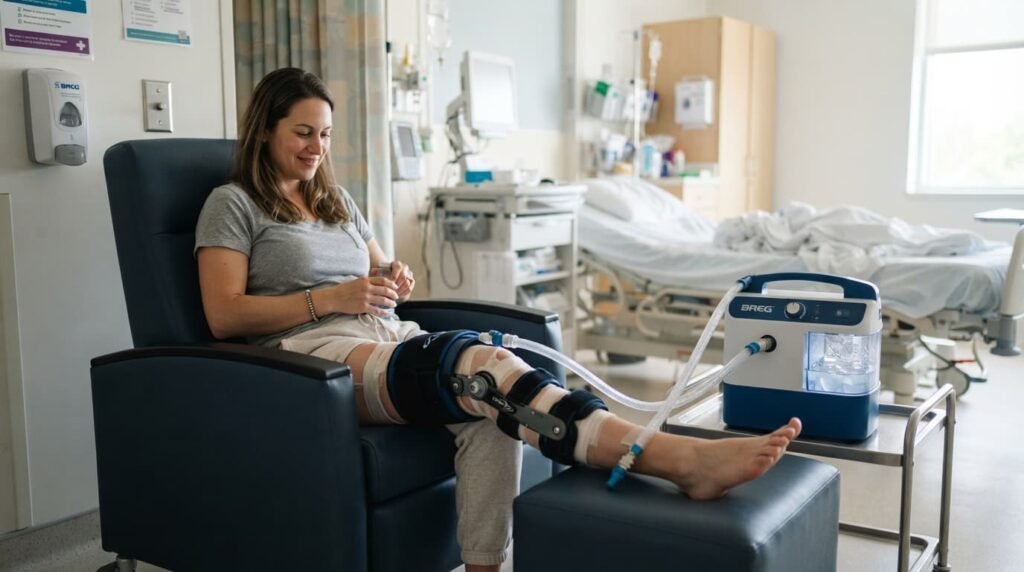
Full immersion means the whole leg sits in cold water. This suits widespread aching after a long walk or a hard gym session. A smaller, targeted soak works better for pain confined to one side of the knee. Neither method needs expensive equipment; a washing-up bowl and a bag of shop-bought ice covers most home situations. Choosing between the two usually comes down to how widespread the discomfort feels.
What The Evidence Says About Cold Water Therapy For Knee Pain
Cold water therapy knee pain research has grown steadily over the past two decades, mostly within sports medicine. A well-cited study from 2018 found that cold water immersion reduced inflammation markers significantly after exercise. Other trials point to reduced pain signalling and faster muscle recovery following short cold sessions.
Most of this research focuses on healthy, active adults rather than older patients with long-term joint conditions. Results from athletic studies do not always translate directly to arthritis management. That gap matters when weighing general cold therapy claims. Advice suited to a specific knee condition carries far more value.
Doctors and physiotherapists in the UK generally view an ice bath for knee pain as a supporting tool. It rarely works well as a stand-alone treatment. It sits alongside movement, strengthening work, and, where needed, medical intervention. Cold water rarely fixes the underlying cause of a painful knee, but it consistently helps manage the symptoms around it.
Ice Bath For A Fresh Knee Injury: The RICE Protocol
Sudden knee injuries, including sprains, minor ligament strains, and twists, respond well to a well-known method. The RICE protocol knee injury approach stands for Rest, Ice, Compression, and Elevation. It remains a standard first-response method used across UK physiotherapy clinics.
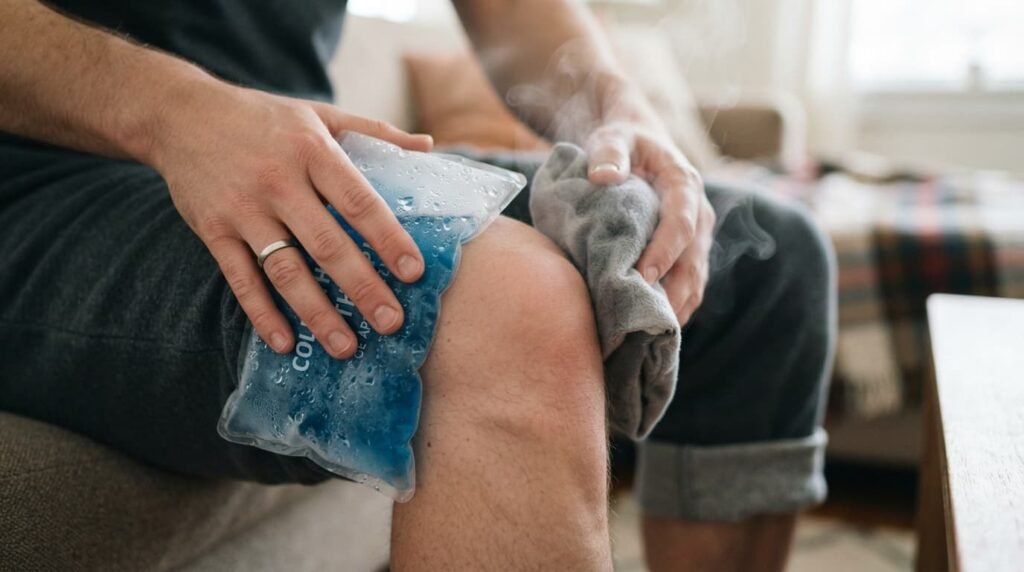
Applying an ice bath for knee pain within the first 48 hours after a fresh injury helps considerably. It can limit internal bleeding and control early swelling. Skipping this early window often means dealing with a stiffer, more swollen knee for longer. A simple routine looks like this:
- Rest the joint and avoid weight-bearing where possible
- Apply cold water or an ice pack for 10 to 15 minutes
- Wrap the knee firmly but not too tightly with a compression bandage
- Raise the leg above heart height where practical
Anyone dealing with knee pain after a fall or sporting injury should read further. Low-impact exercises such as swimming, walking, or cycling support joints without adding stress.
Ice Bath Knee Arthritis Relief: Managing Chronic Flare-Ups
Arthritis behaves differently from a fresh injury. Joints can feel fine for weeks, then flare without warning. An ice bath knee arthritis routine will not cure the underlying joint damage. It often calms an angry flare-up, though. Cold therapy for arthritis knee pain reduces inflammation in overworked joints. Gardening, long walks, or standing for hours can all trigger this kind of flare.
A cool soak will not reverse cartilage wear, though it can make difficult days more manageable. Many people combine short cold sessions with gentle movement once the flare eases, rather than resting completely. The Dr SNA Clinic YouTube channel carries a detailed video series on this topic. It explains how osteoarthritis develops and why joints become swollen and stiff.
Weather plays a role too. Joint stiffness often increases during colder months. It explains why some patients feel their knees ache before rain arrives.
For patients whose arthritis pain has become a daily struggle, non-surgical joint treatments are worth discussing. A specialist consultation can clarify which options suit a particular knee.
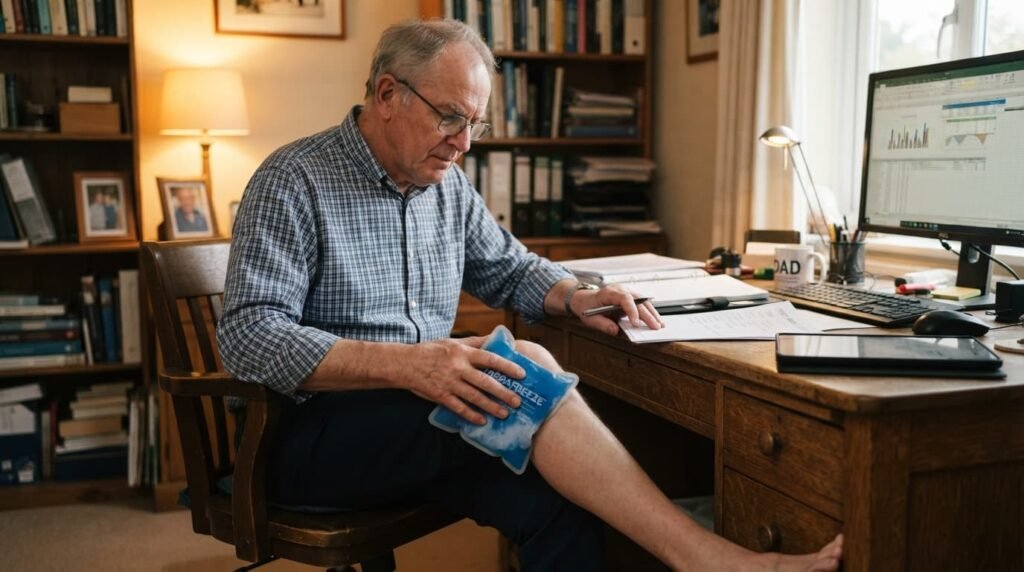
Older adults sometimes worry that cold water feels harsher on ageing joints. The science does not support this concern for most people. Age alone is rarely a reason to avoid short, controlled cold sessions. Underlying conditions matter far more than age when judging suitability. Poor circulation, diabetes, and heart disease all carry more weight in that decision.
Ice Vs Heat For Knee Pain: Choosing The Right One
Deciding between ice vs heat for knee pain confuses many people, but the rule is fairly simple. Ice suits a hot, red, swollen knee. Heat suits a stiff knee that has not been recently injured.
- Choose cold for swelling within 48 to 72 hours of an injury, or straight after intense activity
- Choose heat for morning stiffness, chronic arthritis pain without swelling, or before exercise to loosen the joint
Contrast therapy hot-cold knee routines combine both. A short session might alternate cold and warm water every two to three minutes. Fifteen minutes total is a common target for this kind of routine. This approach can improve circulation while still controlling swelling. Many physiotherapists recommend finishing on cold if the knee still feels puffy.
Best Temperature And Duration For An Ice Bath
Getting the best temperature ice bath setting right matters more than most people expect. Water that is too cold risks skin damage. Water that barely feels cool does very little for swelling.
The recommended range sits between 10°C and 15°C, which feels genuinely cold without becoming dangerous. Anyone new to cold therapy should start gently:
- First attempts: 5 to 7 minutes
- Once comfortable: up to 15 minutes
- Never exceed: 15 to 20 minutes in one session
Ice bath temperature for injury care should sit at the colder end of this range. General joint maintenance can use slightly milder water instead. As for how long to ice bath knee joints during a flare-up, most guidance points to 10 to 15 minutes. Gentle movement should follow, rather than complete rest. A washing-up bowl filled with cold water works just as well as an expensive tub. This applies to most localised knee treatment at home.
Ice Bath After Knee Surgery
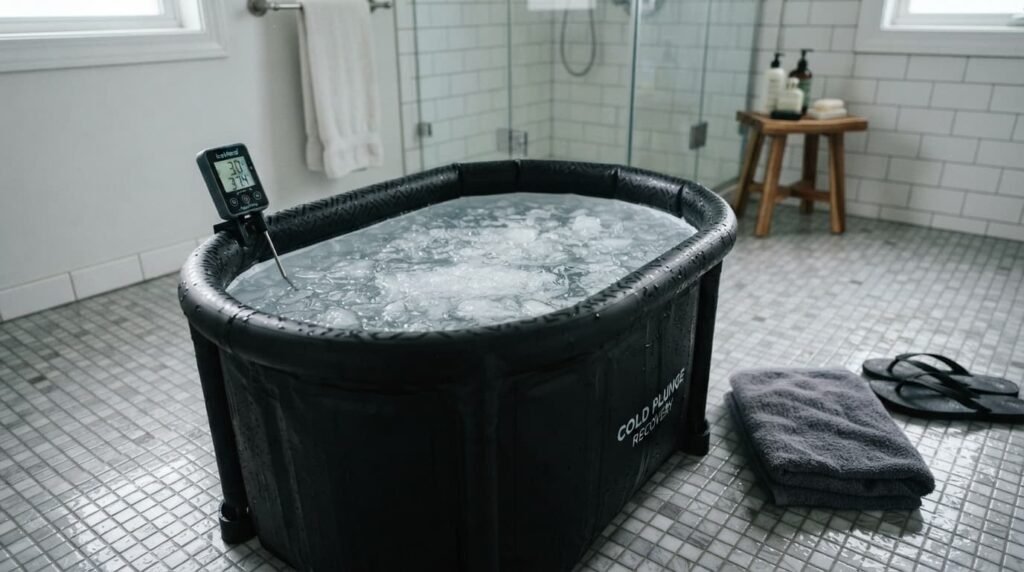
Recovery teams frequently recommend an ice bath after knee surgery to control post-operative swelling. Surgical trauma triggers a strong inflammatory response, and cold therapy helps keep that response manageable during the first week.
Following a surgeon’s specific aftercare instructions always takes priority over general guidance. Some surgical wounds should not be submerged in water until fully healed. Localised ice packs are often safer than full immersion straight after an operation. Compression and gentle, surgeon-approved movement usually follow each cold session. This helps prevent stiffness from setting in during recovery. Patients weighing up injection-based options instead of surgery often research alternatives too. Comparing PRP vs Arthrosamid injection recovery timelines can help clarify which path suits a particular knee.
Cold Plunge Vs Ice Bath For Joint Pain
Cold plunge vs ice bath comparisons come up often, and the two overlap more than they differ. A cold plunge typically means fuller body immersion in a purpose-built tub. An ice bath for knee pain, by contrast, can be as simple as a bucket around one joint.
Is cold plunge good for joint pain? Evidence suggests cold plunge for joint pain relief works best as a short-term tool, not a long-term fix. Cold plunge muscle soreness relief has reasonable support in sports recovery research. This applies particularly to delayed-onset soreness after intense training. Cold plunge for DOMS sessions typically uses water between 10°C and 15°C for ten to fifteen minutes.
Cold water immersion inflammation reduction happens through the same vasoconstriction process described earlier. It is simply applied to more of the body at once. Cold plunge for arthritis sufferers may notice similar benefits to a localised ice bath. Whole-body cold does carry more risk for people with heart conditions, though. Cold plunge chronic pain management remains an area with limited long-term research. Most physiotherapists suggest treating it as one tool among several, rather than a standalone solution.
A cold plunge temperature guide generally follows the same range used for localised ice baths. That range sits roughly between 10°C and 15°C. Some people build tolerance toward slightly colder water over time. Cold plunge vs heat therapy follows the same logic covered earlier: cold for swelling, heat for stiffness. Understanding the overall cold plunge benefits and general ice bath benefits helps set realistic expectations.
Full-body cold plunging also brings a hormonal response that a localised ice bath for knee pain does not produce. Cold exposure releases noradrenaline, which can lift mood and alertness. That extra lift is a genuine bonus, though it should never replace an actual diagnosis. A simple bucket of iced water, aimed directly at the knee, often achieves similar localised swelling reduction. It typically costs far less than a commercial cold plunge tub.
Cold Plunge Safety Tips
Cold plunge safety tips matter just as much as the cold water itself. Anyone with heart disease or uncontrolled blood pressure should speak with a doctor first. The same applies to diabetes with reduced sensation, or poor circulation generally.
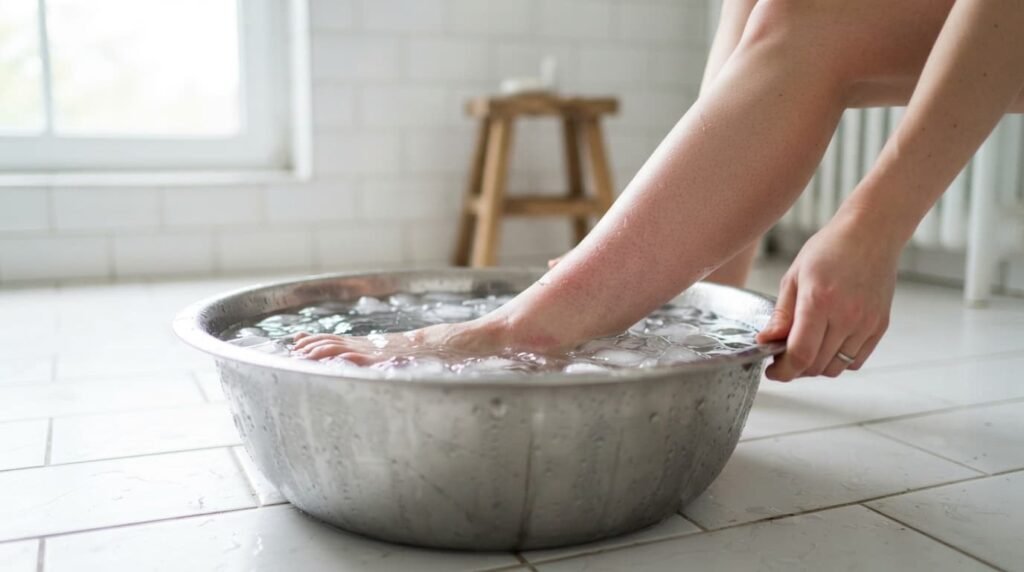
How to cold plunge safely comes down to a few consistent habits:
- Never plunge alone, particularly in open water
- Keep the head above water to avoid a sudden gasp reflex
- Breathe slowly and steadily rather than gasping
- Warm up gradually afterwards rather than jumping into a hot shower immediately
- Stop immediately if skin turns pale, numb, or mottled
Who should not cold plunge includes pregnant women and people with Raynaud’s disease. Anyone with open wounds near the target area should also avoid it. Cold therapy works best as one part of a wider routine. Factors such as knee pain relief foods support long-term joint health alongside it. A proper diagnosis should always come before reaching for the ice. A locked, buckling, or severely swollen knee needs medical assessment rather than home treatment.
Frequently Asked Questions
Does ice help knee pain from arthritis as well as injury?
Ice helps both, though the benefit looks different for each. Fresh injuries respond well because swelling is high and cold limits further tissue damage. Arthritis flares respond because cold calms inflammation in an already irritated joint, even without any new injury present.
How long to ice bath knee joints during a bad flare-up?
Most guidance recommends 10 to 15 minutes per session, with the water kept between 10°C and 15°C. Sessions longer than 20 minutes raise the risk of skin damage without adding extra benefit.
Is an ice bath after knee surgery always safe?
Not always immediately. Surgical wounds sometimes need to stay dry until fully healed, so a surgeon’s aftercare plan should be followed exactly. Localised ice packs are often used instead of full immersion during the earliest recovery days.
What is the best temperature ice bath setting for a painful knee?
Between 10°C and 15°C suits most people and most types of knee pain. Colder water increases the risk of skin irritation without meaningfully improving results for typical home use.
Can an ice bath for knee pain replace physiotherapy or medical treatment?
No. An ice bath for knee pain manages symptoms rather than treating the underlying cause of joint damage. Persistent pain, locking, or swelling that does not settle should always prompt a proper clinical assessment.
Is cold plunge good for joint pain caused by long-term arthritis?
Cold plunge for joint pain can ease a flare-up temporarily, though evidence for long-term arthritis relief remains limited. Combining short cold sessions with regular movement tends to bring more lasting benefit than cold water alone.
Cold therapy remains a genuinely useful, low-cost tool for calming a swollen, painful knee. This applies whether the cause is a fresh injury, a hard training session, or an arthritis flare. Correct timing, sensible water temperature, and knowing when to choose heat instead all make a real difference. Mr Syed Nadeem Abbas, a specialist in non-surgical knee treatment, recommends pairing cold therapy with an accurate diagnosis. Relying on cold water alone rarely solves the underlying problem.
Read more: Physical Therapy For Arthritis Improves Movement And Reduces Pain
Read more: Cycling With Arthritis Can Ease Knee Pain and Improve Mobility